Financial Forecasting. Done right.

Cash flow, profit and scenario forecasts that show you what is coming, before it arrives.

A forecast is only useful if it reflects how your business actually earns and spends. Our ACCA-qualified accountants build rolling cash flow and profit forecasts from your real Xero, QuickBooks, FreeAgent or Sage data, then stress-test them against the decisions you are weighing up, such as a hire, a price rise or a VAT registration. You get a clear, plain-English view of the months ahead and a named accountant to talk it through with.

  • 4.9 Google · 63 reviews
  • ACCA-qualified
  • 30-day money-back
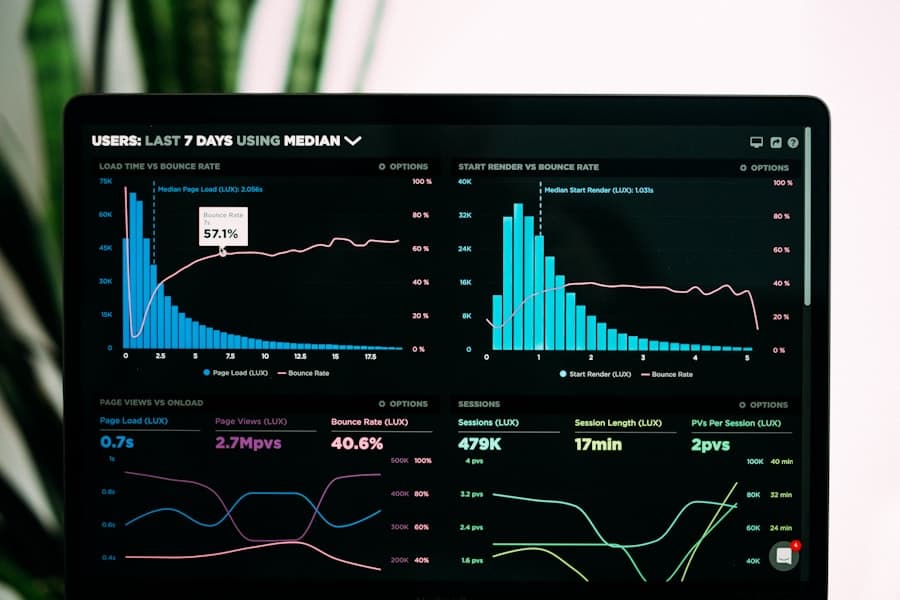
Laptop showing a financial dashboard
Our expertise covers

Everything in this service, in one bill.

  • 01

    Rolling cash flow forecasts

    We build a 12-week and 12-month cash flow forecast driven by your live bookkeeping data, mapping when money genuinely lands and leaves. Debtor and creditor timing, VAT payment dates and seasonal dips are modelled so you can see your true low point in the cash cycle and plan around it, not react to it.


  • 02

    Profit and loss projections

    Beyond cash, we project revenue, gross margin and net profit so you can see whether the business is structurally profitable or simply moving cash around. We separate one-off items from recurring trade, so the underlying trend is visible and you know which months carry the business.

  • 03

    Scenario and sensitivity planning

    We model best-case, worst-case and most-likely versions side by side, then flex the variables that matter most to you, such as a 10 percent drop in sales or a key client leaving. This sensitivity analysis shows which levers move your numbers the most, so you can focus management attention where it counts.

  • 04

    Payroll, wage and pension cost modelling

    Staffing is usually the largest cost line, so we forecast it precisely. We factor in the April 2026 National Living Wage of £12.71 an hour for those aged 21 and over, employer National Insurance, the Employment Allowance and auto-enrolment pension contributions, so a planned hire or pay review is costed in full before you commit.

  • 05

    Tax and VAT cash planning

    Forecasts that ignore tax flatter your cash position. We schedule Corporation Tax, VAT and PAYE liabilities into the timeline, flag when crossing the £90,000 VAT registration threshold becomes likely, and model the cash impact of dividend versus salary extraction using current dividend tax rates, so HMRC bills never blindside you.

  • 06

    Funding, growth and board-ready outputs

    Whether you are approaching a lender, an investor or your own board, we produce forecasts in a format they expect, with clear assumptions, integrated cash, profit and balance sheet views, and a short narrative. We also help you track actuals against forecast each month so the plan stays honest.

Why it pays off

What you actually get.

  • A named, ACCA-qualified accountant

    You work with one qualified accountant who knows your business and your numbers, not a rotating support queue. They build the forecast, explain the assumptions in plain English and are on hand when a decision needs modelling quickly.

  • Fixed, transparent pricing

    Forecasting is included within our fixed monthly plans at £99, £199 or £499 depending on complexity, with no hourly surprises. You know the cost upfront, and our rolling monthly terms mean you are never locked into a long contract.

  • Built on the software you already use

    We work directly in Xero, QuickBooks, FreeAgent and Sage, so forecasts are driven by live data rather than a stale spreadsheet. That means faster updates, fewer errors and a forecast that reflects this week, not last quarter.

  • Replies within 72 hours, guaranteed

    When you are weighing a decision, slow answers cost money. We respond to queries within 72 hours, so when you need a scenario re-run before a meeting, the turnaround is dependable.

  • Risk-free to try

    Every engagement is backed by our 30-day money-back guarantee. If the forecasting service is not giving you the clarity you expected in the first month, you can step away and get your money back.

What is financial forecasting, and what does it actually tell you?

Financial forecasting is the practice of projecting your future cash, profit and financial position based on what your business has done so far and the decisions you are about to make. In plain terms, it answers three questions a business owner asks at 6am: will I have enough cash next month, am I genuinely making money, and what happens if something changes.

There are three core outputs, and a useful forecast covers all three rather than just one. A cash flow forecast tracks the actual timing of money in and out, so you can see your lowest cash point before you reach it. A profit and loss forecast shows whether you are structurally profitable once one-off items are stripped out. A balance sheet forecast shows what you own and owe over time, which is the part lenders and investors scrutinise most closely.

The reason cash and profit are kept separate matters in practice. A profitable business can still run out of money if customers pay late and suppliers want paying now, and a business showing a paper loss can sit on healthy cash for months. Looking at only one number hides this gap, which is why we always model cash and profit side by side rather than assuming one follows the other.

If you want to see how this works for an early-stage business specifically, our guide on building a startup financial model walks through runway and burn rate with worked numbers.

See also: Startup financial model: runway and burn-rate forecasting

What is the difference between financial forecasting and budgeting?

A budget is the plan you set at the start of the year and largely hold fixed; a forecast is the moving prediction you update as reality changes. The budget says what you intended to spend and earn, the forecast says what is now actually likely to happen given the first three or six months of trading.

In practice the two work together rather than competing. You set a budget to give the year a target, then run a rolling forecast alongside it that you refresh monthly so the numbers reflect this week, not last quarter. The gap between the two, the variance, is where the useful management conversation lives, because it shows which assumptions held and which did not.

A common mistake is treating a budget as a forecast and never revisiting it. By month four the original budget is describing a business that no longer exists, while a rolling forecast keeps pace with late-paying clients, a slower-than-hoped launch or an unexpectedly strong quarter. We build the forecast to update from your live bookkeeping data, so refreshing it is a quick monthly task, not a spreadsheet rebuild.

If you are weighing up whether you need this level of financial oversight in-house, our comparison of a fractional CFO versus an accountant covers where forecasting sits in each role.

See also: Fractional CFO vs accountant: which does a growing business need?

How does a three-statement forecast model handle tax timing?

A three-statement model links your profit and loss, cash flow and balance sheet so that a change in one flows correctly through the other two, and the part it handles best is tax timing, which is where many spreadsheets quietly go wrong. Tax is recognised in your profit and loss in the period it relates to, but it leaves your bank account weeks or months later, so a forecast that ignores the gap will overstate your cash.

The timing rules are fixed and known, which makes them straightforward to model accurately. A VAT-registered business on standard accounting must submit its return and pay HMRC one calendar month and seven days after the end of each VAT period, according to gov.uk. A company that is not classed as large pays Corporation Tax nine months and one day after the end of its accounting period, per gov.uk, so a profit earned in month one is not a cash outflow until almost a year later.

The headline tax figures the model uses are equally concrete. The VAT registration threshold is £90,000 of taxable turnover in any rolling 12 months, so a growing business needs to see in advance when it is likely to cross it and start charging VAT. Corporation Tax runs at a small profits rate of 19 percent up to £50,000 of profit and a main rate of 25 percent above £250,000, with Marginal Relief easing the rate in between, all confirmed on gov.uk.

Putting these into a single timeline is what turns a forecast from optimistic into defensible. The table below shows how the same year of trading creates tax liabilities at different moments, which is exactly the cash trap a three-statement model is built to surface.

LiabilityWhen it is incurredWhen it is paid (per gov.uk)
VAT (standard accounting)Each quarterly VAT period1 month and 7 days after the period ends
Corporation Tax (not a large company)Across the accounting period9 months and 1 day after the period ends
VAT registration triggerTurnover passes £90,000 in any rolling 12 monthsMust register and start charging from then

See also: VAT Return deadlines (gov.uk)Pay your Corporation Tax (gov.uk)Corporation Tax rates (gov.uk)

How often should you update a financial forecast, and what data does it need?

A forecast should be refreshed at least monthly, because the value comes from the comparison between what you predicted and what actually happened, and that comparison is only honest while the numbers are current. A forecast updated once a year is a guess with a date on it; a rolling monthly forecast is a working tool you can make decisions from.

The inputs are less daunting than owners often expect. The model is driven primarily by your live bookkeeping data from Xero, QuickBooks, FreeAgent or Sage, which already holds your sales, costs, debtor and creditor positions. On top of that we layer the decisions only you can supply, such as a planned hire, a price change, a new contract or a piece of equipment, because those are the levers a forecast exists to test.

What makes the output trustworthy is keeping assumptions explicit and separate from the maths. When every assumption is written down, you and any lender can see exactly what is driving the numbers, change a single input and watch the effect ripple through, rather than arguing about a black box. This is also what lets us re-run a scenario quickly when a decision needs answering before a board meeting or a funding deadline.

If your numbers are heavily driven by operational metrics rather than just the ledger, our guide on ecommerce KPIs and management accounts shows how the two connect. And if you would like a forecast built around the specific decision you are facing, you can book a free Tax Health Check and we will map out the next steps with you.

See also: Ecommerce KPIs and management accounts explainedBook a free Tax Health Check

How we deliver

Four steps from first call to filed.

  • 01

    Discovery

    Understanding your business needs.

  • 02

    Solution Design

    Crafting your custom accounting strategy.

  • 03

    Onboarding

    Quick and easy integration.

  • 04

    Regular Rhythm

    Consistent monitoring and reporting.

Trusted by leading innovators
Partner brand 1
Partner brand 2
Partner brand 3
Partner brand 4
Partner brand 5
Partner brand 6
Partner brand 7
Partner brand 8
Partner brand 9
Partner brand 10
Partner brand 11
Partner brand 12
Common questions

Frequently asked questions.

A three-statement model links profit and loss, balance sheet, and cash flow so every assumption flows through all three. A revenue change updates the P&L, the balance sheet debtor position, and the cash flow timing automatically. Banks, investors, and due-diligence teams will not accept standalone P&L forecasts because they hide the working capital and funding implications.

Base, downside, and stretch as standard, with sensitivity layers on the three or four variables that genuinely move your business - usually price, volume, gross margin, and customer churn. Investor-facing models add a specific stress case (top customer leaves, costs rise 20%, growth doubles) because that is the first question any serious investor asks.

It is designed to. We build to the format VCs, angels, and banks expect - clearly stated assumptions tab, monthly granularity for 24 months then annual to year 5, working capital schedule, headcount build, and a use-of-funds page tied to the cash flow. Most clients close their round without coming back for model revisions.

Both. The underlying model lives in Excel or Google Sheets so your finance team can interrogate it, with a live KPI dashboard layered on top - revenue, gross margin, cash days on hand, runway, customer acquisition cost, and any sector-specific metric we agree. The dashboard refreshes from your accounting software so the board pack is never out of date.

Either. A one-off fundraising or strategic-planning model is quoted per project and delivered within three weeks. Ongoing rolling forecasts updated monthly or quarterly sit inside the £199 Premium Plus or £499 Enterprise plan, with a quarterly review session built in.

Zmartly Ltd20-22 Wenlock Road, London N1 7GU020 8175 5145info@zmartly.co.uk
Free · 30 minutes · No obligation

Stop overpaying tax. Start filing in 5 days.

Thirty minutes with an ACCA-qualified accountant. Most owners uncover £1,000-£3,000 in annual savings on the first call. If we are not the right fit, you walk away with a free tax review on the house.

Google reviewer HeenaGoogle reviewer land4 success (chill feel good)Google reviewer Jorge Carballo GomezGoogle reviewer Auris Property AcademyGoogle reviewer Sean Barrington
Joined by 240+ UK businesses this year
4.9 Google< 72h reply time30-day money-back