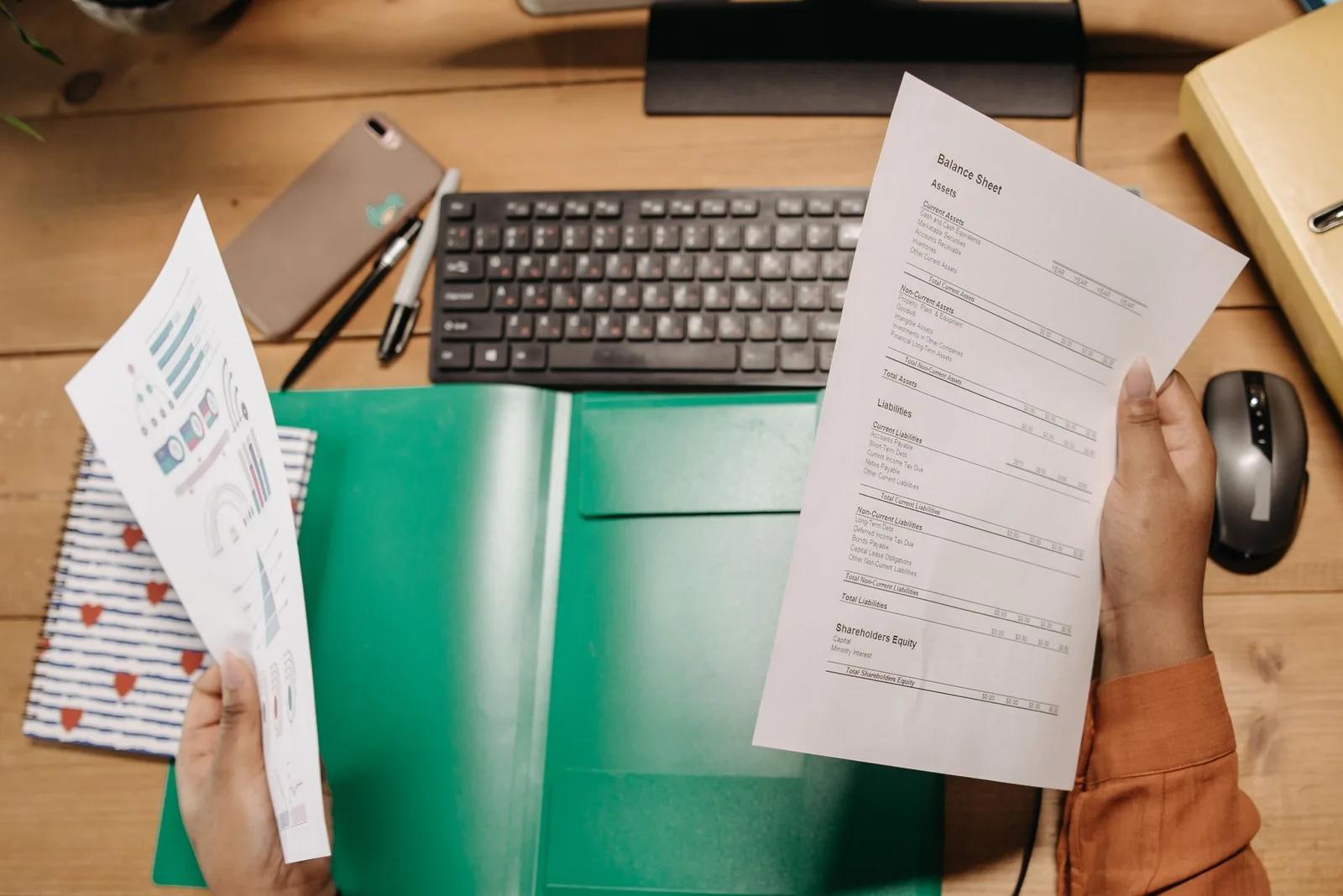

To file company accounts, send the annual accounts to Companies House and a separate Company Tax Return, including the CT600 form, to HM Revenue and Customs (HMRC). A private company's annual accounts are normally due 9 months after its financial year ends, with first accounts due 21 months after registration; the tax return is due 12 months after the accounting period ends.
Put the accounts deadline and tax deadline in separate diary entries
An Amazon seller's limited company reports to different bodies for different purposes. Companies House receives accounts for the public register. HMRC receives the return that calculates the company's taxable profit or loss and Corporation Tax bill.
| Task for a private company | Usual deadline |
|---|---|
| First accounts to Companies House | 21 months after registration |
| Subsequent annual accounts to Companies House | 9 months after the financial year ends |
| Company Tax Return to HMRC | 12 months after the accounting period ends |
| Pay Corporation Tax | Usually 9 months and 1 day after the accounting period ends |
The payment deadline normally comes before the tax return deadline. Leaving the tax calculation until the return is due can therefore leave the bill overdue. Check the period covered by each filing, particularly for a company's first accounts or after a change of year end.
Our guide to filing deadlines helps you separate the obligations. Paying Corporation Tax and submitting accounts are distinct jobs: a bank payment is not a filing receipt.
Prepare company accounts from the underlying records

Annual accounts, also called statutory accounts, summarise the financial year using the company's financial records. For an online seller, gather the sales and refund records, marketplace fee invoices, stock information, bank records and unpaid supplier bills needed to explain the year.
A marketplace payout is useful evidence of money received, but it does not explain every part of the accounts by itself. Keep the records behind the payout available so the accounts can show the sales, costs and balances they support.
Under the official annual accounts guidance, the full statutory accounts include:
- A balance sheet showing what the company owns, owes and is owed at the year end.
- A profit and loss account showing sales, running costs and the resulting profit or loss.
- Notes that explain the figures.
- A director's report, unless the company is a micro-entity.
- An auditor's report where one is required.
A director must sign the balance sheet, and the director's name must be printed on it. Accounts must follow the applicable accounting standards. The choice of filing format does not remove the need to prepare the underlying figures properly.
Copies also go to shareholders and people entitled to attend the company's general meetings. Preparing accounts for the members and deciding what may be omitted from the public filing are separate decisions.
Use the official filing guidance after the combined service closure
The former service for filing accounts and the Company Tax Return together has closed. Do not plan your filing around an old bookmark for that service. The government filing service page directs companies to replacement guidance, including approved software suppliers, other filing methods and corrections to previous returns.
You can file Companies House accounts through its online service, suitable accounting software or by sending paper accounts by post. Get the directors' approval first and check that the route accepts your accounts type. The Companies House filing service says commercial software becomes mandatory from 1 April 2028.
Use commercial software to file the Company Tax Return online with HMRC. Paper returns are allowed only if you have a reasonable excuse or are filing in Welsh. Check that the software covers the CT600, tax computation and company accounts, as explained in the replacement filing guidance. HMRC lists recognised commercial software; some products can submit both filings.
If an accountant handles both submissions, agree the scope clearly: preparation of the accounts, delivery to Companies House, preparation of the tax calculation and delivery of the return to HMRC. Ask for confirmation of each submission. The phrase 'accounts finished' leaves too much room for misunderstanding.
Small companies can limit what they put on the public register
A small company meets at least 2 of these 3 size tests in the annual accounts guidance:
| Test | Small company limit |
|---|---|
| Turnover | £15 million |
| Amount on the balance sheet | £7.5 million |
| Employees | 50 |
A qualifying small company can choose not to send its profit and loss account and director's report to Companies House. It may also use simpler, abridged accounts if every member, normally a shareholder, agrees. Abridged accounts contain a simpler balance sheet with notes, with the option to include a simpler profit and loss account and director's report.
That concession concerns the public filing. Small companies must still provide statutory accounts to their members and HMRC as part of the Company Tax Return. Do not use a reduced public version as a reason to leave the company's sales and costs unrecorded.
Micro-entities can prepare a smaller set of accounts
A micro-entity is a very small company that meets at least 2 of the following tests:
| Test | Micro-entity limit |
|---|---|
| Turnover | £1 million |
| Amount on the balance sheet | £500,000 |
| Employees | 10 |
Qualifying micro-entities can prepare simpler accounts meeting the statutory minimum and send a balance sheet with reduced information to Companies House. They can also use the exemptions available to small companies. A micro-entity does not need a director's report.
For an Etsy or Shopify seller, the useful question is which accounts regime the company qualifies for. The shop's platform does not decide that. Check the relevant size tests with the person preparing the accounts before choosing the public filing format.
A dormant company still has an accounts obligation
For Companies House, a dormant company has had no significant accounting transactions during the financial year. Certain items are excluded from that test: Companies House filing fees, late accounts penalties and money paid for shares when the company was incorporated.
Being dormant does not remove the Companies House accounts filing requirement. A qualifying company can use simpler accounts, and small dormant companies do not need an audit. Our guide to dormant company accounts explains the separate filing task.
Check the company's Corporation Tax status separately. If HMRC issues a notice requiring a Company Tax Return, its guidance says the company must file even if it made a loss or has no Corporation Tax to pay. Do not ignore a notice just because the shop has stopped taking orders.
An Amazon seller's March year end, illustrated
This is an illustration, not a real client. Assume an established private company selling on Amazon has a financial year and Corporation Tax accounting period ending on 31 March 2026. These are subsequent accounts, and the company has not changed its year end.
| Illustrative event | Date |
|---|---|
| Financial year and tax accounting period end | 31 March 2026 |
| Companies House accounts deadline, 9 months later | 31 December 2026 |
| Usual Corporation Tax payment deadline, 9 months and 1 day later | 1 January 2027 |
| Company Tax Return deadline, 12 months later | 31 March 2027 |
The seller needs the accounts ready for the December filing and the tax calculation ready for the payment deadline. The following March return deadline does not defer payment. Payment methods have their own arrival times, so arrange the money early enough to reach HMRC by the due date.
The example has no assumed sales, profit or tax rate. Its purpose is to show the order of the tasks: prepare the records, approve and file the accounts, arrange payment and complete the tax return within its own deadline.
The tax return needs a tax calculation as well as accounts
HMRC's taxable profit can differ from the profit in the annual accounts. The return works out the profit or loss for Corporation Tax and the resulting bill. Do not simply copy the accounting profit into every part of the tax calculation.
Read our CT600 return guide for the return's role, alongside HMRC's Company Tax Return instructions. A loss or no tax bill does not excuse filing where HMRC has issued a notice to deliver a return.
Correct accounts and tax returns through their own routes
If the Companies House accounts need correcting, amended accounts must cover the same period as the originals. You can submit them on paper, or through the filing software used for the original accounts if it supports corrections. The original accounts remain on the register.
Paper amended accounts must explain that they replace the originals, are now the statutory accounts and were prepared as at the original accounts date. Mark the front as amended. If changing only part, send a director-signed note explaining the change with a copy of the original accounts.
For the Company Tax Return, changes are normally allowed within 12 months of the filing deadline. HMRC lists commercial software, writing to the Corporation Tax office or sending a paper return as amendment routes. Correcting the Companies House filing does not itself amend the tax return.
Frequently asked questions
How do I file company accounts with Companies House?
File Companies House accounts through its online service, suitable software or paper post, after director approval. Check that the route accepts your accounts type. From 1 April 2028, Companies House requires commercial software. File the separate Company Tax Return online with HMRC using commercial software; paper returns are allowed only for a reasonable excuse or filing in Welsh.
When must a limited company file its first accounts?
A private company normally files its first accounts within 21 months of registration. Subsequent accounts are normally due 9 months after the financial year ends. Check the actual due date for the company, especially after changing its year end, rather than treating the first accounts timetable as an annual rule.
Can I prepare company accounts myself?
You can prepare and file the Company Tax Return yourself or use an accountant, but the accounts must still meet the relevant standards and filing requirements. For a seller, gather the records behind sales, refunds, fees and stock before starting. A director must sign the balance sheet and have their name printed on it.
Can a small company leave its profit and loss account off the public register?
A qualifying small company can choose not to send its profit and loss account and director's report to Companies House. That does not remove the obligation to prepare statutory accounts for members and HMRC. Abridged accounts are another option, but all members must agree before the company uses them.
Does a dormant company need to file accounts?
A dormant company still has to file accounts at Companies House, although simpler accounts may be available. Companies House dormancy depends on significant accounting transactions, with specific exclusions such as its filing fees. Check Corporation Tax dormancy separately and deal with any HMRC notice requiring a Company Tax Return.
Is the Corporation Tax payment due with the tax return?
Corporation Tax payment is usually due earlier than the return: 9 months and 1 day after the accounting period ends, compared with 12 months for filing the return. Work out the bill in time for payment. The later return deadline does not extend the usual payment deadline.