
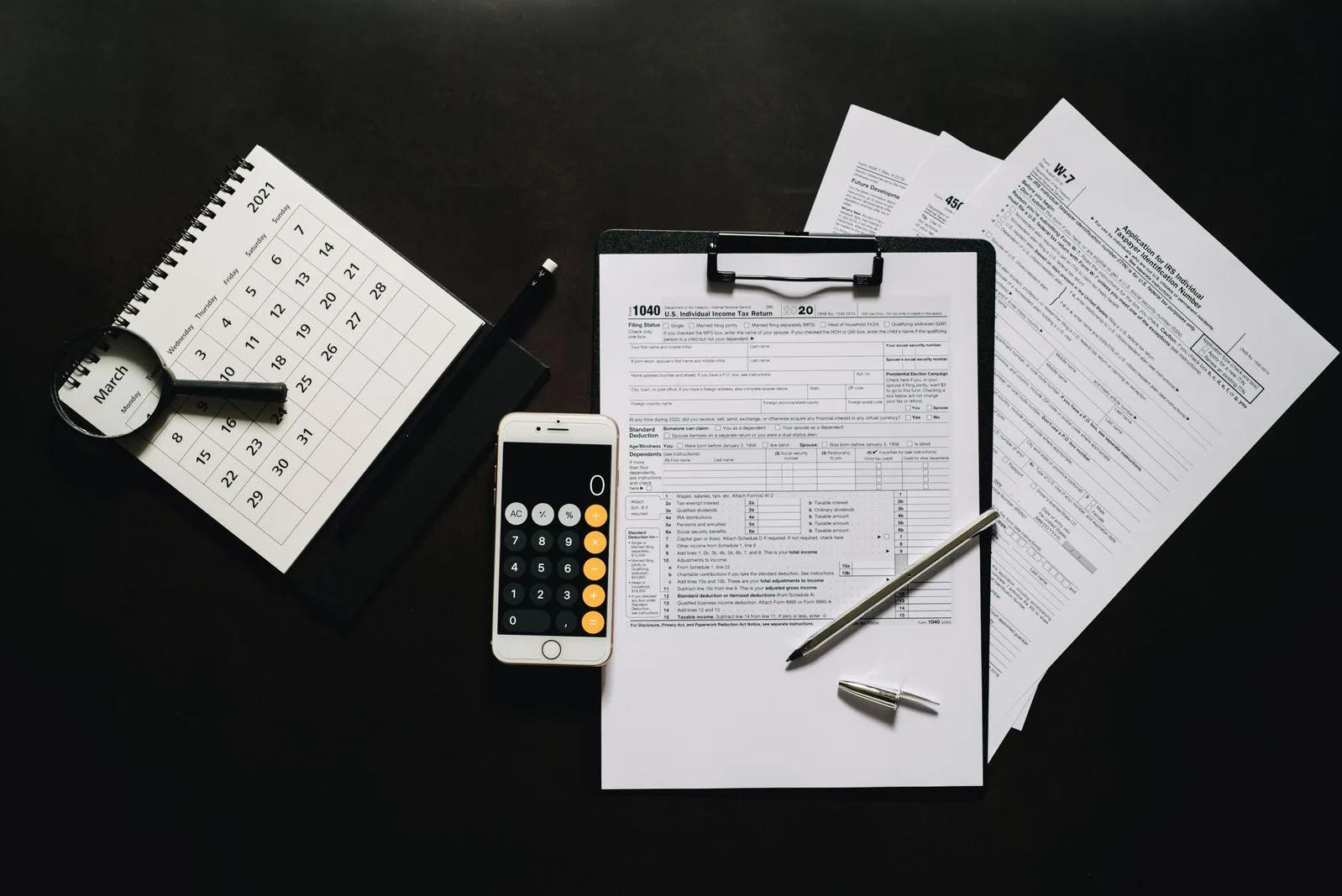
A Corporation Tax return (the CT600) is how a UK limited company reports its profit and tax to HMRC. You must file it within 12 months of your accounting period ending, but pay any tax due earlier, nine months and one day after the period ends. You file even if you made a loss.
If you run a UK limited company, you have to tell HMRC how much profit you made and how much Corporation Tax you owe. You do that with a Corporation Tax return, filed on a form called the CT600.
It catches a lot of first-time directors out. The return isn't the same as your Companies House accounts, the payment deadline comes before the filing deadline, and you still have to file even if you made a loss.
This guide walks you through who needs to file, what goes in the return, the two deadlines that matter, and how to submit everything to HMRC. It's written for company directors, whether you're filing for the first time or just want to get the basics straight.
What is a Corporation Tax return for?
A Corporation Tax return, filed on the CT600 form, is how your limited company reports its financial performance to HMRC. It tells HMRC about your company's income and spending during its accounting period so they can work out how much Corporation Tax you owe.
The CT600 is also where you claim the reliefs and allowances your company is entitled to, which can bring the bill down. Common ones include capital allowances on equipment, research and development (R&D) relief, and trading losses carried forward from earlier years.
In short, the return does four things:
- It declares your trading income, investment income, and any capital gains for the period.
- It reports the allowable business expenses that reduce your taxable profit.
- It calculates the Corporation Tax due at the right rate. For the financial years starting 1 April 2025 and 1 April 2026, that's 19% for profits up to £50,000 and 25% for profits over £250,000, with marginal relief tapering the rate in between.
- It creates an official record of your company's tax position that HMRC can review.
Even if your company made a loss or has no tax to pay, you still need to file so HMRC knows where you stand. Miss the deadline and you get an automatic penalty, whether or not any tax is owed.
If the rates and bands are what you're after, our Corporation Tax services page sets out how the calculation works in practice.
Who needs to file a Corporation Tax return?

Most UK limited companies and many unincorporated associations must file a Corporation Tax return once HMRC sends a "notice to deliver a Company Tax Return". That notice usually arrives within a few weeks of your accounting period ending, and it sets out the period the return must cover.
It typically applies to:
- Limited companies registered at Companies House, whether actively trading or newly started.
- Unincorporated associations such as clubs, societies, and community groups that have taxable income.
- UK branches of foreign companies trading through a UK permanent establishment.
Registering at Companies House usually triggers your Corporation Tax record automatically, so your first notice tends to follow soon after incorporation.
What if I don't receive a notice but think I should file?
Don't sit and wait. Contact HMRC if you believe your company should be filing but no notice has turned up. A notice that never arrives doesn't protect you from a late-filing penalty, and a missing notice usually points to an administrative slip that needs fixing rather than an exemption. If you use an accountant, flag it with them straight away so they can chase HMRC and check your records are correct.
Do I need to file a CT600 for a dormant company?
You don't need to file a Corporation Tax return for a company that's dormant for Corporation Tax purposes, but only if it stayed dormant for the whole period you'd be reporting. If it was active for any part of the year before going dormant, you still have to file for that active stretch.
How does HMRC define dormant?
HMRC's definition isn't the same as the Companies House one. For Corporation Tax, your company is generally dormant if it isn't trading and has no taxable income.
A company can be dormant at Companies House (no significant accounting transactions) yet still be active for Corporation Tax if it's receiving bank interest, rental income, or other taxable receipts. Watch that gap.
You have to tell HMRC
HMRC will keep expecting returns, and keep issuing penalties for non-submission, until you formally tell them the company is dormant. They won't work it out on their own.
You can notify them by phone, in writing, or through your accountant. Keep a note of when and how you did it, as that record protects you if a penalty is ever raised. And when the company starts trading again, you must tell HMRC within three months of becoming active.
How do I register for Corporation Tax?
Most companies are registered for Corporation Tax automatically when they form at Companies House. HMRC is notified of the incorporation and sets up your record without you doing anything.
The exception is if you registered the company as dormant from the start. In that case you must tell HMRC separately within three months of starting any business activity.
After registration, HMRC sends a letter with your company's Unique Taxpayer Reference (UTR), a 10-digit number you'll need for everything Corporation Tax related. It's separate from any personal UTR you hold for Self Assessment, so keep the two apart. The letter usually arrives within a couple of weeks of registration, though it can take longer in busy periods.
You'll need that company UTR to file the return online, set up a Business Tax Account, and pay your Corporation Tax. If it hasn't arrived within about three weeks of incorporating, contact HMRC's Corporation Tax helpline to confirm your registration and reissue the letter. You can't file without it, so chase it early.
Who is responsible for filing the return?
Company directors are legally responsible for making sure the return is filed on time and that everything in it is accurate. That responsibility stays with the directors even when an accountant prepares and files the return for them.
In practice, that means directors are on the hook to:
- Get the return filed by the deadline, which is 12 months after the end of the accounting period.
- Stand behind the accuracy of every figure, calculation, and claim in it.
- Make sure the tax is paid by the earlier deadline of nine months and one day after the period ends.
Can I delegate the work?
Yes. Most companies appoint an accountant or bookkeeper to prepare the return, which often makes sense because the computations get fiddly and the rules shift. But delegating the work doesn't delegate the responsibility. You're still accountable for it being done correctly and on time.
What happens if it's filed late or wrong?
HMRC charges an automatic penalty for late filing, and that penalty grows the longer you leave it (see the deadlines section below). If the return understates your tax, HMRC can add a further penalty based on the tax at stake. In serious cases involving deliberate errors, directors can face personal liability.
The sensible approach is to review the return before it's submitted, keep in touch with your accountant as the deadline nears, and set reminders well in advance. If you'd rather hand the whole thing over, our Corporation Tax services cover preparation and filing end to end.
What should I include in my Corporation Tax return?
A complete return is made up of a few parts that together give HMRC the full picture.
The CT600 form. The main return, where you report income, expenses, and the tax calculation. It has sections for trading profits, investment income, capital gains, and any reliefs or adjustments.
Your company accounts. You submit your full statutory accounts for the period: the profit and loss account, balance sheet, and notes. Most small companies prepare these under FRS 102, and micro-entities under FRS 105.
Tax computations. These show how you got from your accounting profit to your taxable profit, adding back non-deductible costs, deducting capital allowances, and so on. Clear computations cut down on HMRC queries.
Supplementary pages. Depending on your circumstances you may need extra pages, for things like group relief, R&D claims, or losses.
Your return must also state clearly which accounting period it covers. That's normally the 12-month period shown in your statutory accounts.
Should I include overseas profits?
If your company is UK resident, it's liable for Corporation Tax on its worldwide profits, wherever they arise. If your company is based overseas but trades through a UK branch, only the profits attributable to that UK establishment are within UK Corporation Tax.
Where you've paid tax on the same profits abroad, check whether a double taxation agreement exists between the UK and that country. These usually let you set foreign tax paid against your UK liability so you aren't taxed twice on the same income. Keep evidence of the foreign tax and claim the relief in your return.
How do I submit a Corporation Tax return online?
You file your Corporation Tax return online through HMRC, either with HMRC's own service or with commercial accounting software.
You can complete the CT600 through HMRC's free online filing service, entering your figures directly and submitting electronically. Your accounts and computations go in as part of the same filing, usually as iXBRL (inline eXtensible Business Reporting Language) files. Most accounting software generates those automatically, which keeps the process simple.
Is there Making Tax Digital for Corporation Tax?
Not at the moment. There's no Making Tax Digital regime in force for Corporation Tax, so you carry on using HMRC's online service or compatible commercial software. It's worth being clear on one point of confusion: Making Tax Digital for Income Tax starts for sole traders and landlords with qualifying income over £50,000 from 6 April 2026, but that's a separate scheme and doesn't touch limited companies filing a CT600.
Can I still file a paper return?
Paper filing is allowed only in narrow cases, for example if a disability prevents you using a computer, or for religious reasons. You can also file on paper if you want to submit your return in Welsh. Otherwise HMRC expects online filing.
What if I use an accountant?
If you use an accountant, they'll usually handle the whole filing with their professional software: preparing the accounts, completing the CT600, and submitting it all to HMRC. You're still responsible for it being filed on time, though, so keep in touch as the deadline approaches to confirm everything's on track.
What are the Corporation Tax deadlines?
There are two deadlines, and they're not the same. This is the bit that trips people up.
Filing deadline. You must file the CT600 within 12 months of the end of the accounting period it covers. For example, if your period ends on 31 March 2025, your return is due by 31 March 2026. This applies even if you made a loss or owe nothing.
Payment deadline. Any Corporation Tax you owe is due nine months and one day after the end of the accounting period. Using the same example, a period ending 31 March 2025 means payment must reach HMRC by 1 January 2026.
Yes, that means you pay the tax roughly three months before the return explaining it is even due. It feels back to front, but that's how the system runs. In practice, most companies finalise and file the return around the same time they pay, comfortably inside the payment window.
Why are the deadlines different?
HMRC wants the tax in reasonably soon after the profits are earned, so payment can't wait the full 12 months. The longer filing window simply gives you time to finalise the accounts and the detailed return.
What happens if I miss a deadline?
For late filing, HMRC applies automatic penalties: £200 as soon as the return is a day late, and another £200 once it's three months late. If it's six months late, HMRC estimates your bill (a "tax determination") and adds a penalty of 10% of the unpaid tax, with a further 10% if you're 12 months late. File late three times in a row and those £200 penalties rise to £1,000 each.
Miss the payment deadline and HMRC charges interest on the unpaid tax from the due date until you pay.
The Companies House deadline is separate
Your statutory accounts also go to Companies House, but on a different deadline, normally nine months after the period end for a private company. Don't confuse the Corporation Tax filing deadline with the Companies House accounts deadline. They're separate obligations to different bodies.
Is a Company Tax Return the same as filing accounts?
No. These are two separate legal requirements, filed with different bodies, for different purposes.
| Company Tax Return (CT600) | Company accounts | |
|---|---|---|
| Filed with | HMRC | Companies House |
| Purpose | Calculate and collect Corporation Tax | Show your financial position publicly |
| Contents | CT600 form, accounts, tax computations, any supplementary pages | Statutory accounts (P&L, balance sheet, notes, directors' report) |
| Public? | No, only HMRC sees it | Yes, on the public register |
| Deadline | 12 months after period end | Normally 9 months after period end (private company) |
Why the confusion?
Both submissions include your company's accounts, so people assume they're the same filing. But the return to HMRC goes much further, with the tax computations and adjustments that Companies House neither needs nor wants.
Can I file both at once?
There's no single filing that satisfies both. That said, most accounting software and accountants prepare both submissions from the same underlying accounts at the same time, which keeps the figures consistent. You still submit them separately through each body's system.
Want a hand with your CT600?
Getting your Corporation Tax return right, claiming every relief you're due, and hitting both deadlines is exactly what we do. Book a free 20-minute call with a Zmartly accountant and we'll talk through your company's filing. Get in touch with Zmartly.
FAQs
What is the CT600 form?
The CT600 is the official HMRC form for filing your Corporation Tax return. It's where you report your company's taxable profits, claim reliefs, and calculate the Corporation Tax due. You submit it together with your accounts and tax computations to complete the return.
Do I need to file a Corporation Tax return if my company made a loss?
Yes. You must still file even if you made a loss or owe no tax. HMRC needs to know your position, and reporting a loss can let you carry it forward to reduce tax in profitable years. Not filing simply because you made a loss still triggers penalties.
What happens if I file my Corporation Tax return late?
HMRC charges an automatic £200 penalty as soon as the return is a day late, and a further £200 once it's three months late. At six months late HMRC estimates your bill and adds 10% of the unpaid tax, with another 10% at 12 months. If you file late three times in a row, the £200 penalties rise to £1,000 each.
Can I amend my Corporation Tax return after filing?
Yes. You can normally amend the return within 12 months of the filing deadline if you spot an error. You file an amended CT600 through HMRC. If the change increases your tax, you pay the extra plus any interest; if it reduces your tax, HMRC reviews the amendment before processing a refund.
What is the Corporation Tax rate for 2025/26?
For the financial year starting 1 April 2025, the small profits rate is 19% for profits up to £50,000 and the main rate is 25% for profits over £250,000. Companies with profits between £50,000 and £250,000 pay the main rate but can claim marginal relief, giving an effective rate between 19% and 25%.
Can I pay my Corporation Tax in instalments?
Companies with annual taxable profits over £1.5 million generally pay Corporation Tax in quarterly instalments. Smaller companies pay in one go by the deadline of nine months and one day after the period ends. If you're struggling to pay, contact HMRC's Business Payment Support Service about a Time to Pay arrangement.
What's the difference between my company UTR and my personal UTR?
Your personal UTR relates to your own Self Assessment, while your company UTR relates to your limited company's Corporation Tax. They're separate 10-digit numbers. Always use the right one for each type of tax to avoid processing delays.