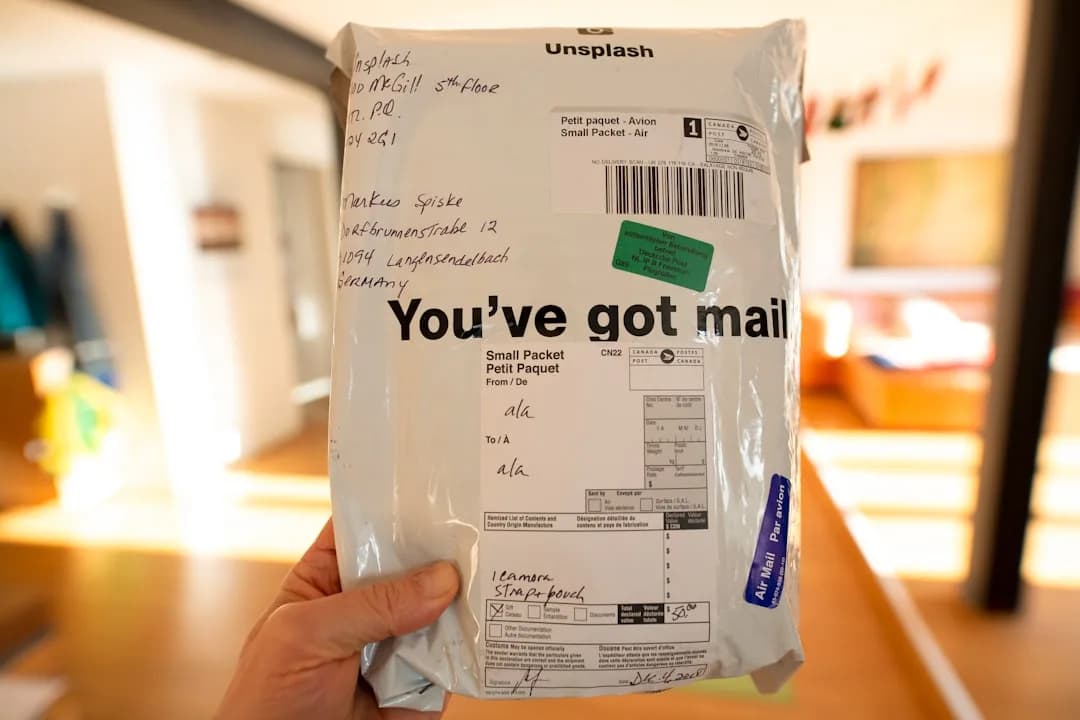

If you sell online and ship to customers in the European Union, the rules changed on 1 July 2026. The EU removed its long-standing customs duty exemption on low value parcels and replaced it with a temporary flat €3 customs duty per item on goods worth up to €150 sent from outside the EU. Since Brexit, UK sellers count as non-EU sellers, so this is a direct new cost on exactly the small, low value orders that make up most cross-border ecommerce.
This is the first step of a much larger EU Customs Reform that lands in full from 2028. This guide explains what has changed, what the €3 duty costs in practice with a worked example, what is confirmed versus still being finalised (including a proposed per-parcel handling fee), who is affected, and the practical steps to protect your margins now. The figures here come from the European Commission's own announcement.
What changed for low value parcels on 1 July 2026?
On 1 July 2026 the EU abolished its €150 customs duty relief for parcels imported from outside the EU and replaced it with a temporary flat €3 customs duty per item. The charge applies mainly to business-to-consumer ecommerce goods and runs as a bridge until the wider customs reform takes full effect in 2028.
Before July 2026, a consignment with an intrinsic value of €150 or less entered the EU free of customs duty. That exemption is what the reform removes, under Commission Delegated Regulation (EU) 2026/1022. It is worth separating the two charges that people confuse, because only one of them is new:
- Customs duty: previously not charged on consignments of €150 or less. From 1 July 2026 a flat €3 per item applies. This is the new cost.
- Import VAT: already due on parcels of any value since the EU scrapped its separate €22 VAT exemption in July 2021. This is unchanged.
For consignments worth more than €150, standard customs duty and import VAT already applied at the border, and that does not change. If you also import stock into the UK, the mirror-image change on this side of the Channel is covered in our guide to the end of the £135 UK import duty relief.
How is the €3 EU parcel duty calculated?
The €3 duty is charged per item category by tariff classification, not per unit and not per parcel. Several identical goods count as one item, so five T-shirts attract a single €3 charge, but a parcel holding three T-shirts and a watch attracts €6 because it contains two different item types. The duty is temporary and is expected to run until the full customs reform applies in 2028.
The European Commission gives its own worked example: five T-shirts in one parcel incur €3, while three T-shirts plus a watch incur €6. The charge sits on top of any import VAT, and the seller, the marketplace, or the carrier declaring the goods is responsible for paying it as part of the customs process. To see how customs duty and import VAT interact on imported goods more generally, read our explainer on customs duty versus import VAT.
Current rules versus the new rules at a glance
The core change is narrow but it bites on cheap, high-volume orders: the customs duty exemption disappears, while import VAT stays the same. The table below sets out what applies to a low value parcel sent into the EU before and after 1 July 2026.
| Feature | Before 1 July 2026 | From 1 July 2026 |
|---|---|---|
| Customs duty on goods worth €150 or less | None, the relief applied | Flat €3 per item category |
| How the duty is worked out | Not applicable | Per item type by tariff classification, not per unit |
| Import VAT | Applies (no VAT exemption since July 2021) | Still applies, unchanged |
| IOSS for VAT on goods up to €150 | Available | Still available, VAT only |
| Low value B2B imports | Duty relief applied | Outside the €3 charge, but standard tariffs now apply |
Does VAT still apply, and what about IOSS?
Yes, VAT is unchanged by this reform. The EU scrapped its separate €22 VAT exemption back in July 2021, so import VAT already applies to parcels of any value. The new €3 charge is customs duty on top of VAT, and the Import One-Stop Shop (IOSS) still handles the VAT on consignments worth up to €150.
In practice, if you use IOSS to collect EU VAT at checkout, you keep doing that, and the €3 duty is a separate line in your landed cost. If you are still mapping out how EU VAT works for a UK online business, our UK ecommerce EU VAT guide (OSS and IOSS) walks through registration and the schemes in full.
Is there an EU handling fee, and what else is still coming?
Beyond the €3 duty, the EU plans a per-parcel handling fee and tougher customs data rules as part of its 2028 Customs Reform. Reports point to a fee of roughly €2 per item and new mandatory product identifiers phasing in from late 2026, but the exact amounts and dates are still being finalised in EU law, so treat any single figure as provisional.
Two things are worth watching rather than banking on. First, several member states already charge their own national handling fees on low value parcels, with France reported to have introduced one in 2026 and Italy a €2 fee, so the real cost can already be higher than €3 depending on the destination. Second, the full EU Customs Reform, built around a new EU Customs Authority and a central EU Customs Data Hub, is due to apply from 2028, at which point the €150 duty threshold is set to disappear permanently and the temporary €3 charge gives way to normal tariffs. Confirm the position for your destination country before you reprice.
Who does this change affect?
The change affects anyone outside the EU sending low value goods to EU consumers. That includes UK online retailers shipping direct to EU customers, dropshippers whose supplier posts items straight to an EU buyer, and Amazon, Shopify or TikTok Shop sellers fulfilling EU orders from Great Britain. Consumers may also see higher checkout prices where the seller passes the duty on.
How exposed you are depends on how much of your EU order volume is low value and shipped from outside the EU. Our guides to dropshipping tax in the UK and Shopify dropshipping, import VAT and EORI cover how these supply chains are taxed, which is the starting point for working out your new landed cost.
How much could the €3 duty add to your costs?
The extra cost is a flat €3 per item type, so it hurts most on cheap, single-line, high-volume orders where €3 is a large share of the order value. Unlike a percentage duty, the flat charge does not scale down for low priced goods, which is the opposite of how duty has historically worked on small parcels.
Here is a worked example. Say you sell a phone accessory for €18 to an EU customer and post it directly from the UK:
- Before 1 July 2026: customs duty €0, because the €150 relief applied. VAT charged as normal.
- From 1 July 2026: customs duty €3 per item, so about 16.7% of the order value added as duty. VAT still charged as normal.
If that same customer buys the accessory plus a separate cable in one parcel, that is two different item types, so the duty is €6, not €3. On thin ecommerce margins a flat €3 to €6 per order can wipe out the profit on a budget product unless you re-price, bundle identical items, or rethink whether to hold stock inside the EU. Model the effect on your own numbers with our ecommerce tax calculator before changing your prices.
How should sellers prepare now?
The duty is already live, so this is about protecting margin rather than waiting. Start by identifying which of your EU orders are low value and shipped from outside the EU, then rebuild the landed cost of each so nothing is priced on the old duty-free assumption. Small, calm changes now beat a scramble when the handling fee and data rules land.
- Map your EU order flow: value bands, destination countries, and whether goods ship from GB or from EU stock.
- Add the flat €3 per item type to the landed cost of affected orders, then review pricing and shipping terms.
- Check whether bundling identical items, raising free-shipping thresholds, or holding stock in the EU reduces the hit.
- Keep your IOSS VAT process in order, and make sure checkout prices reflect duty and VAT for EU buyers.
- Watch for the confirmed amount and date of the per-parcel handling fee and the new product-identifier data rules.
Should you ship DDP or DAP to EU customers?
The €3 duty makes delivery terms matter more. On Delivered Duty Paid (DDP) terms you collect the duty and VAT at checkout and the parcel arrives with nothing to pay, which protects the customer experience but means you carry the cost in your pricing. On Delivered At Place (DAP) terms the customer can be billed on delivery, which risks refused parcels and chargebacks on cheap orders. For low value ecommerce, DDP with duty and VAT built into the price is usually the cleaner option.
Get your EU shipping costs reviewed
If you ship to EU customers, it is worth pressure-testing your margins against the €3 duty now rather than discovering it in a quarter of thin orders. Zmartly is a CIMA-regulated firm, and our qualified accountants (ACMA, CGMA, ACCA, FCCA) work with online sellers on VAT, import costs and pricing every week through our accounting service for ecommerce sellers. Book a free call with Zmartly and we will map your exposure and the steps to protect your profit.
Frequently asked questions
When did the EU €3 parcel duty start?
The EU €3 parcel duty started on 1 July 2026. From that date the EU removed its €150 customs duty exemption for parcels imported from outside the EU and replaced it with a temporary flat €3 customs duty per item category, under Commission Delegated Regulation (EU) 2026/1022. It is a bridging measure until the wider EU Customs Reform applies in 2028.
Do UK sellers have to pay the EU €3 customs duty?
UK sellers shipping goods worth €150 or less directly to EU consumers are within scope, because since Brexit the UK is a non-EU country. The duty is declared and paid as part of the EU customs process by the seller, the online marketplace, or the carrier, depending on your shipping setup. In practice the cost usually lands with the seller unless it is passed on to the customer at checkout.
Does the €3 duty replace VAT on EU parcels?
No. The €3 charge is customs duty and sits on top of import VAT. The EU removed its separate €22 VAT exemption back in July 2021, so VAT already applies to parcels of any value. The Import One-Stop Shop (IOSS) still handles VAT on consignments up to €150, and the €3 duty is a separate line in your landed cost.
Is there an EU parcel handling fee in November 2026?
A per-parcel handling fee is proposed as part of the EU Customs Reform, with reports pointing to around €2 per item, but the exact amount and start date are still being finalised in EU law and should not be treated as fixed. Some member states already charge their own national handling fees, so check the position for each destination country before you reprice.
Sources
- European Commission: €3 customs duty for low-value parcels
- GOV.UK: Government backs high street with acceleration of cheap import reforms
- GOV.UK: Trade Tariff, look up commodity codes and duty rates
- GOV.UK: Tax and customs on goods sent from abroad
- GOV.UK: VAT and overseas goods sold directly to customers in the UK