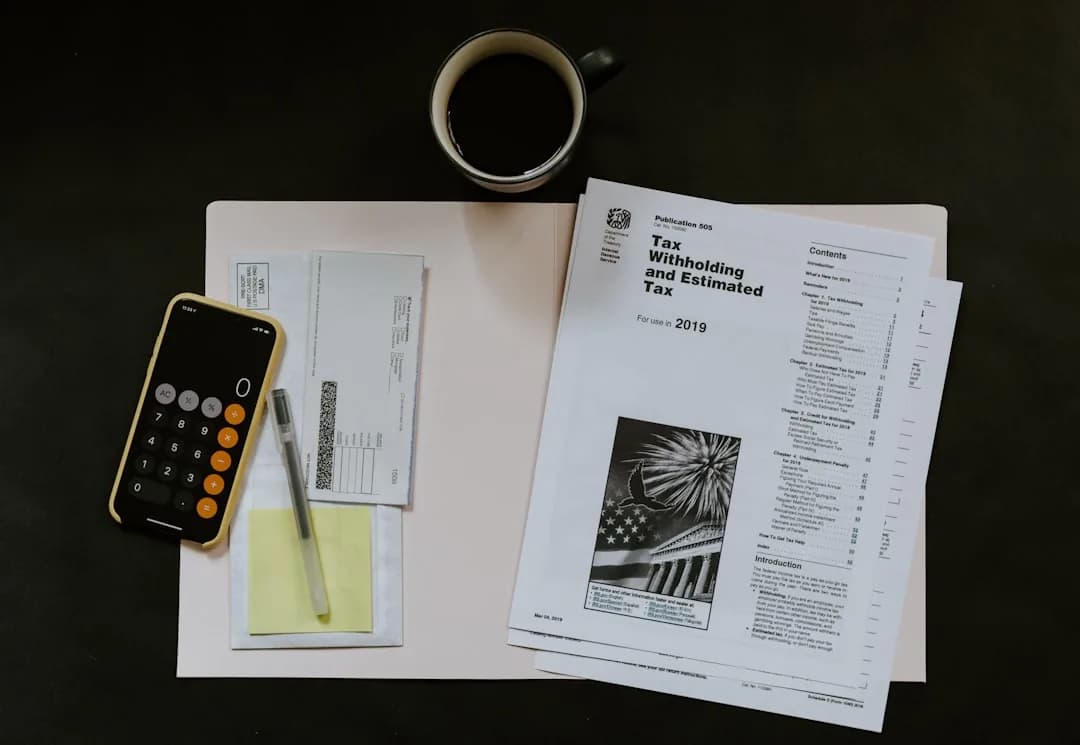

If you run your construction business through a limited company and your contractors deduct 20% under the Construction Industry Scheme (CIS) before they pay you, that money is not gone. It is tax paid in advance, and you can get the excess back.
Here is the part that trips up most company directors. A limited company does not claim a CIS refund on a Self Assessment tax return. That is how sole traders and partners do it. Your company reclaims its CIS deductions through payroll, by reporting them on your monthly Employer Payment Summary (EPS) and setting them off against the PAYE, National Insurance and CIS you owe HMRC.
This guide explains exactly how that works, what happens to any excess at the end of the tax year, and how to claim a straight refund for 2026/27. It is written for limited company subcontractors. If you want this run for you each month, that is what we do for CIS contractors.
A quick answer: how does a limited company get its CIS deductions back?
Your company reports the CIS deductions taken from its income on each monthly (or quarterly) EPS. HMRC offsets those deductions against the PAYE, NIC, student loan and CIS amounts your company owes that period, so you pay HMRC less. If your CIS deductions are bigger than what you owe, you carry the excess forward to later months in the same tax year. Whatever is still left over after the tax year ends can be refunded to you or set against your Corporation Tax bill.
Why a limited company cannot use Self Assessment for CIS
When a contractor pays a registered subcontractor, they deduct 20% from the labour element and hand it to HMRC. If the subcontractor is not registered for CIS, the rate jumps to 30%. A subcontractor with gross payment status has nothing deducted at all.
For an individual or a partnership, those deductions are credited on the Self Assessment return. The deductions count towards the person's Income Tax and Class 4 National Insurance for the year, and any surplus is repaid. If you trade as a sole trader rather than a company, our guide to claiming a CIS tax refund walks through that route instead.
A limited company works differently. HMRC's CIS guidance on claiming back deductions as a limited company subcontractor is explicit that the company set-off route "is not available to individuals or partners in a partnership." Your company is its own legal person and an employer in HMRC's eyes, so its CIS deductions flow through the PAYE system, not through anyone's Self Assessment. The director's personal tax return has nothing to do with it.
This is the single most common mistake we see. A director tries to reclaim the company's CIS on their own SA100, or waits for a Corporation Tax repayment that never automatically arrives, while thousands of pounds of deductions sit unclaimed in the company's PAYE account.
How the EPS set-off works month by month
Every month, your company already files payroll information with HMRC. Two submissions matter here:
- The Full Payment Submission (FPS), which reports what you paid your employees.
- The Employer Payment Summary (EPS), which reports adjustments, including the CIS deductions taken from your company's income.
You enter the CIS deductions suffered as a subcontractor on the EPS. HMRC then sets those deductions off against the amounts your company owes for that tax month or quarter, in particular:
- PAYE tax due from your employees.
- Employer and employee National Insurance contributions.
- Student loan repayments due from your employees.
- CIS deductions you have made from your own subcontractors.
So if your company suffered £1,200 of CIS deductions in a month and owed £1,500 of PAYE and NIC, you report the £1,200 on the EPS and pay HMRC only £300. The CIS deductions have done their job: they have settled most of your employer bill.
If in any month your CIS deductions are larger than everything you owe, HMRC's instruction is clear. The company "should set off the excess against future payments in the same tax year." You carry the surplus forward and use it against next month's PAYE and CIS liabilities. You do not get an in-year cash refund (the only exception is a company in liquidation or administration).
To use this route, you must have a PAYE scheme and file the EPS. A company with no employees still needs a live PAYE scheme to report CIS deductions and recover them, which catches out single-director companies that never set payroll up.
What happens to excess CIS deductions at year end?
Some companies suffer far more CIS than they ever owe in PAYE, because they have few or no employees but lots of deducted income. In that case the deductions pile up across the year and there is nothing left to absorb them by 5 April.
That surplus is not lost. Once the tax year ends, and once your company has filed its final FPS and final EPS for the year, HMRC's guidance is that "any excess CIS deductions that cannot be set off may be refunded or set against Corporation Tax due." You choose. Either:
- HMRC repays the surplus to your company's bank account, or
- HMRC sets it against your Corporation Tax (or another liability such as VAT or PAYE) if you tell them to.
The key conditions are that the tax year has actually ended and that all your relevant PAYE, CIS and Corporation Tax returns are in. HMRC will not process a clean repayment while returns are outstanding, because it cannot see your full position.
How to claim the CIS refund after 5 April
You do not have to wait until the surplus has built up all year to think about this, but the formal refund claim happens after the tax year closes. The process for 2025/26, claimed from April 2026 onwards, looks like this.
1. Finish the payroll year. Submit your final FPS and final EPS for the tax year. Do not rush the final EPS in before 5 April, because HMRC warns that if you submit too early "your records may not show all deductions for the previous tax year," which causes delays or an incorrect payment. Let the year close, then claim.
2. Get your returns up to date. Your PAYE, CIS and Corporation Tax returns all need to be submitted, because HMRC checks them before repaying.
3. Make the claim. You ask HMRC in writing or online, quoting your company name, PAYE reference, and your Corporation Tax unique taxpayer reference if you want the money set against Corporation Tax. You tell HMRC whether you want a bank repayment or a set-off, and against which tax. Note that HMRC currently asks for current-year claims to be made by post, marked 'CIS', to PT Operations North East England, HM Revenue and Customs, BX9 1BX, with the supporting detail attached. Earlier years can be dealt with online.
4. Keep your CIS deduction statements. Each contractor must give you a monthly CIS payment and deduction statement. These are your evidence that the deductions were made. Keep them, because they have to reconcile to what you have reported on your EPS.
If a claim turns out to be too low once more statements come in, you can submit a revised claim for the full corrected figure.
Illustrative example: a roofing company's CIS year
Illustrative example. Imagine Lewis runs a roofing company, a limited company with himself as the only employee on a small salary. For 2026/27 his contractors deduct CIS from his labour invoices at the standard 20% registered rate. Over the year his company suffers £9,000 of CIS deductions.
His company's own PAYE and NIC bill for the year, on his modest director's salary, comes to about £1,000. He has no subcontractors of his own, so no CIS to pass on.
Here is how the recovery plays out:
| Item | Amount |
|---|---|
| CIS deductions suffered during the year | £9,000 |
| Company PAYE and NIC owed for the year | £1,000 |
| Set off against PAYE and NIC via the EPS | £1,000 |
| Excess CIS still unclaimed at 5 April | £8,000 |
Across the year, Lewis reports the CIS deductions on each EPS, which wipes out his £1,000 PAYE and NIC bill. That leaves £8,000 of deductions with nothing to set against.
After 5 April, once his final EPS and his company returns are filed, he claims the £8,000. He chooses to have HMRC set it against his company's Corporation Tax bill, which reduces what he has to pay at his next Corporation Tax due date. If his Corporation Tax bill were smaller than £8,000, he could take the balance as a cash repayment instead.
These figures are illustrative. Your own position depends on your deductions, your payroll and your Corporation Tax bill.
Gross payment status and the 2026 CIS changes
If your company is repeatedly sitting on big CIS refunds, it is worth asking whether you should hold gross payment status (GPS) instead. With GPS your contractors pay you in full with no deduction, so you manage the tax yourself rather than lending it to HMRC all year. You pay your Corporation Tax and PAYE in the normal way.
GPS is not automatic. Your company has to pass HMRC's compliance test and the CIS gross payment status turnover test, which since 6 April 2024 includes your VAT obligations alongside PAYE, CIS and Corporation Tax filing and payment. HMRC can also cancel gross payment status immediately where it has reasonable grounds to suspect fraud across VAT, PAYE, Income Tax Self Assessment or Corporation Tax.
A further tightening applies from 6 April 2026, part of the wider CIS changes from April 2026. Where gross payment status is cancelled and the behaviour that led to the cancellation arose on or after 6 April 2026, the company cannot reapply for GPS for five years, rather than the previous one year. The message is consistent: keep every tax return and payment up to date, because slipping behind now risks your gross status for far longer.
Whether you stay on net status and reclaim through the EPS, or move to gross and self-manage, the right answer depends on your cash flow and how clean your compliance record is. We help construction businesses weigh that up and keep the GPS test satisfied. If you run a single trade such as plumbing, our tax guide for plumbers covers the wider picture alongside CIS.
Want your CIS deductions reclaimed properly every month instead of left in your PAYE account? Book a free call with a Zmartly accountant and we will get your EPS set-off and year-end refund sorted.
Frequently asked questions
Does a limited company claim a CIS refund on Self Assessment?
No. Self Assessment is how sole traders and partners reclaim CIS. A limited company recovers its deductions through payroll, by reporting them on the monthly Employer Payment Summary and setting them off against the PAYE, NIC and CIS it owes, with any surplus refunded or set against Corporation Tax after the tax year ends.
What is the EPS and why does it matter for CIS?
The Employer Payment Summary is a payroll submission your company sends HMRC each month. It is where you report the CIS deductions taken from your company's income as a subcontractor. HMRC offsets those reported deductions against your employer liabilities, which is how a limited company gets its CIS back.
Can I get a CIS refund during the tax year?
Generally no. Within the year you can only set CIS deductions off against amounts you owe, carrying any excess forward to later months. A cash repayment or set-off against other taxes is only made after the tax year ends and your final returns are filed. The one exception is a company in liquidation or administration.
When can I claim my company's CIS refund?
After 5 April, once you have filed your final Full Payment Submission and final Employer Payment Summary for the year and your PAYE, CIS and Corporation Tax returns are up to date. Do not file the final EPS too early, or HMRC's records may not show all your deductions and the claim can be delayed or paid incorrectly.
What deduction rate will contractors apply to my company?
If your company is registered for CIS, contractors deduct 20% from the labour element of your payments. If you are not registered, the rate is 30%. If your company holds gross payment status, contractors pay you in full with no deduction.
Can the refund be set against my Corporation Tax instead of repaid?
Yes. When you claim, you can ask HMRC to set the excess CIS deductions against your Corporation Tax (quoting your Corporation Tax unique taxpayer reference), or against another liability such as VAT or PAYE, rather than receiving a bank repayment.