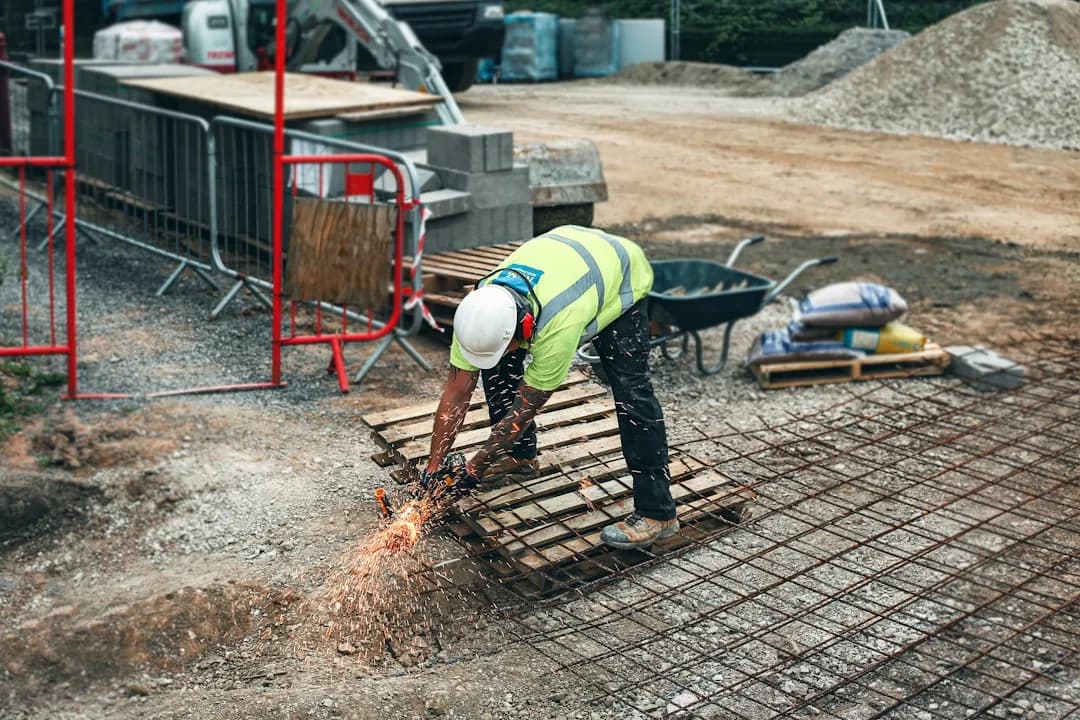
If you are a construction subcontractor, gross payment status (GPS) is the difference between being paid in full and watching 20% of every invoice disappear to HMRC before it reaches you. Get it, and contractors pay you gross. You then settle your own tax through Self Assessment or Corporation Tax instead of having it deducted at source.
To get GPS, your business has to pass three tests. The one that trips most subcontractors up is the turnover test: you have to prove your construction turnover is high enough.
This guide explains exactly how the turnover test works, the thresholds for sole traders, partnerships and companies, and how the test sits alongside the business test and the compliance test. It also covers the April 2026 changes that make GPS harder to keep once you have it.
It is written for subcontractors and labour-only firms across the trades. If you would rather we handled the application and the ongoing compliance for you, that is what we do for CIS contractors and subcontractors.
What is CIS gross payment status?
Under the Construction Industry Scheme (CIS), contractors deduct money from a subcontractor's payments and pass it to HMRC as an advance towards that subcontractor's tax and National Insurance.
The deduction depends on your status:
| Subcontractor status | CIS deduction from labour |
|---|---|
| Registered for CIS | 20% |
| Not registered for CIS | 30% |
| Gross payment status | 0% (paid in full) |
With gross payment status, no deduction is taken. You receive the full invoice value and account for the tax yourself later. For a busy subcontractor, that is a significant cash-flow advantage: you are not lending HMRC 20% of your turnover throughout the year and waiting to reclaim any overpayment. (If you have come to the UK to work in construction, how much UK tax you ultimately owe also depends on your residence status, which our explainer on the UK Statutory Residence Test walks through.)
The trade-off is responsibility. HMRC only hands GPS to businesses it trusts to pay their own tax on time, which is why the qualifying tests exist.
What are the three tests for gross payment status?

To get GPS, you have to show HMRC three things:
- The business test. Your business does construction work (or provides labour for it) in the UK, and it is run through a bank account.
- The turnover test. Your construction turnover, excluding VAT and the cost of materials, is at least the relevant threshold.
- The compliance test. You have paid your tax and National Insurance on time, and filed your returns, in the past.
You have to pass all three. The turnover test is the gate most subcontractors focus on, because it is the one with hard numbers attached, so the rest of this guide drills into it before returning to the compliance side, which is where the April 2026 changes bite.
How does the CIS turnover test work?
The turnover test looks at your net construction turnover over the 12 months before you apply. "Net" here means your turnover from construction work after you strip out VAT and the cost of materials. It is the labour element HMRC cares about.
There are two ways to pass, depending on your structure.
The standard threshold (per person):
| Business structure | Turnover needed (excluding VAT and materials) |
|---|---|
| Sole trader | At least £30,000 |
| Partnership | At least £30,000 for each partner |
| Limited company | At least £30,000 for each director |
So a two-partner partnership normally needs at least £60,000 of net construction turnover, and a three-director company normally needs at least £90,000.
The alternative threshold (whole business):
If you cannot meet the per-person figure, a partnership or company can instead qualify on a single combined figure:
| Business structure | Alternative turnover threshold |
|---|---|
| Partnership (whole partnership) | At least £100,000 |
| Limited company (whole company) | At least £100,000 |
This alternative is what saves larger firms where one or two partners or directors do most of the invoicing. A company with five directors would need £150,000 under the per-director rule, but it can fall back on the £100,000 whole-company test instead.
These thresholds are set in legislation and have not changed for the 2026/27 tax year (see gov.uk, apply for gross payment status). They are checked against your actual records, so the figures in your accounts and CIS statements need to support whatever you put on the application.
What counts towards the turnover figure?
This is where applications fail on a technicality, so it is worth being precise.
The turnover test counts your relevant payments for construction work, excluding:
- VAT. Use the net-of-VAT figure, not your gross invoiced total.
- The cost of materials. Only the labour element of your construction income counts. If you invoice £80,000 but £35,000 of that was materials, your turnover for the test is £45,000.
That materials exclusion is the single biggest reason a subcontractor who "turns over plenty" still fails. A groundworker or a roofer buying a lot of their own materials can have healthy invoices but a thin labour figure once materials come out.
In practice, the mistake we see most often is a sole trader assuming their VAT-inclusive, materials-included sales total clears £30,000 comfortably, then discovering the labour-only figure sits just under. Clean bookkeeping that separates labour from materials on every job is what makes the test easy to evidence, and it is part of what we set up for CIS subcontractor clients.
Illustrative example: working out the turnover test
Illustrative example. Imagine Tomasz runs a groundworks business as a sole trader and wants to apply for gross payment status in the 2026/27 tax year. Over the previous 12 months his construction invoices look like this:
| Item | Amount |
|---|---|
| Total construction invoices (excluding VAT) | £72,000 |
| Less: cost of materials he supplied | £40,000 |
| Net construction turnover for the turnover test | £32,000 |
Tomasz invoiced £72,000 net of VAT, which sounds comfortably over the line. But once the £40,000 of materials he bought and supplied is stripped out, his labour turnover for the test is £32,000.
That clears the £30,000 sole-trader threshold, but only by £2,000. If he had supplied just £2,500 more in materials, his net figure would have dropped to £29,500 and he would have failed.
The lesson is that the test turns on the labour figure, not the headline sales. These figures are illustrative; your own position depends on your actual invoicing, your structure and how much of your work is materials.
How do the April 2026 changes affect gross payment status?
Passing the turnover test gets you GPS. Keeping it is a separate, ongoing job, and the rules here have tightened.
First, a change that is already in force. Since 6 April 2024, compliance with VAT obligations forms part of the statutory compliance test. That means your VAT returns and VAT payments, alongside your CIS, PAYE, Income Tax and Corporation Tax obligations, are now part of what HMRC checks before granting GPS and at every review afterwards. Minor VAT slips are subject to the usual tolerances, but persistent VAT lateness can now cost you gross payment status.
Then the April 2026 package, which we cover in full in our guide to the CIS changes from April 2026. HMRC's "Simplification and administrative improvements to the Construction Industry Scheme" introduces three changes from 6 April 2026:
- A longer re-application bar. Where the behaviour that leads to your gross payment status being cancelled arises on or after 6 April 2026, you cannot re-apply for GPS for five years from the date of cancellation. (Cancellations driven by earlier behaviour keep the previous, shorter bar.)
- Nil returns become mandatory again. A contractor who pays no subcontractors in a period must now either file a nil return or notify HMRC that none will be paid. If they do neither, a penalty can follow unless they have a reasonable excuse.
- Payments to public bodies leave CIS. Payments to local authorities and other public bodies now fall outside the scope of CIS, putting the old Extra-Statutory Concession onto a statutory footing.
The five-year bar is the one that bites subcontractors directly. Losing gross payment status was already painful for cash flow; from April 2026, getting it back can take five years rather than the shorter wait that applied before. That raises the stakes for keeping your own house in order, because the behaviour that triggers a cancellation is judged on what happens from 6 April 2026 onwards.
The practical takeaway: GPS is no longer a "set and forget" status. File and pay everything on time, including VAT, and keep clean records of your supply chain.
How do you apply and keep gross payment status?
You apply for gross payment status as part of registering for CIS as a subcontractor, or you can apply later once your turnover supports it. You apply to HMRC and provide the evidence that backs the three tests.
Once you have GPS, HMRC reviews it regularly to confirm you still meet the conditions. If you fall behind on returns or payments across CIS, PAYE, Self Assessment, Corporation Tax or now VAT, HMRC can remove your status and put you back on 20% deductions. Losing GPS hits cash flow immediately, because contractors must start deducting again straight away.
If your status is refused or cancelled, you have a right to appeal, but prevention is far cheaper than appeal. The reliable way to hold on to GPS is simple in principle and easy to slip on in practice: file on time, pay on time, every tax, every period.
That ongoing discipline, the CIS returns, the VAT, the year-end accounts, is exactly what we keep on track for subcontractors so a missed deadline never quietly costs them their gross status. If you want your application built properly and your compliance watched all year, book a free call with a Zmartly accountant and we will review where you stand.
Frequently asked questions
What is the turnover threshold for CIS gross payment status?
For 2026/27 you need net construction turnover, excluding VAT and the cost of materials, of at least £30,000 if you are a sole trader, £30,000 for each partner in a partnership, or £30,000 for each director in a company. A partnership or company can instead qualify on a whole-business turnover of at least £100,000.
Does the turnover test include materials?
No. The turnover test only counts the labour element of your construction income. You exclude VAT and the cost of any materials you supply. This is why a subcontractor with high invoices can still fail the test once materials are stripped out.
How many directors do I need to meet the £100,000 turnover test?
The £100,000 figure is an alternative whole-company threshold, so the number of directors does not matter for it. Under the standard per-director rule you would need £30,000 for each director, so a company with four or more directors will usually rely on the £100,000 whole-company test instead.
Can HMRC take away my gross payment status?
Yes. HMRC reviews gross payment status regularly and can remove it if you fall behind on filing or paying your CIS, PAYE, Self Assessment, Corporation Tax or VAT obligations. From 6 April 2026, where the behaviour that leads to cancellation arises on or after that date, you cannot re-apply for gross payment status for five years from cancellation.
Is VAT now part of the CIS compliance test?
Yes. Since 6 April 2024, compliance with VAT filing and payment obligations is part of the statutory compliance test for getting and keeping gross payment status, alongside CIS, PAYE, Income Tax and Corporation Tax. Minor failures are subject to the usual tolerances, but repeated VAT lateness can cost you GPS.
What deduction applies if I do not have gross payment status?
If you are registered for CIS but do not have gross payment status, contractors deduct 20% from the labour element of your payments. If you are not registered for CIS at all, the deduction is 30%. With gross payment status, no deduction is taken and you are paid in full.