
UK value added tax (VAT) rates in 2026 are 20 per cent standard rate, 5 per cent reduced rate and 0 per cent zero rate. A VAT-registered online seller applies the rate for each product, so a basket containing adult clothing and qualifying children's clothing can contain different rates.
The product determines the VAT rate
Most goods and services take the standard rate. Use a reduced or zero rate only when the product and the circumstances meet the relevant conditions. A shop category such as clothing, food or home improvements is too broad to decide the answer on its own.
For a seller, the useful question is what you're supplying and how it qualifies. The same checkout can contain a book, a poster and a child's coat. Calling all of them merchandise doesn't give them the same tax treatment.
| Rate | Examples an online seller may meet |
|---|---|
| Standard: 20% | Most goods and services, including ordinary adult clothing, confectionery, posters and exercise books. |
| Reduced: 5% | Children's car seats and qualifying domestic fuel and power. Conditions apply. |
| Zero: 0% | Qualifying children's clothes and footwear, books and most food. Listed energy-saving materials installed in qualifying buildings have separate conditions and a time limit. |
The government's VAT rate summary sets out the three rates. Its product and service rate list explains the categories and points to detailed notices where conditions matter.
Clothing, food and books need product-level checks
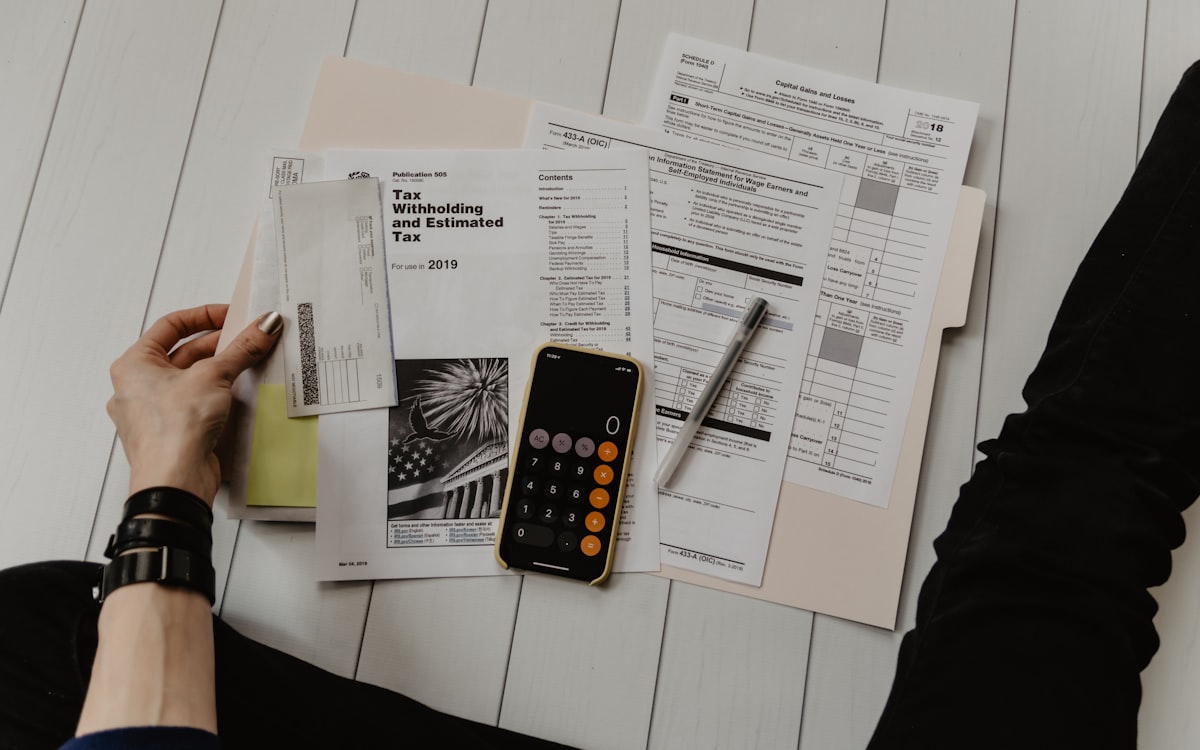
Qualifying children's clothes, footwear and babywear are zero-rated. Ordinary adult clothing takes the standard rate. Keep enough product information to support the rate you select, rather than relying only on the name a supplier gives the item.
Most food for human consumption is zero-rated, but the exceptions matter to a snack seller. Confectionery, crisps, savoury snacks, ice cream, alcoholic drinks, soft drinks and mineral water are standard-rated. Pet food is also standard-rated. A general food setting across the whole catalogue can therefore produce the wrong result.
Books, newspapers, magazines and children's picture books can qualify for the zero rate. Exercise books, letterheads and posters are examples of standard-rated printed products. The fact that something is printed on paper isn't enough to make it a zero-rated publication.
Check a new product before its first sale. Save its description and the reason for its VAT treatment alongside your catalogue records. That makes it easier to investigate a marketplace report later without reconstructing what the product actually was.
Energy-saving relief depends on installation
The government's list gives a zero rate until 31 March 2027 for specified energy-saving materials installed in residential accommodation and certain charitable buildings. Listed items include insulation, solar panels, air source heat pumps, electrical storage batteries and heating controls.
That is an installation relief with conditions. An online listing for equipment alone doesn't establish that the relief applies. A seller of insulation rolls or heating controls should distinguish the sale of materials from a qualifying installation before choosing the product's VAT setting.
Domestic fuel and power are a different category, generally at the reduced rate where the conditions are met. Business fuel is usually standard-rated. Don't transfer the VAT treatment of your household energy bill to everything your business sells or buys.
Exempt and outside-the-scope sales are separate categories
Exempt supplies include qualifying insurance and financial services. They aren't taxable sales at the zero rate, and VAT on costs relating to exempt supplies generally can't be reclaimed. Our guide to exempt and zero-rated supplies explains why the distinction matters even when neither adds VAT to the customer's bill.
Outside-the-scope transactions sit outside the UK VAT system. They also have no VAT charged, but for a different reason. Don't use that label merely because your shop hasn't registered for VAT: the nature of a sale and the seller's registration status are separate questions.
Registration determines whether you charge VAT
A VAT rate tells you how a supply is treated. It doesn't by itself mean every seller must add VAT. A business that isn't VAT-registered must not charge VAT, even when it sells products that would be standard-rated in the hands of a registered seller.
Equally, a zero-rated catalogue doesn't automatically remove registration obligations. Zero-rated sales are taxable sales. Check the rules for registering for VAT using your taxable turnover, rather than looking only at the VAT charged on each order.
Work out VAT from the net or gross price
A net price excludes VAT. A gross price includes it. If your supplier quotes a cost net of VAT, you need to add the tax to calculate the amount payable. If your customer has already paid a VAT-inclusive retail price, you need to extract the tax from that amount.
- For a net price at the standard rate, multiply by 0.20 to find the VAT, or by 1.20 to find the gross price.
- For a gross price at the standard rate, divide by 6 to find the VAT, or by 1.20 to find the net price.
- At the reduced rate, multiply a net price by 0.05 for the VAT. Divide a gross price by 21 to extract the VAT.
- At the zero rate, the VAT is zero and the net and gross prices are the same.
The VAT fraction is the part of a VAT-inclusive price that represents tax. The VAT fraction is the rate divided by (100 + the rate). At the standard rate, 20 divided by 120 gives one-sixth. At the reduced rate, 5 divided by 105 gives one twenty-first. VAT Notice 700 explains the calculation.
Taking 20 per cent off a gross price doesn't reverse adding 20 per cent to a net price. The percentage has a different starting point. That small distinction matters when you're checking the margin left after a marketplace sale.
Mixed baskets keep the rates of their separate products
For separately priced goods in a mixed basket, calculate VAT on each line using its own rate, then add the amounts. A standard-rated item doesn't make an unrelated zero-rated item standard-rated just because they travel in the same parcel.
If you sell differently rated items together for a single offer price, you may need apportionment. That means splitting the price fairly between the separate supplies and keeping a calculation you can justify. An indivisible single supply must not be split artificially. HM Revenue and Customs (HMRC) explains mixed-rate offers in its guidance on discounts.
Postage follows the contract with your customer
When your contract requires you to deliver the goods, the delivery charge follows their VAT treatment. Showing postage separately at checkout doesn't change that. Where separate goods have different rates, allocate the related delivery charge fairly between them.
A separately supplied optional delivery service within the UK is standard-rated, even if the goods are zero-rated. Free delivery or delivery built into the price is accounted for within the full selling price, using the goods' treatment. These distinctions come from HMRC's delivered goods guidance.
The VAT treatment of postage you buy doesn't automatically pass through to postage you charge. Look at your agreement with the customer, rather than copying the tax code from a stamp or courier receipt.
Illustration: an online clothing order with mixed rates
This is an illustration, not a real client. A VAT-registered seller supplies an ordinary adult coat for £120 including VAT and qualifying children's clothes for £60. Delivery is included in those prices, and these are separately priced products, not a single bundled supply.
- Adult coat VAT: £120 divided by 6 = £20.
- Adult coat net sale: £120 minus £20 = £100.
- Children's clothing: £60 net plus £0 VAT = £60 gross.
- Order total: £120 plus £60 = £180.
- Total net sales: £100 plus £60 = £160. Adding £20 VAT reconciles to £180.
For comparison, an illustrative qualifying child's car seat priced at £100 net has £5 VAT at the reduced rate, making £105 gross. Reversing that calculation, £105 divided by 21 gives £5 VAT. The correct rate comes first; the arithmetic follows it.
Frequently asked questions
What is the VAT rate in the UK in 2026?
The standard UK VAT rate is 20 per cent in 2026. The reduced rate is 5 per cent and the zero rate is 0 per cent. Which applies depends on the goods or services and any qualifying conditions. Exempt and outside-the-scope supplies are separate categories, rather than additional VAT rates.
How much is VAT on a £120 selling price?
VAT is £20 if £120 is the VAT-inclusive price of a standard-rated sale. This illustration uses the VAT fraction: £120 divided by 6 equals £20, leaving £100 net. If £120 is instead the net price, adding 20 per cent gives £24 VAT and a £144 total.
Are all food products zero-rated?
No. Most food for human consumption is zero-rated, but several common online grocery products are standard-rated. Examples include confectionery, crisps, ice cream, alcoholic drinks, soft drinks and mineral water. Check the actual product and the conditions, rather than applying one food tax code across every item in your catalogue.
Do I charge the same VAT rate on a mixed basket?
No. Separate products retain their own VAT treatment when sold together in a basket. Calculate the VAT for each line and add it up. A single-price offer containing separately supplied items at different rates may require a fair allocation of the price. Keep the reasoning behind that allocation.
Is postage always standard-rated?
No. Delivery required by the sales contract follows the VAT treatment of the delivered goods, even where the charge is shown separately. A separately supplied optional UK delivery service is standard-rated. Check the customer contract; the VAT treatment of the postage you bought doesn't settle the treatment of your charge.
Can an unregistered seller charge VAT?
No. A seller that isn't VAT-registered must not charge VAT. That doesn't turn standard-rated goods into exempt goods, or remove the need to monitor taxable turnover. Zero-rated sales also count as taxable sales, so a shop selling only qualifying children's clothes can still need to consider registration.