If you cut gardens, lay patios or run a landscaping crew, your tax bill comes down to two things: claiming everything you're entitled to, and choosing the right business structure. Get both right and you keep more of what you earn. Get them wrong and you either overpay HMRC or store up trouble for later.
This guide is for self-employed gardeners and landscapers in England, Wales and Northern Ireland. We'll cover which expenses you can claim, how to handle tools and big-ticket equipment, how mileage works, and the question we get asked most: should you stay a sole trader or go limited?
All figures here are for the 2025/26 tax year unless we say otherwise. Scotland sets its own Income Tax bands, so if you trade there the rates differ.
In short: a self-employed landscaper pays Income Tax and Class 4 National Insurance on profit (income minus allowable costs). You can claim materials, tools, van mileage and protective clothing, expense big kit through the Annual Investment Allowance, and going limited usually only pays once profits sit reliably in the higher-rate band.
Do I need to pay tax as a self-employed gardener?
If you work for yourself, you pay tax on your profit, which is your income minus your allowable business costs. You report it through a Self Assessment tax return each year.
There's one threshold worth knowing first. The trading allowance lets you earn up to £1,000 of gross trading income a year tax-free, and if that's all you make, you don't need to tell HMRC at all. That's handy for someone mowing a few neighbours' lawns at the weekend. Once your gross income goes over £1,000, you need to register for Self Assessment.
You must register by 5 October following the end of the tax year in which you started trading. So if you began landscaping during 2025/26, you register by 5 October 2026. Miss that and HMRC can charge penalties.
Most working landscapers will earn well above £1,000, so for the rest of this guide we'll assume you're registered and filing a return.
What expenses can a landscaper claim?
The golden rule is that a cost must be incurred "wholly and exclusively" for the business. If it is, it reduces your taxable profit. Here are the everyday costs HMRC lets the self-employed deduct, mapped onto a landscaping business:
| Cost area | What you can claim |
|---|---|
| Materials and stock | Plants, turf, paving, gravel, compost, fencing, aggregates bought for jobs |
| Tools and consumables | Spades, shears, strimmer line, gloves, blades, fuel for machinery |
| Vehicle and travel | Van running costs or mileage, parking, congestion charges, train fares to a job |
| Protective clothing | Boots, hi-vis, waterproofs, branded workwear |
| Subcontractor pay | What you pay other workers or crews on a job |
| Premises | Rent and running costs on a yard, lock-up or storage unit |
| Insurance and finance | Public liability cover, tool insurance, bank and card charges |
| Admin and marketing | Phone, website, fuel-card fees, leaflets, accountancy fees |
| Working from home | A reasonable share of home costs if you do admin and quoting from home |
A few traps to watch. Everyday clothing you could wear off-site (jeans, a fleece) isn't allowable, even if you only wear it for work. Protective gear and branded uniform are. And if you buy something you use partly privately, such as a phone, you claim only the business share.
You can either work out the business portion of your home and vehicle costs in detail, or use HMRC's simplified flat rates. For home working, the flat rate is based on the hours you spend working from home each month. For most landscapers the bigger decision is how to handle the van, which we cover below.
If keeping receipts straight feels like a losing battle in a job where half your day is outdoors, our bookkeeping service is built for trades exactly like yours.
How do I claim for tools and equipment?
This is where landscapers leave money on the table, because the rules split into two pots.
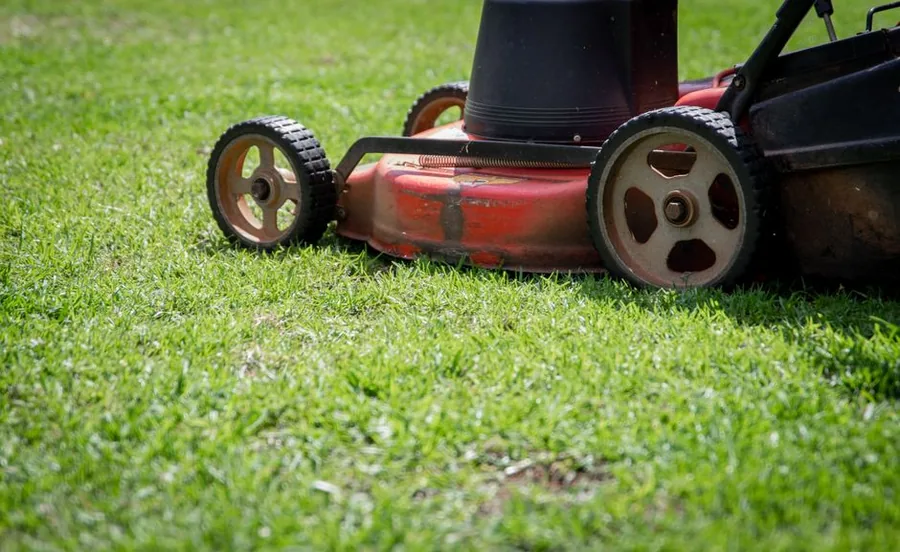
Small tools and consumables, things like a spade, shears, strimmer line or a pair of gloves, are normal running costs. You claim the full amount as an expense in the year you buy them, the same as you would fuel or compost.
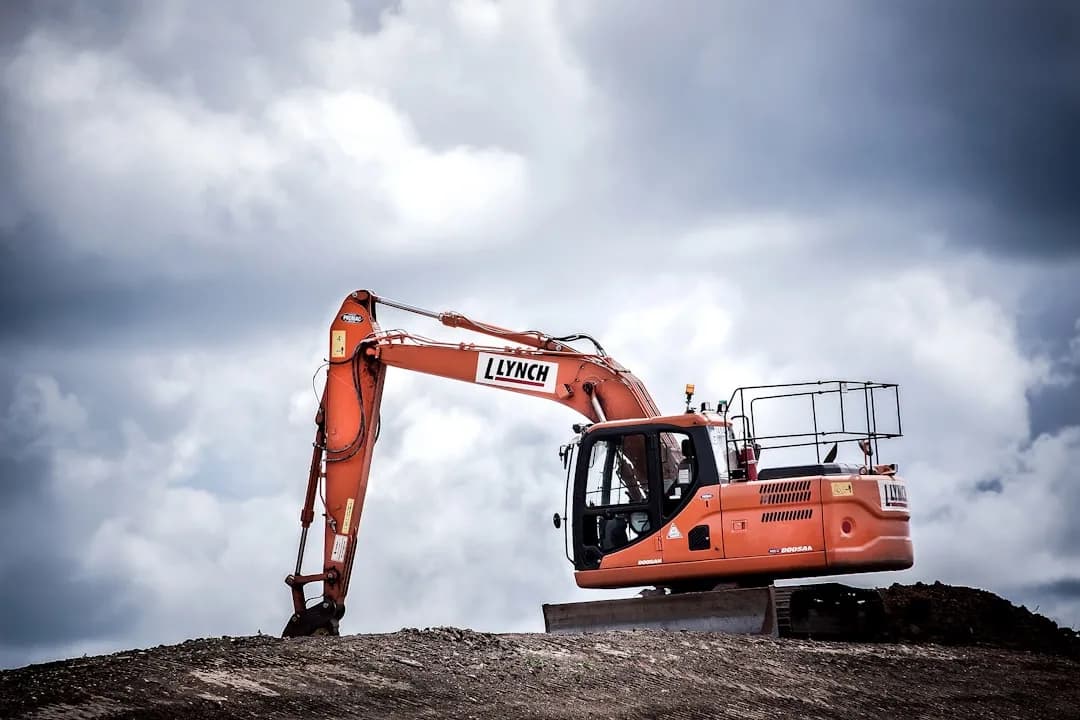
Bigger kit that you'll use for years, such as a ride-on mower, a wood chipper, a mini-digger or a trailer, counts as plant and machinery. These are capital items. Under traditional (accruals) accounting you claim them through capital allowances rather than as a straight expense.
The good news is the Annual Investment Allowance (AIA). It lets you deduct the full cost of most plant and machinery from your profit in the year you buy it, up to £1,000,000 a year. For a landscaper that limit is effectively unlimited, so a £9,000 chipper bought for the business is fully deductible in year one.
Two points to remember:
- Cars are excluded from the AIA. A van, a trailer or a digger qualifies, but a car does not. Cars get a slower writing-down allowance instead.
- AIA only covers business use. If you use a piece of kit privately as well, you scale the claim back to the business proportion.
If you use the cash basis instead of traditional accounting, most equipment is simply claimed as an expense when you pay for it (cars aside), which keeps things even simpler for a small sole trader.
How does mileage work for landscapers?
You've got two routes, and you pick one per vehicle.
Actual costs. You add up everything the van costs (fuel, insurance, repairs, servicing, road tax) and claim the business-use share. You can also claim capital allowances on the van itself.
Simplified mileage (flat rate). You claim a set rate per business mile and don't track running costs separately. For 2025/26 the flat rates are:
| Vehicle | First 10,000 business miles | Each mile after 10,000 |
|---|---|---|
| Cars and goods vehicles | 45p | 25p |
| Motorcycles | 24p | 24p |
Note that on 6 April 2026 (the start of the 2026/27 tax year) the car and goods-vehicle rate for the first 10,000 miles rose to 55p, with 25p after that. For 2025/26, the year covered by this guide, it was 45p.
A word of warning: once you use the flat rate for a vehicle, you must keep using it for that vehicle for as long as it's in the business. So choose deliberately. Mileage is simplest and often generous for a fairly economical van doing high miles. Actual costs tend to win for a thirsty, expensive vehicle or one bought outright. You can claim parking and other travel like train fares on top either way.
Not sure which leaves you better off? Run both through our mileage calculator before you commit.
What tax will I actually pay as a sole trader?
As a sole trader you pay Income Tax and Class 4 National Insurance on your profit. Here's how it stacks up with current figures.
Illustrative example. Tom is a self-employed landscaper. In 2025/26 he invoices £62,000 and has £18,000 of allowable costs (materials, van, tools, insurance), leaving a profit of £44,000.
- Personal Allowance for 2025/26 is £12,570, so his taxable income is £44,000 - £12,570 = £31,430.
- That all sits in the basic rate band (which runs to £37,700 of taxable income), taxed at 20%: £31,430 x 20% = £6,286 Income Tax.
- Class 4 NIC is 6% on profit between £12,570 and £50,270: (£44,000 - £12,570) x 6% = £31,430 x 6% = £1,885.80.
- Total for the year: £6,286 + £1,885.80 = £8,171.80.
Class 2 NIC isn't charged as a flat weekly amount any more for someone with profits at Tom's level, so it doesn't add to the bill.
He'll pay that via Self Assessment, and because his bill is over £1,000 he'll also make payments on account towards the next year. You can sanity-check your own position with our self-employed tax calculator.
Should a landscaper go limited?
This is the big one. There's no universal answer, but there are clear signals.
A sole trader is simple: one tax return, no Companies House filings, and you keep the profit (after tax). The downside is you're personally liable for business debts, and once profits climb you pay Income Tax and Class 4 NIC on all of it.
A limited company is a separate legal person. It pays Corporation Tax on its profit (19% on profits up to £50,000 for FY2025), and you take money out as a small salary plus dividends, which can be more tax-efficient at higher profit levels. You also get limited liability, which matters more on big landscaping contracts. The trade-offs are real admin: annual accounts, a company tax return, payroll, and stricter record-keeping.
When does going limited usually start to make sense?
As a rough guide, the tax saving from incorporating tends to appear once profits are comfortably and reliably into the higher-rate territory, broadly when you're earning more than you need to draw to live on. Below that, the extra accountancy and admin cost can wipe out any saving.
Illustrative example. Take the same £44,000 of profit. As a sole trader, Tom's Income Tax and NIC come to £8,171.80 (above). As a company director paying himself a £12,570 salary and the rest as dividends, the mix of Corporation Tax at 19% and dividend tax (10.75% in the basic band for 2026/27, after the £500 dividend allowance) lands in a similar ballpark at this level, before you add the cost of running the company. That's exactly why £44,000 is a borderline case where staying a sole trader is often the calmer choice.
Push profits higher, or factor in liability protection on commercial contracts, and the company starts to pull ahead. The point is that incorporation is a numbers decision, not a status symbol, and it's worth modelling properly before you file at Companies House.
A quick decision guide
| If this is you... | Likely best fit |
|---|---|
| Side income or just started, profit modest | Sole trader |
| Steady profit but you draw most of it to live on | Sole trader (simpler, similar tax) |
| Profits reliably high and you can leave some in the business | Worth modelling a limited company |
| Big commercial contracts where liability is a worry | Limited company (for protection) |
Want a clear answer for your numbers rather than a rule of thumb? We model both for landscapers in our tax advisory service.
Does CIS apply to landscapers?
Sometimes, and it catches people out. The Construction Industry Scheme (CIS) covers payments from contractors to subcontractors for construction work. Pure gardening, like mowing, planting and maintenance, generally falls outside CIS.
But a lot of landscaping is construction work: laying patios and driveways, building walls and decking, groundworks, drainage and structural fencing. If you do that kind of work for another business in the construction sector, or you pay subcontractors to, CIS deductions can apply. It's the type of work, not your job title, that decides it.
If you think CIS might touch your business, get it checked before money changes hands, because deductions taken at source affect your cash flow and how you reconcile tax at year end.
Frequently asked questions
Do gardeners pay tax on cash jobs?
Yes. All income from your work is taxable, however you're paid. Cash jobs count exactly the same as bank transfers, and they must go on your Self Assessment return. The only income you can ignore is gross trading income of £1,000 or less in a year, covered by the trading allowance.
Can I claim for my work boots and waterproofs?
Yes. Protective clothing and branded uniform are allowable because you need them for the job. Ordinary clothes you could wear day to day, like jeans or a plain fleece, are not allowable even if you only wear them at work.
Can I claim a ride-on mower or a digger in one go?
Usually, yes. Larger equipment is plant and machinery, and the Annual Investment Allowance lets you deduct the full cost (up to £1,000,000 a year) from your profit in the year you buy it, as long as it's for business use. Cars are the main exclusion.
Is mileage better than claiming actual van costs?
It depends on the vehicle. The 45p per mile flat rate (first 10,000 business miles in 2025/26) often suits an economical van doing high mileage. Actual costs usually win for an expensive or thirsty vehicle. Once you pick the flat rate for a vehicle you must stick with it, so compare them first.
At what profit should I become a limited company?
There's no fixed number, but the tax saving usually only appears once profits are reliably into higher-rate territory and you can leave some money in the company. Below that, extra admin and accountancy costs often cancel out the benefit. It's worth modelling your actual figures before deciding.
Book a free Tax Health Check →
Key takeaways
- You pay tax on profit, not turnover, so claiming every allowable cost directly lowers your bill.
- Small tools are everyday expenses; big kit like mowers and diggers goes through the Annual Investment Allowance, which covers the full cost up to £1,000,000 a year.
- Pick mileage or actual van costs deliberately, because you're stuck with the choice per vehicle. The flat rate is 45p per mile (first 10,000 miles) for 2025/26.
- Going limited is a numbers decision. At modest profits, staying a sole trader is often simpler and similar on tax.
- Some landscaping is construction work, so check whether CIS applies before you invoice or pay a subcontractor.
Sorting your tax shouldn't eat into your evenings after a day on site. Zmartly works with landscapers, gardeners and trades across the UK, and we'll handle your Self Assessment, tell you straight whether going limited pays, and make sure you claim every pound you're owed. Book a free call with a Zmartly accountant and we'll take it from here. See how we help landscapers, tradesmen and sole traders.