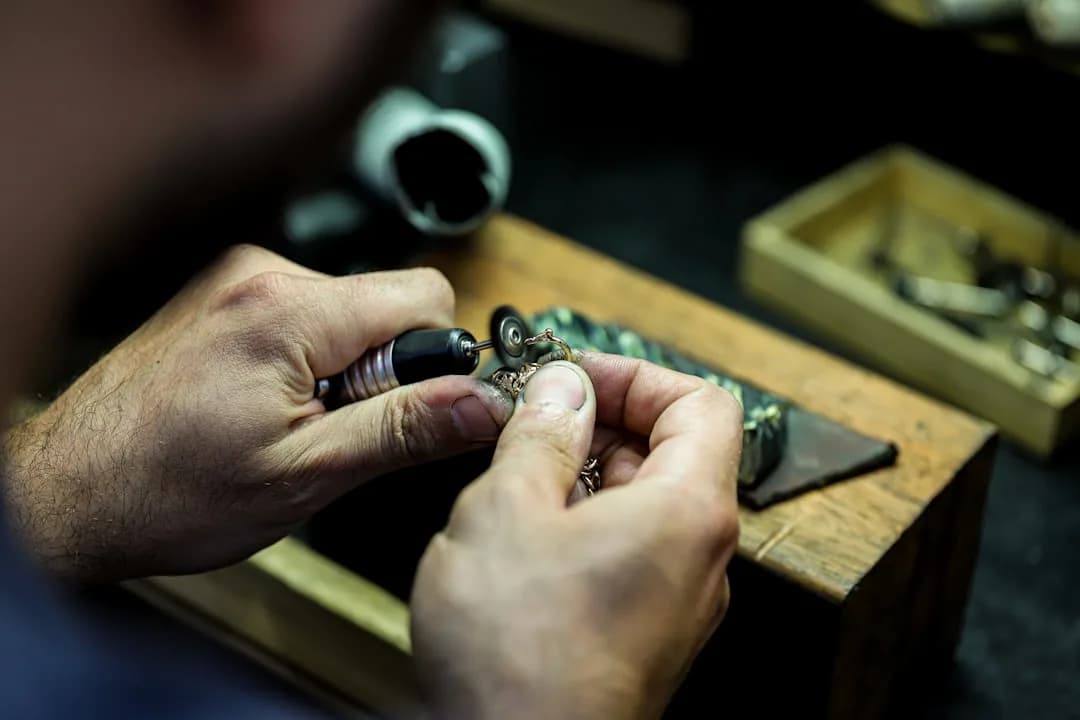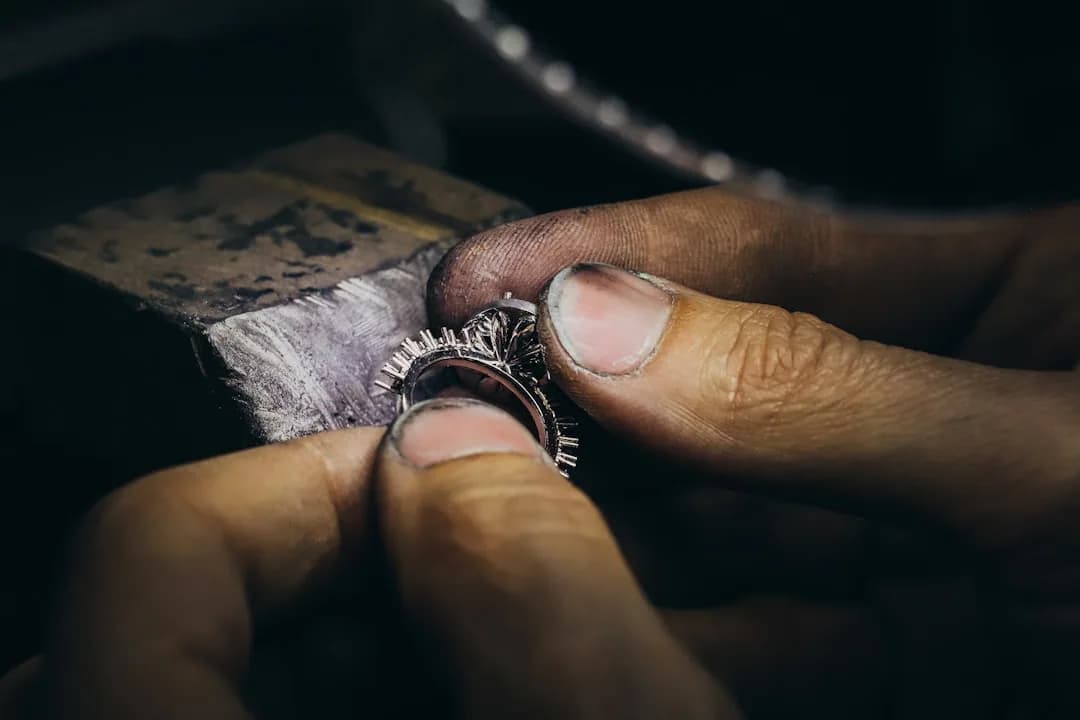
You run a jewellery business, a customer wants to pay several thousand pounds in cash for a ring, and a nagging question sits in the back of your mind: should you be registered with HMRC for money laundering supervision, and are you breaking the law if you're not?
It's a fair worry. Jewellers sit squarely in the sights of the money laundering rules because gold, gems and watches are easy to move and easy to convert. But the rule that actually triggers registration is narrower than most people assume, and plenty of jewellers don't need to register at all.
This guide explains exactly when the "high value dealer" rules apply, the single cash test that decides it, what registration costs in 2025/26, and what you have to do once you're in. It's written for UK jewellers, pawnbrokers, bullion dealers and watch traders. If you sell precious goods and take cash, read on.
Do jewellers need to register for money laundering supervision?
You need to register with HMRC as a high value dealer only if you accept or make cash payments of €10,000 or more (or the equivalent in any currency) for goods, either in one go or as linked payments (gov.uk). If you never take that much in cash, you don't have to register, even though you sell gold and gems.
So being a jeweller doesn't automatically put you in the net. What puts you in the net is the cash. A shop that takes card, bank transfer and cheque for its big-ticket sales, and only ever sees small amounts of cash, falls outside the high value dealer rules entirely.
That said, HMRC treats dealers in precious metals and stones as a high-risk group, because criminals use gold and gems as an alternative to cash. So if you're anywhere near the threshold, it pays to get this right.
What is a high value dealer?

A high value dealer is, in HMRC's words, "any business or sole trader that accepts or makes high value cash payments of 10,000 euros or more (or equivalent in any currency) in exchange for goods."
High value dealers are one of nine business sectors that HMRC supervises directly for anti money laundering purposes. The others include money service businesses, estate and letting agents, art market participants, and accountancy and trust or company service providers that aren't already supervised by a professional body or the Financial Conduct Authority.
The key word is goods. The rule is about selling or buying physical items for high value cash. So it captures a jeweller selling a diamond ring for cash, and it equally captures a dealer paying out cash to buy scrap gold or a second-hand Rolex from a member of the public. Buying counts as well as selling. If gold buying is your trade, the VAT side has its own quirks, covered in our guide to VAT for a cash-for-gold business.
If you only ever provide services, or you take card and bank transfer for your large sales, the high value dealer registration doesn't apply to you.
How does the €10,000 cash test work?
The whole regime turns on one test. Work through it carefully, because the detail matters.
What counts as cash?
Cash means notes, coins, or traveller's cheques. HMRC also counts it as cash when a customer deposits notes and coins directly into your bank account, or pays cash to a third party for your benefit.
What does not count: payment by credit card, debit card, cheque or bank transfer. As gov.uk puts it, "you do not need to register if you are only ever paid large amounts by credit card, debit card or cheque." Electronic and card money is traceable, so it sits outside the high value dealer test.
Is the threshold per transaction or per year?
It's per transaction, not an annual total. The €10,000 figure applies to a single transaction, and crucially to linked transactions. If a customer pays for one item in several smaller cash instalments that together reach €10,000 or more, that's caught. HMRC will also treat cash payments "broken down into smaller amounts" to dodge the threshold as a single linked transaction. You can't sidestep the rule by splitting a £12,000 cash sale into three £4,000 payments across three days.
What about a mix of goods and services?
If you supply goods and services together, it's the open market value of the goods that's measured against the threshold. So if the goods element alone is €10,000 or more and it's paid in cash, you're caught.
Why euros, not pounds?
The threshold is fixed in euros because it comes from the underlying regulations. In practice you convert at the rate on the day of the transaction. Around €10,000 is broadly in the £8,000 to £9,000 region depending on the exchange rate, so treat any cash sale or cash purchase in that ballpark as a trigger to check carefully rather than assume you're under.
The decision walkthrough
| Question | Answer | What it means |
|---|---|---|
| Do you sell or buy goods (not just services)? | No | Not a high value dealer for this purpose |
| Yes | Go to next question | |
| Do you ever accept or make a cash payment of €10,000 or more (single or linked) for goods? | No | No registration needed |
| Yes | You must register | |
| Are all your large payments by card, cheque or bank transfer only? | Yes | No registration needed |
| No (some are cash) | You must register |
Worked example: does this jeweller need to register?
Illustrative example. Aisha runs an independent jewellery shop. In a typical month her sales break down like this:
| Sale | Amount | Payment method | Counts toward the cash test? |
|---|---|---|---|
| Engagement ring | £6,200 | Card | No (not cash) |
| Tennis bracelet | £4,800 | Bank transfer | No (not cash) |
| Eternity ring | £3,500 | Cash | Under threshold on its own |
| Loose diamond, paid in 3 cash instalments for one stone | £11,400 total | Cash, linked | Yes, linked cash over the threshold |
Aisha's first three sales are fine. The card and bank transfer payments never count, and the £3,500 cash sale is well under €10,000 on its own.
The fourth sale is the problem. One diamond, paid in three cash instalments that add up to £11,400 (comfortably over €10,000 at any realistic exchange rate), is a single linked transaction. Splitting it across three visits makes no difference. Because Aisha has accepted a high value cash payment for goods, she must register with HMRC as a high value dealer.
Now compare a second case. Illustrative example. Daniel sells vintage watches and pays out cash to private sellers who bring watches in. Last month he bought a watch from a member of the public for £9,800 in cash. Buying counts as well as selling, and £9,800 is over €10,000 at the prevailing rate, so Daniel is also caught and must register, even though he was the one paying.
What does it cost to register with HMRC?
HMRC charges a set of fixed fees rather than a percentage. The figures below are the rates published on gov.uk (money laundering supervision fees, gov.uk; fees guidance last updated 22 December 2025). HMRC reviews these fees periodically, so check the current figures on gov.uk before you budget or pay.
| Fee | Amount | Notes |
|---|---|---|
| Registration fee (one-off) | £300 | Non-refundable; paid up front even if you later claim the small business reduction |
| Premises fee | £400 per premises | Paid annually for each premises; £200 if a premises is added in the second half of the registration year |
| Approval (fit and proper for officers and beneficial owners) | £40 per person | One-off, per relevant person, for high value dealers |
| Annual renewal | £400 per premises | Paid each year when you update your registration |
A couple of points jewellers often get wrong:
- The premises fee is the recurring cost. It's £400 per premises every year, not a one-off. A single-shop jeweller pays £400 a year to stay registered after the first year.
- The full £500 fit and proper test fee that you may read about applies only to money service businesses and trust or company service providers, not to high value dealers. For a jeweller, the people-check is the lighter £40 per person approval fee.
There's a small business reduction for businesses with turnover under £5,000. You still pay the £300 application fee and £400 premises fee up front, but you get a £500 refund once your application or annual declaration is accepted. Most trading jewellers won't qualify, but a very small side operation might.
Whether registration costs are deductible against your trade and how they sit alongside the wider tax picture for your shop is something we cover for jewellery clients as part of our statutory accounts service. On a related point, many jewellers ask whether their cover counts as a business expense too, which we answer in our guide to whether jewellers' block insurance is tax deductible.
What must you do once you're registered?
Registration is the start, not the end. Once you're supervised, you have to operate an anti money laundering regime that's proportionate to your business. The core duties are:
- Appoint a nominated officer (sometimes called the MLRO) and make sure staff know to report anything suspicious to them.
- Carry out a written risk assessment of your business, and update it as your customers and products change.
- Run customer due diligence when you carry out a relevant transaction. For high value dealers, due diligence is required on occasional cash transactions of €10,000 or more. That means identifying the customer, for example by name, an official photo document, and their address and date of birth.
- Keep records for five years, including customer identification, your risk assessments and transaction records.
- Train relevant staff on their anti money laundering responsibilities and keep evidence that you've done it.
- Report suspicious activity. Where your nominated officer has knowledge or suspicion of money laundering, a suspicious activity report goes to the National Crime Agency.
None of this is exotic, but it does need writing down. HMRC expects to see policies, a risk assessment and training records if it inspects you, not just a verbal "we keep an eye out".
What happens if you trade without registering?
Trading as a high value dealer without being registered is a criminal offence, and it can result in a penalty or prosecution.
You must apply for supervision within 30 days of starting the relevant activity. If you register late, HMRC can charge a penalty for the period you traded while unregistered. The penalty is built up in three-month "trading periods", so the longer you've been trading unregistered, the bigger it gets, up to a maximum of £104,000.
HMRC takes unregistered trading seriously because, in its view, hiding from supervision can itself be a sign of money laundering. So this isn't a box-ticking technicality. If you've crossed the cash threshold and you're not registered, fix it now rather than wait.
The reassuring news for most jewellers is that, unlike money service businesses, you don't have to wait for HMRC to approve your registration before you keep trading. High value dealers can carry on trading while the application is processed.
How do you register, and by when?
You register and manage your supervision through HMRC's online anti money laundering service on gov.uk. You'll set up the business, list your premises, name your nominated officer and any beneficial owners or managing officers for the approval check, and pay the fees.
The deadline that matters: apply within 30 days of deciding you'll accept or make high value cash payments. In practice, the moment you realise a cash sale or cash purchase is going to tip over the threshold, that's your cue to register straight away rather than after the fact.
After the first year, HMRC sends an annual supervision notice reminding you to update your registration and pay the annual fee on each premises. Miss that and your registration can be cancelled.
If you'd rather not wrestle with the risk assessment, the policies and the renewal cycle yourself, this is exactly the kind of compliance we handle for jewellery clients. See how we support jewellery businesses on our accountants for jewellers page.
Not sure whether your cash sales tip you over the high value dealer threshold? Book a free 20-minute call with a Zmartly accountant and we'll tell you straight whether you need to register, and handle it for you if you do.
Frequently asked questions
Do all jewellers have to register for money laundering supervision?
No. Only jewellers who accept or make cash payments of €10,000 or more for goods, in a single or linked transaction, need to register as high value dealers. If you only ever take card, cheque or bank transfer for your large sales, you don't need to register.
Does a card or bank transfer payment count toward the €10,000 threshold?
No. The test only counts cash, meaning notes, coins or traveller's cheques, including cash paid directly into your bank account. Credit card, debit card, cheque and bank transfer payments don't count, so you do not need to register if you are only ever paid large amounts that way.
What does HMRC money laundering supervision cost for a jeweller?
There's a one-off £300 registration fee, a £400 per premises fee paid annually, and a £40 per person approval fee for relevant officers and beneficial owners. The annual cost to stay registered is £400 per premises. Businesses with turnover under £5,000 can claim a £500 small business reduction refund.
What is the penalty for trading without registering?
Trading as a high value dealer without registering is a criminal offence and can lead to a penalty or prosecution. Penalties are calculated in three-month trading periods based on how long you traded unregistered, up to a maximum of £104,000.
Does buying scrap gold or second-hand watches for cash count?
Yes. The rules apply to both accepting and making high value cash payments for goods. So paying a member of the public £10,000 or more in cash for scrap gold or a watch triggers registration just as a cash sale would.
Can I keep trading while my registration is being processed?
Yes. As a high value dealer you can continue trading while HMRC processes your application. That's different from money service businesses and trust or company service providers, which must wait for approval before they trade.