If you buy gold from the public for cash and sell it on, your VAT position is not the simple "20% on everything" most retailers deal with. Gold has its own rules, and they catch a lot of dealers out.
Get it wrong in either direction and you have a problem. Charge VAT you shouldn't, and your refiner won't pay it. Miss VAT you should have accounted for, and HMRC will want it back with interest.
This guide walks through how VAT actually works for a cash-for-gold business, when the special gold reverse charge applies, why the margin scheme rarely helps with scrap, and exactly what you need on your invoices and in your records. It is written for UK dealers in England, Wales and Northern Ireland.
Do I need to register for VAT as a cash-for-gold business?
You must register for VAT once your taxable turnover passes the £90,000 threshold for 2025/26, the same trigger as any other business.
The catch for gold dealers is working out what counts as taxable turnover. Sales of investment gold are exempt from VAT, while supplies of scrap gold to another VAT-registered business sit under a special accounting scheme. Both still feed into your registration test, but they are taxed very differently once you are registered, so the headline figure rarely tells the whole story.
For the registration threshold, see gov.uk. You can deregister if your taxable turnover falls below £88,000.
In practice, most active cash-for-gold dealers register quickly because the gross value flowing through the business is high even when the margins are thin. If you are close to the line, talk to us about whether voluntary registration helps or hurts you, since a lot of your sales may carry no output VAT for you to collect.
How does VAT work when I sell scrap gold to a refiner?
When you sell scrap gold to a UK VAT-registered refiner, you do not charge VAT. Under HMRC's Special Accounting Scheme for gold (VAT Notice 701/21), the buyer accounts for the VAT under a domestic reverse charge. You invoice the VAT-exclusive price and the refiner self-accounts for the output tax on their own return.
This is the part that surprises most dealers. When you sell scrap gold, broken jewellery or gold sweepings to another UK VAT-registered business, you usually do not charge VAT in the normal way. Instead, a Special Accounting Scheme for gold applies, and the buyer accounts for the VAT.
HMRC's VAT Notice 701/21 sets this out. The scheme applies to goods made of gold (or partly of gold) where the amount paid does not exceed the open market value of the gold contained in them, and it specifically covers scrap gold, scrapped or broken jewellery and sweepings. This is the everyday stock of a cash-for-gold business. Our deeper walkthrough of the scrap gold VAT reverse charge and the Special Accounting Scheme covers the mechanics in full.
Under the scheme, "the buyer pays you the VAT exclusive price of the gold and accounts for the output tax to HMRC." In other words, you invoice the price without adding VAT to the cash you collect, and your refiner deals with the VAT on their own return. It is a domestic reverse charge, the same mechanism used in construction and some electronics, applied to gold.
Three conditions matter:
- Both you and your buyer must be UK VAT-registered businesses.
- The supply must be made in the course of business.
- You must be satisfied your buyer is genuinely VAT-registered (check and keep a record of their VAT number).
If you sell to a private individual or a non-registered buyer, the reverse charge cannot apply and you fall back on the normal rules, which usually means standard-rated at 20% unless the gold qualifies as exempt investment gold. Source: VAT Notice 701/21, gov.uk.
What about investment gold?
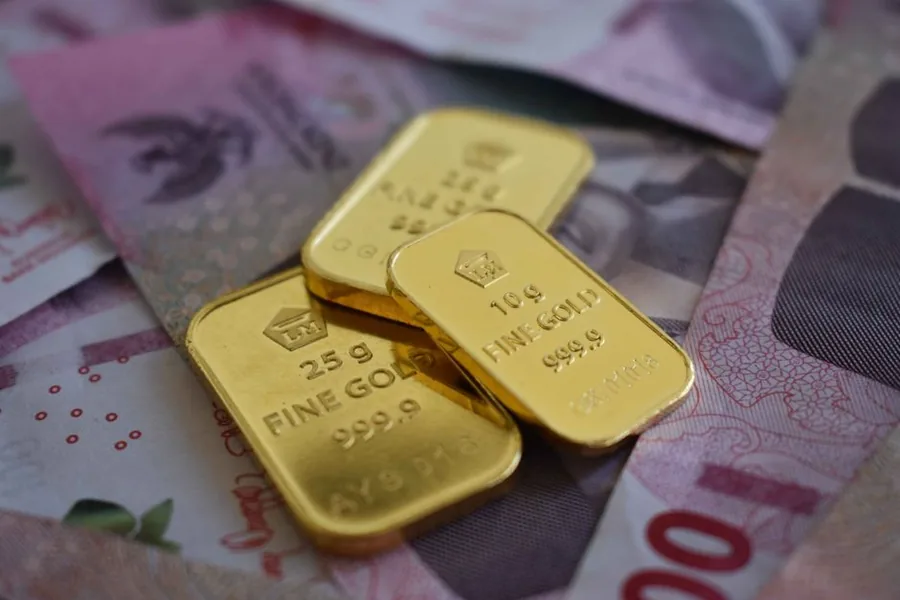
Investment gold is different again. Supplies of investment gold are exempt from VAT, subject to an option to tax. Investment gold means gold bars or wafers of a purity not less than 995 thousandths in accepted bullion weights, or certain gold coins (broadly post-1800, at least 900 thousandths pure or legal tender, and selling at no more than 180% of the open market value of the gold they contain).
A bar of melted-down scrap you have refined into investment-grade form can become exempt investment gold. The mixed bag of old chains and broken rings you buy over the counter is not investment gold while it is still scrap, so do not assume the exemption applies to everyday buy-ins. If you also hold gold personally, the line between selling gold as a trader or as an investor changes how the profit is taxed.
Can I use the VAT margin scheme on gold I buy from the public?
For most of your stock, no. This is the single biggest misunderstanding we see.
The VAT margin scheme lets some second-hand dealers pay VAT on their profit margin rather than the full selling price, using a VAT fraction of one-sixth of the margin. It is great for second-hand goods generally. But VAT Notice 718 is explicit that you cannot use the margin scheme to account for the sale of precious metals, investment gold or precious stones.
So scrap gold, gold bullion and loose stones are all outside the margin scheme. You cannot run melted or refined gold through it.
Where the margin scheme can help a cash-for-gold business is the second-hand jewellery you resell as jewellery rather than melting down. A pre-owned gold ring sold on to a customer as a ring is eligible second-hand goods, provided you bought it without VAT being charged to you (for example, from a private seller) and you did not buy it on a VAT invoice showing VAT separately. For the full picture on how VAT applies to gold jewellery in the UK, including new and second-hand pieces, see our dedicated guide. Notice 718 is clear that "if VAT is shown separately on the purchase invoice" you cannot use the scheme, even if you did not reclaim that VAT.
So a typical dealer ends up running two parallel treatments:
| What you sell | Usual VAT treatment | Why |
|---|---|---|
| Scrap or broken gold to a VAT-registered refiner | Gold reverse charge (buyer accounts for VAT) | Special Accounting Scheme, Notice 701/21 |
| Investment gold (e.g. refined 995+ bars, qualifying coins) | Exempt, subject to option to tax | Notice 701/21 |
| Second-hand jewellery resold as jewellery, bought VAT-free | Margin scheme, VAT on the margin (1/6) | Eligible second-hand goods, Notice 718 |
| New jewellery, or items bought on a VAT invoice | Standard rate 20% on full selling price | Outside margin scheme and reverse charge |
Sources: VAT Notice 718, gov.uk and VAT Notice 701/21, gov.uk.
If you need a hand mapping your own product lines to the right treatment, our accountants for jewellers do exactly this for gold buyers and resellers.
What does the gold reverse charge mean for my VAT return?
When you sell under the Special Accounting Scheme, the boxes on your VAT return are not the ones you might expect. The mechanics differ slightly for the seller and the buyer.
As the seller, you do not pay output VAT on the gold to HMRC. You show the VAT-exclusive value of the sale in the relevant boxes and make clear on the invoice that the buyer accounts for the VAT (see invoicing below).
As the buyer, when you buy scrap gold under the scheme, you self-account. Per HMRC's guidance, the VAT on the invoice is included in Box 1 (as output tax you are accounting for) and, subject to the normal rules, recovered in Box 4 as input tax. The ex-VAT value of the purchase goes in Box 7, and a corresponding figure feeds Box 6 for the supply.
Here is a worked illustration.
Illustrative example: selling scrap gold under the reverse charge
Goldline Trading (a fictional, illustrative cash-for-gold shop) buys assorted broken 9ct and 18ct gold from the public over a quarter, paying out £42,000 in cash. It sorts and sells the lot to a VAT-registered refiner for £50,000.
Because the buyer is a VAT-registered business and the goods are scrap gold, the Special Accounting Scheme applies:
- Goldline invoices the refiner for £50,000, the VAT-exclusive price. No VAT is added to the amount the refiner pays.
- Goldline does not pay output VAT on this sale to HMRC. It notes on the invoice that the refiner accounts for the VAT.
- The refiner records VAT of £10,000 (20% of £50,000) in Box 1, and recovers the same £10,000 in Box 4 under the normal input-tax rules, so the net cash effect for the refiner is usually nil.
Goldline's gross margin here is £8,000 (£50,000 minus £42,000). That margin is its trading profit for Corporation Tax or Income Tax purposes. It is not a VAT margin, because precious metals are outside the margin scheme. The figures are illustrative.
If Goldline had instead sold a single second-hand 18ct bracelet on to a member of the public as a wearable item for £900, having bought it from a private seller for £600, that sale could go through the margin scheme: VAT due would be one-sixth of the £300 margin, which is £50.
What must my invoices show?
Your paperwork has to match the VAT treatment, and a reverse-charge sale needs specific wording.
For a gold reverse-charge sale to a VAT-registered buyer, your invoice should show:
- Your name, address and VAT registration number.
- The buyer's name, address and VAT registration number.
- A unique invoice number and the date of supply.
- A clear description, quantity and the gold content where relevant.
- The VAT-exclusive price the buyer pays.
- The amount of output tax due, stated clearly but not added to the total the buyer pays, with wording that the VAT is to be accounted for by the buyer of the gold.
If you are unsure how the wording and figures should sit on the document itself, our worked gold reverse charge invoice example shows exactly how to lay one out.
For a margin scheme sale of second-hand jewellery, Notice 718 requires the invoice to show your VAT number, the buyer's details, an invoice number and date, a description of the goods, and the total price, with no VAT shown separately. It must also indicate that the item was sold under the margin scheme.
For a standard-rated sale (new jewellery, or anything bought on a VAT invoice), you issue a normal VAT invoice charging 20%.
Never show VAT separately on a margin scheme or reverse-charge invoice. Doing so can make you liable to account for that VAT in addition to the correct treatment.
What records must a cash-for-gold business keep?
Gold dealing carries a heavier record-keeping load than ordinary retail, partly for VAT and partly for anti-money-laundering reasons. Build it into your daily routine rather than reconstructing it at quarter-end.
For VAT generally, you must keep your sales and purchase invoices, your VAT account, and enough detail to support every figure on your return. As a VAT-registered business you must also keep digital records and file under Making Tax Digital for VAT.
For margin scheme stock, Notice 718 requires a stock book. For each item it should record the stock number, the purchase and sale dates, the purchase and selling prices, the seller's and buyer's names, a description, the margin and the VAT due. Without a complete stock book entry, HMRC can refuse the margin treatment and charge VAT on the full selling price.
For investment gold, Notice 701/21 requires you to keep accounting records and customer records where a single transaction exceeds £5,000, or where supplies to one customer exceed £10,000 in any 12-month period. You must record the customer's name, address, date of birth and a verified form of ID, plus the description, purity and quantity of the gold. There is also a duty to notify HMRC of transactions over those thresholds within 28 days.
Keep your VAT and gold records for at least six years.
Solid bookkeeping is doing real work here, not box-ticking. If you would rather not run the stock book and VAT account yourself, our bookkeeping service keeps gold dealers compliant and audit-ready.
A note on equipment and capital allowances
Scales, testing kit, safes, refining equipment and shop fit-out are usually plant and machinery. Most can be written off in full in the year you buy them using the Annual Investment Allowance, which covers up to £1,000,000 of qualifying spend. See gov.uk. Stock, including the gold itself, is not plant and does not qualify.
Do I need to register as a high value dealer?
Quite possibly, and this sits alongside VAT rather than replacing it.
If your business accepts or makes cash payments of 10,000 euros or more (or the equivalent in any currency) for goods, you are a high value dealer and must register for anti-money-laundering supervision with HMRC. Cash means notes, coins or traveller's cheques, and the rules also bite where a customer deposits cash into your bank account or pays a third party for your benefit.
The threshold applies to a single payment, to multiple payments for one transaction, and to payments deliberately broken into smaller amounts to dodge the limit. You must register before you accept or make a high value cash payment, and you must carry out customer due diligence on those deals. Trading as an unregistered high value dealer is a criminal offence.
Given how much cash a gold-buying business handles, many cross the threshold without realising it. Source: high value dealer registration, gov.uk. For the wider supervision picture, see our guide to money laundering supervision for jewellers.
Frequently asked questions
Do I charge VAT when I buy gold from a member of the public?
No. A private individual selling you their old jewellery is not making a VAT supply, so there is no VAT for you to pay or reclaim on the buy-in. Your VAT obligations arise when you sell the gold on.
Is scrap gold sold to a refiner standard-rated at 20%?
Usually not in the normal way. If your buyer is a UK VAT-registered business, the Special Accounting Scheme for gold applies and the buyer accounts for the VAT, so you invoice the VAT-exclusive price. If you sell scrap gold to a non-registered buyer, the standard 20% rate generally applies unless it qualifies as exempt investment gold. See VAT Notice 701/21.
Can I use the margin scheme for my whole cash-for-gold business?
No. The margin scheme cannot be used for precious metals, investment gold or precious stones, so it does not cover scrap gold or bullion. It can apply to second-hand jewellery you resell as jewellery, where you bought it without VAT being charged to you. See VAT Notice 718.
What is the VAT registration threshold for 2025/26?
£90,000 of taxable turnover on a rolling 12-month basis. The deregistration threshold is £88,000. Exempt investment gold sales and reverse-charge gold sales still count towards the turnover test even though the VAT treatment differs.
When do I have to register as a high value dealer?
As soon as you decide you will accept or make cash payments of 10,000 euros or more for goods, you must register with HMRC for money laundering supervision, before taking that payment. Linked instalments and deliberately split payments count towards the limit.
Talk to an accountant who knows the gold trade
Gold VAT is unforgiving, and the difference between the reverse charge, the margin scheme and a standard-rated sale changes how every invoice should look. We help cash-for-gold dealers get the treatment, invoicing and records right from the start.
Want this set up properly? Book a free 20-minute call with a Zmartly accountant through our accountants for jewellers page.