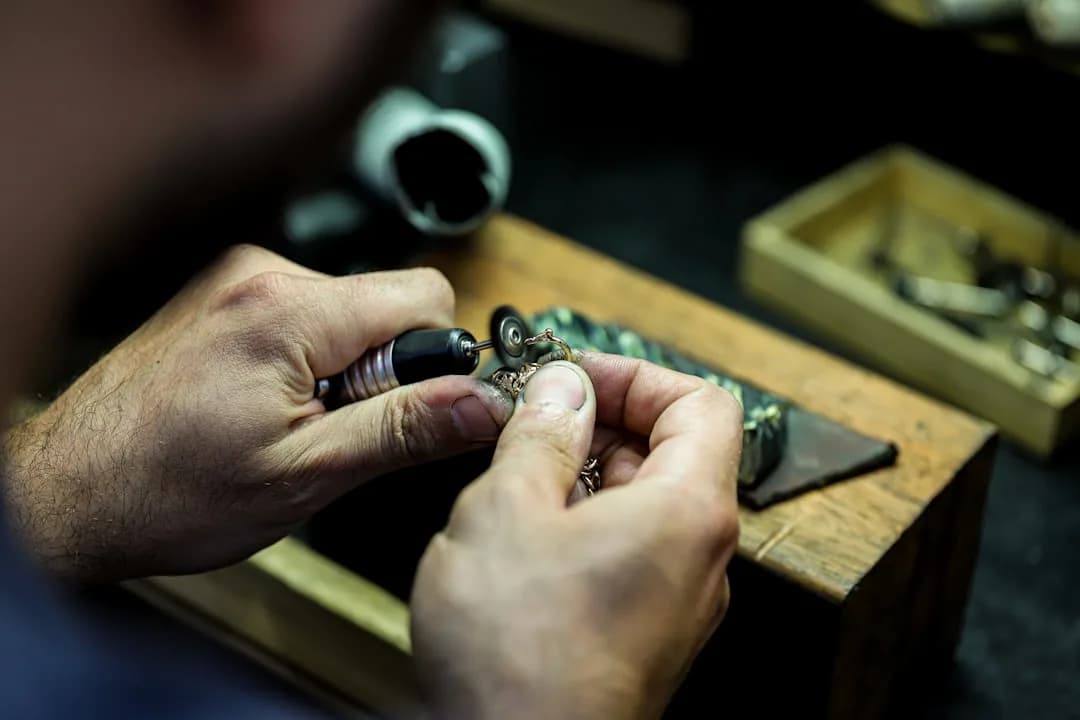
If you run a jewellery shop, two of your biggest fixed costs are the same two things that keep you awake at night: insuring the stock and locking it down. A jewellers block policy can run into thousands a year, and a proper alarm, safe and CCTV fit-out is a serious spend. So it is fair to ask whether HMRC lets you knock any of it off your tax bill.
The short version is yes, most of it is deductible, but not always in the way you would expect. Insurance premiums usually come straight off your profit. Security kit often goes through capital allowances instead. And there are a couple of jewellery-specific traps, around VAT and money laundering, that catch sellers out.
This guide walks through exactly how a UK jeweller treats block insurance and shop security for tax, with a worked example and a quick decision table. It is written for jewellers trading as a sole trader, partnership or limited company in England, Wales or Northern Ireland.
Is jewellers block insurance tax deductible?
Yes. Jewellers block insurance is an allowable business expense and you deduct the premium from your trading profits, as long as the policy is taken out wholly and exclusively for the purposes of the trade.
That phrase is the whole test. HMRC's guidance is clear that "whether insurance premiums are deductible from trading profits depends on what is insured and whether the insurance has been taken out for the purposes of the trade." A jewellers block policy that insures your stock, your premises contents, cash, goods in transit and goods left out on memo with customers is squarely a cost of running the shop, so the premium is deductible.
The same logic covers the other policies a jeweller carries: public liability, employers' liability (compulsory once you have staff), business interruption and building cover. Each is allowable on the same wholly-and-exclusively basis.
Where you need to be careful is mixed-use cover. If a single policy insures both the business and something personal, for example a home-and-business policy where you trade from home, you can only deduct the business proportion. HMRC's own manuals tell inspectors to "allow a proportion of the licence, insurance (provided the insurance covers business use), repairs, finance costs," where an asset is used partly for trade and partly privately. So split it on a fair and reasonable basis and keep the workings.
What does jewellers block insurance actually cover?
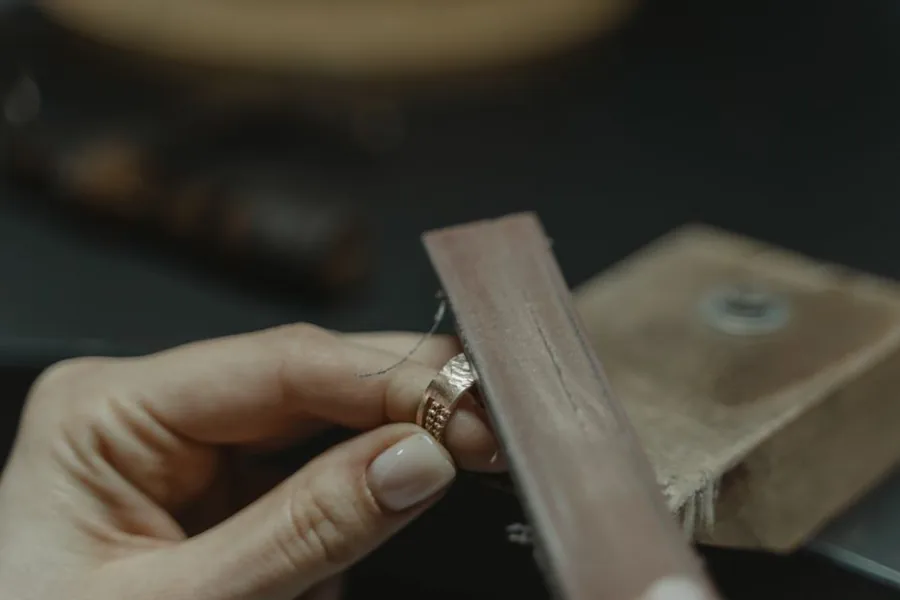
A jewellers block policy is a specialist all-risks contract built for the jewellery trade. It is not the same as a standard shop policy, and that is the point of it. Typical sections include:
- Stock and stock in trust, on the premises and in the window
- Cash and high-value items in the safe
- Goods in transit, including stock you carry to a trade fair or a customer
- Goods on memo or approval out with customers and other jewellers
- Theft, including hold-up and ram-raid, plus accidental damage
Because every section relates to trading stock or trading activity, the premium is a revenue cost of the business and comes off profit in full. There is no need to split a pure business jewellers block policy. The split question only arises if the policy bundles in something private.
Is shop security tax deductible too?
Yes, but the route depends on whether the spend is a running cost or a lasting asset.
Day-to-day security running costs are revenue expenses, deducted from profit in the year you incur them. These include:
- Monitored alarm and keyholding subscriptions
- Manned guarding or security patrols
- Repairs and servicing of an existing alarm or safe
- CCTV cloud storage and maintenance contracts
Buying the security equipment itself is usually capital expenditure, and that is treated through capital allowances rather than as a straight deduction. The good news for jewellers is that the kit you most rely on qualifies. HMRC confirms that "fire alarm and CCTV systems" count as claimable fixtures, and electrical systems are listed as qualifying integral features. A safe, intruder alarm, security shutters, reinforced display cabinets and the CCTV installation are plant and machinery for capital allowance purposes.
Most jewellers can write the full cost off in year one using the Annual Investment Allowance (AIA), which lets a business "deduct the full value of qualifying plant and machinery from profits before tax." The AIA limit is £1,000,000 a year (the level since 1 January 2019), so a typical shop fit-out sits comfortably inside it. The effect is the same as an immediate deduction, even though it is technically a capital allowance.
Companies have a second option. From 1 April 2023 full expensing gives a permanent 100% first-year allowance on new and unused main-rate plant and machinery, with no annual cap. In practice, for a jewellery shop spending well under £1,000,000, the AIA usually does the job for any business structure.
Insurance vs security: revenue or capital?
The single most common mistake we see is treating a one-off security installation as if it were an ordinary running cost. It still gets relief, but through a different mechanism, and getting it wrong can distort your accounts and your VAT. Here is the clean version.
| Cost | Tax treatment | When you get relief |
|---|---|---|
| Jewellers block insurance premium | Revenue deduction from profit | In the accounting period it relates to |
| Public/employers' liability premium | Revenue deduction from profit | In the accounting period it relates to |
| Alarm monitoring and keyholding fees | Revenue deduction from profit | In the year incurred |
| Repairs to an existing safe or alarm | Revenue deduction from profit | In the year incurred |
| New safe, alarm, shutters, CCTV install | Capital allowances (AIA or full expensing) | Usually 100% in year of purchase |
| Reinforced display cabinets (fixtures) | Capital allowances (AIA) | Usually 100% in year of purchase |
The principle is simple. If you are keeping something running, it is revenue. If you are buying a lasting asset, it is capital, and AIA normally still gives you the full deduction in year one.
What happens to an insurance payout for stolen stock?
This is the flip side that jewellers forget. If your block insurance pays out after a theft, that payout is generally taxable as trading income.
HMRC applies a symmetry rule: "in most situations, if the insurance premiums are allowable deductions from trading profits, the receipts from the policy are taxable as trading income." Because you deducted the premium, the proceeds for lost or stolen trading stock count as a trading receipt.
In practice this often nets out. You lose stock (a cost), you receive a payout (income), and the two broadly offset in the same period. But the timing can differ, and a large payout landing in a different accounting period to the loss can create a tax charge you did not budget for. Flag any significant claim to your accountant so the stock write-off and the receipt are matched correctly.
Worked example: a jeweller's claim for 2025/26
Illustrative example. Aanya runs a limited-company jewellery shop on a UK high street. In the year to 31 March 2026 she pays for insurance and upgrades her security. Her figures:
| Item | Cost | Treatment |
|---|---|---|
| Jewellers block insurance premium | £6,400 | Revenue deduction |
| Public and employers' liability | £1,100 | Revenue deduction |
| Alarm monitoring and keyholding | £1,500 | Revenue deduction |
| New grade-rated safe | £4,200 | Capital (AIA) |
| Intruder alarm and CCTV install | £7,800 | Capital (AIA) |
| Reinforced display cabinets | £5,000 | Capital (AIA) |
Revenue deductions: £6,400 + £1,100 + £1,500 = £9,000 off profit directly.
Capital spend eligible for AIA: £4,200 + £7,800 + £5,000 = £17,000, all within the £1,000,000 AIA limit, so the full £17,000 is deducted in 2025/26.
Total reduction in taxable profit for the year: £9,000 + £17,000 = £26,000.
At the 19% small profits rate of Corporation Tax for the financial year (profits under £50,000), the corporation tax saved is £26,000 x 19% = £4,940. A company taxed at the 25% main rate would save £26,000 x 25% = £6,500, before any Marginal Relief. The exact saving depends on the company's profit level and rate.
The takeaway: every figure in that table is deductible. The only question was revenue versus capital, and AIA collapsed the difference for the security kit.
The jewellery-specific rules you cannot ignore
Tax relief is the easy part. The jewellery trade has a few quirks that sit alongside it, and they catch sellers far more often than the insurance question does. If you sell gold or take cash, read this section carefully. For a deeper, sector-specific view, our accountants for jewellers page covers how these rules interact with day-to-day trading, and our guides to the investment gold VAT exemption and money laundering supervision for jewellers go further on each.
Is gold jewellery the same as investment gold for VAT?
No, and this trips people up constantly. Investment gold is VAT exempt, but the definition is narrow. HMRC defines investment gold (other than coins) as "gold of a purity not less than 995 thousandths that is in the form of a bar, or a wafer, of a weight accepted by the bullion markets." Investment gold coins are also exempt where they meet the purity and price tests in VAT Notice 701/21.
Finished jewellery is not investment gold. HMRC's guidance explicitly excludes "part manufactured or finished jewellery" from the investment gold regime. So when you sell a 9ct or 18ct gold ring, that is a standard-rated supply at the 20% VAT rate, not an exempt one. Do not assume gold content makes a sale exempt.
There is also a Special Accounting Scheme (a reverse charge) for certain gold supplies between VAT-registered traders, covering fine gold and investment gold. It applies to bullion-type transactions, not to over-the-counter retail jewellery sales, so most high-street jewellers never touch it. If you trade in gold grain or bars with other registered businesses, check whether it applies.
Can I use the VAT margin scheme on second-hand jewellery?
Often, yes. The VAT margin scheme lets you account for VAT on your margin (the difference between what you paid and what you sold for) rather than the full selling price, charged at 16.67%, one sixth of the margin. It is designed for second-hand goods where you could not reclaim VAT on purchase, which is exactly the position when you buy a pre-owned piece from a member of the public.
Two limits matter. You cannot use the margin scheme for "any item you bought for which you were charged VAT," nor for "precious metals, investment gold, or precious stones" bought as loose stones or bullion. So a second-hand finished ring bought VAT-free from a customer can go through the scheme, but loose investment-grade gold or unset gemstones cannot. Where you hold a lot of low-value second-hand stock, the global accounting scheme can simplify the record-keeping by pooling purchases and sales.
Do I need to register for money laundering supervision?
Quite possibly. If you accept or make high-value cash payments, you may be a "high value dealer" and have to register with HMRC for anti-money laundering supervision. The threshold is cash payments "of 10,000 euros or more (or equivalent in any currency) in exchange for goods," including linked payments that add up to that amount.
This is not optional. HMRC's guidance states you "must not accept or make a high value cash payment until you have registered as a high value dealer," and that "trading while not registered is a criminal offence." The supervision fees you pay HMRC are themselves a deductible business cost, but the real point is compliance: register first, then trade in cash. Many jewellers simply set a cash limit below the threshold to stay out of the regime entirely.
FAQs
Is jewellers block insurance tax deductible for a sole trader?
Yes. A sole trader deducts the premium from trading profits in the same way a company does, provided the policy is wholly and exclusively for the business. If it bundles in any private cover, only the business proportion is allowable.
Can I claim the full cost of a new shop safe and alarm in one year?
Usually yes. A safe, alarm, shutters and CCTV are plant and machinery, and the Annual Investment Allowance lets most jewellers deduct the full cost (up to £1,000,000 a year) in the year of purchase. Companies can instead use full expensing on qualifying new equipment.
Is an insurance payout for stolen jewellery taxable?
Generally yes. Because the premium was deductible, HMRC treats the payout for lost or stolen trading stock as taxable trading income. It often offsets the stock loss in the same period, but the timing should be matched carefully.
Is selling gold jewellery VAT exempt because it contains gold?
No. The VAT exemption applies only to investment gold (bars, wafers and qualifying coins of at least 995 thousandths purity). Finished jewellery is a standard-rated supply at 20%, regardless of its gold content.
Are HMRC money laundering supervision fees tax deductible?
Yes. If you have to register as a high value dealer, the supervision fees are an ordinary cost of running a compliant business and are deductible from your trading profits.
Book a free Tax Health Check →
A quick word from Zmartly
Insurance and security relief is straightforward once you know which costs are revenue and which are capital, but the VAT and money laundering rules around jewellery are where margins quietly leak. Want a jewellery accountant to check your insurance, security and VAT treatment in one go? Talk to a Zmartly accountant for jewellers and we will make sure every allowable cost is claimed and every gold and cash rule is covered.