The VAT margin scheme
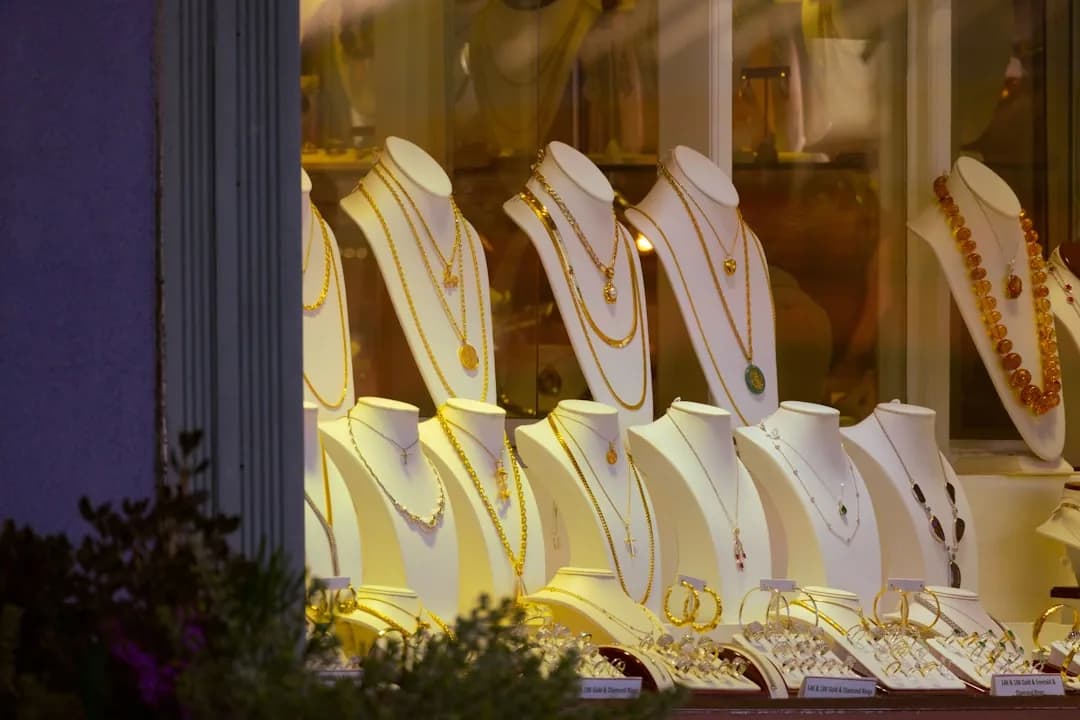
For second-hand, antique and estate jewellery we run the margin scheme so VAT falls on your profit, not the full price. We keep the stock book HMRC asks for first and reconcile it to your sales.
The VAT margin scheme, gold rules and high-value stock handled by accountants for jewellers, so you can stay at the bench.
You are a jeweller, not a bookkeeper. As specialist accountants for jewellers, we take the VAT margin scheme, your precious-metal stock and your tax return off your hands. A bench goldsmith, a high-street retailer buying estate pieces, or selling on Etsy and your own site? Jewellery has tax quirks a generalist will miss, second-hand margin VAT, the gold rules, deposits on commissions, and we know every one. Book a call with an accountant for jewellers who actually gets it, on one fixed monthly fee.

Most accountants treat a jeweller like any other shop. They file last year and miss the quirks that decide your tax bill.
The VAT margin scheme set up wrong. Gold taxed the wrong way. Stock valued badly, so your accounts and your insurance disagree. So you overpay, and you never quite know why.
A specialist jewellery accountant works the other way round. We know the trade, so we know where your money leaks. We do not just record your numbers. We improve them.
For second-hand, antique and estate jewellery we run the margin scheme so VAT falls on your profit, not the full price. We keep the stock book HMRC asks for first and reconcile it to your sales.
Investment gold is exempt; manufactured and most other items are standard-rated. We treat every line correctly so your VAT returns are right and your input tax is not lost.
We value precious-metal and gemstone stock properly, handle consignment and sale-or-return goods, and keep figures that match your insurance cover.
We account for deposits on bespoke work, work in progress and repair income cleanly, so the VAT lands at the right time and your margins are clear.
Etsy, your own site, exhibitions and the counter, we reconcile every channel and apply the right VAT treatment to each, all under Making Tax Digital.
Your accounts and tax return filed on time, Saturday-staff and bench payroll run, and your bill flagged months early so January holds no surprises.
Buy a ring, watch or estate piece from a member of the public and you get no VAT invoice. Under the normal rules, you would charge VAT on the full resale price, even though you could not reclaim a penny on the way in.
The VAT margin scheme fixes that. You charge VAT only on your margin, the difference between what you paid and what you sell it for, not the full selling price. On low-margin second-hand pieces, that is a real saving on every sale.
It only applies to eligible second-hand, antique and collectable goods, and it comes with strict record-keeping. You must keep a stock book showing each item in, each item out, and the margin on it. We set the scheme up properly, keep the VAT stock book HMRC inspects, and make sure no eligible piece is ever taxed in full.
Gold is not one thing for VAT. Investment gold, broadly high-purity bars, wafers and certain coins held as an investment, is VAT-exempt under HMRC’s gold rules (VAT Notice 701/21A). You do not charge VAT on it.
Manufactured jewellery and most other gold items are different. Sell a finished gold ring or chain and that is a standard-rated supply, with VAT due in the normal way (subject to the margin scheme where the piece is second-hand and eligible).
Get this wrong and you either lose input tax you were entitled to, or you invoice incorrectly and carry the risk. We map every gold flow you have, new, second-hand, investment-grade and scrap, so each is treated correctly and your returns stand up to a check.
For most jewellers, stock is the biggest number on the balance sheet and the biggest risk in the shop. Value it badly and your profit, your tax and your insurance cover all drift apart.
We value precious-metal and gemstone stock on a proper, consistent basis, and we separate the goods you actually own from consignment and sale-or-return (memo) pieces that belong to someone else until they sell. Those should not sit in your stock figure.
We also help you run a defensible stocktake and keep your accounts in step with the values your insurer relies on, so a claim, or an HMRC enquiry, does not turn up a mismatch you cannot explain.
Bespoke commissions and repairs do not behave like a normal over-the-counter sale. A customer pays a deposit, you order materials and findings, work in progress builds up, and the final piece is handed over weeks or months later.
For VAT, a deposit usually creates a tax point straight away, so the VAT can fall due long before the piece is finished. Hallmarking and Assay Office fees, materials and findings are costs of the job; repairs and commissions are income that needs recording cleanly against it.
We build this into your invoicing so VAT does not surprise you, track work in progress against each commission, and make sure repair and commission income is captured in full and taxed at the right time.
Few jewellers sell through one channel any more. You might have a shop counter, an Etsy shop, your own website and the odd fair or exhibition, each with its own fees, payouts and VAT quirks.
Marketplace and card fees eat into margin and need recording correctly, and the VAT treatment can differ between a new piece, an eligible second-hand piece on the margin scheme, and a sale to a customer abroad.
We reconcile every channel back to your bookkeeping, apply the right VAT treatment to each, and keep you ready for Making Tax Digital, so your returns are right first time, whichever till the sale came through.
As a sole trader, it is simple. You pay Income Tax and National Insurance through Self Assessment, usually with Payments on Account.
As you grow, a limited company often keeps more in your pocket. You pay Corporation Tax, then take a small salary and dividends, and you get a clearer line between your money and the business holding high-value stock.
But a company means more admin: accounts at Companies House and tighter records. With valuable stock and insurance to think about, the structure decision matters more for jewellers than for most.
The right answer depends on your income and your plans. We will tell you which one puts more money in your pocket.
Most independent jewellers pay between £129 and £250 a month. That is less than the margin on a single decent sale.
No hourly rates. No surprise bills. One fixed fee, a named, qualified accountant for jewellers, and a 30-day money-back guarantee.
Startups and small companies that need essential compliance and year-end support without VAT or payroll.
Growing businesses that need complete accounting services, VAT return management, and payroll handling.
Established businesses that want strategic mentoring, business planning, and a part-time finance director driving growth.
I’ve had an excellent experience working with Zmartly. Harvey and the team are professional, responsive, and genuinely supportive. They explain things clearly, stay on top of deadlines, and always look for practical ways to save tax and improve…

I’ve used several accountants in the past, but hands down there is no one better than Harvey at Zmartly. He really understands exactly what advice you’re looking for and explains everything clearly and professionally. Nothing ever feels rushed…

Have been working Zmartly for nearly 2 years now for my E-Commerce Business and they have been spot on in every aspect. they have given me amazing advice to save tax and they are always on point with…

I started working with Zmartly Accountants after having serious issues with my previous accounting firm. They were missing deadlines, incorrectly calculating VAT, constantly late, and extremely difficult and frustrating to communicate with. Switching to Zmartly was a huge…

I've had a terrible experience with multiple accountants. Zmartly have been incredible. If you do ecommerce / Amazon FBA you definitely need to go with someone who understands the complexities with it. Thanks to Harvey and his amazing…

I’ve had an excellent experience working with Zmartly. Harvey and the team are professional, responsive, and genuinely supportive. They explain things clearly, stay on top of deadlines, and always look for practical ways to save tax and improve…
I’ve used several accountants in the past, but hands down there is no one better than Harvey at Zmartly. He really understands exactly what advice you’re looking for and explains everything clearly and professionally. Nothing ever feels rushed…
Have been working Zmartly for nearly 2 years now for my E-Commerce Business and they have been spot on in every aspect. they have given me amazing advice to save tax and they are always on point with…
I started working with Zmartly Accountants after having serious issues with my previous accounting firm. They were missing deadlines, incorrectly calculating VAT, constantly late, and extremely difficult and frustrating to communicate with. Switching to Zmartly was a huge…
I've had a terrible experience with multiple accountants. Zmartly have been incredible. If you do ecommerce / Amazon FBA you definitely need to go with someone who understands the complexities with it. Thanks to Harvey and his amazing…
No, provided you meet the conditions, the VAT margin scheme lets you account for VAT only on the difference between what you paid and what you sell it for. You can't reclaim VAT on the purchase (there usually isn't any, as you bought from a private individual), and you must keep a stock book recording each item bought and sold. We set this up and run the records HMRC inspects.
It depends on the type. Investment gold, generally bars and wafers of at least 995 thousandths fineness recognised by the bullion market, is VAT-exempt. Finished and part-finished jewellery is standard-rated. Scrap and broken jewellery sold between VAT-registered traders falls under the special accounting scheme, where the buyer (not you) accounts for the VAT. Each route is treated differently, which is exactly where generalists slip up.
If you accept or make a cash payment of €10,000 or more (or the equivalent in any currency) for goods, in one go or as linked transactions, you must register with HMRC for money-laundering supervision before taking that payment. Registration is renewed annually and a fee is payable per premises. Trading as an unregistered High Value Dealer is a criminal offence, so we get you registered and keep the AML checks in order.
For your customers it varies: UK legal-tender coins from The Royal Mint (such as Sovereigns and Britannias) are exempt from CGT, while gold bars and non-legal-tender coins are chargeable, subject to the annual exempt amount of £3,000 for 2025/26. This is a frequent customer question and a genuine selling point, we'll brief you so you can answer it accurately.
Once your VAT-taxable turnover exceeds £90,000 in any rolling 12-month period (the 2025/26 threshold), or if you expect to breach it in the next 30 days. With the margin scheme, it's the margins, not full sale values, that count towards your taxable turnover on those sales, which can change your registration position. We monitor this for you.
Yes, display cabinets, safes, alarm and CCTV systems, laser welders, casting and polishing kit and bench tools generally qualify as plant and machinery for the Annual Investment Allowance, giving 100% relief against profit in the year you buy them. We make sure every qualifying asset from a refit or workshop upgrade is captured.
Memo and consignment goods sit in your shop but you don't own them until they sell, so they shouldn't be in your closing stock or balance sheet as yours. Getting this wrong inflates your stock figure and your tax. We separate owned stock from sale-or-return lines and value owned stock at the lower of cost and net realisable value.
Plain-English explainers, kept current with the latest HMRC rules.
Zmartly Ltd · 12 Hammersmith Grove, London W6 7AP · 020 8175 5145 · [email protected]
CIMA-regulated. Qualified accountants (ACMA, CGMA, ACCA, FCCA).