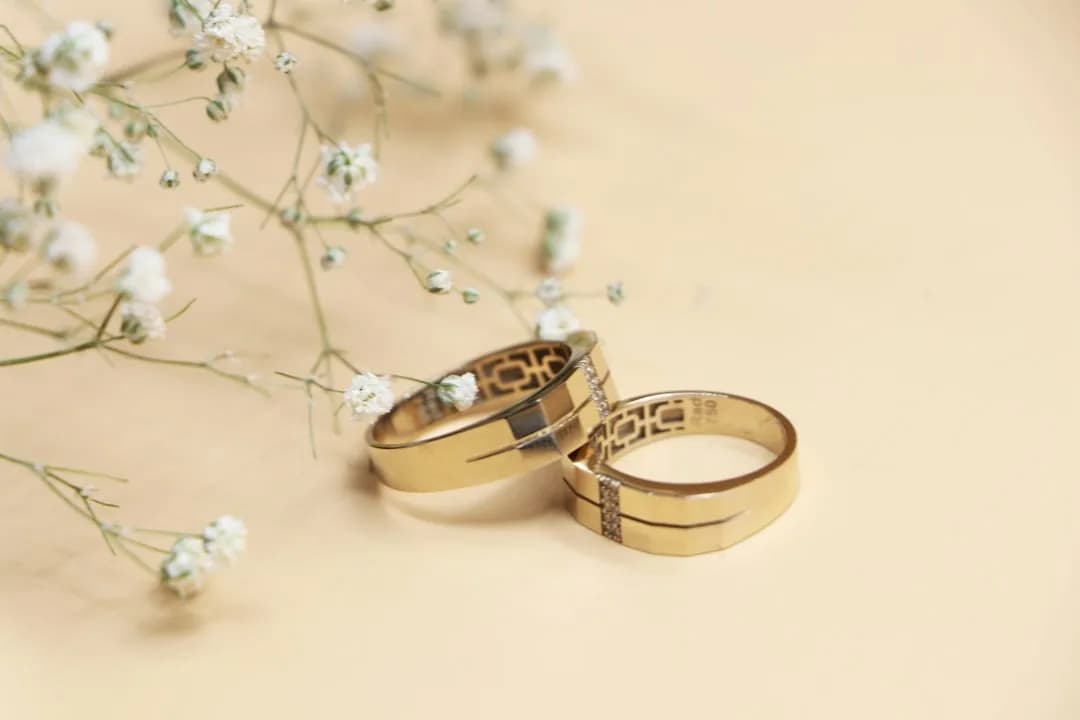
If you make or sell precious-metal articles in the UK, the law forces you to hallmark most of them before you can describe and sell them. The Assay Office charges you for that. So the obvious question follows: can you knock those fees off your taxable profit?
The short version is yes, in almost every case, and this guide explains exactly why, where the fees go on your accounts, and the one or two edge cases where you need to think a little harder.
We will also clear up the related questions jewellers ask in the same breath: the VAT treatment of gold and second-hand pieces, capital allowances on the kit you buy, and the money laundering registration fee that many jewellers also pay. Figures here are for the 2025/26 tax year unless stated.
Are hallmarking fees tax deductible?
Yes. Assay Office hallmarking fees are an allowable revenue expense for a jewellery business, so you deduct them in full when working out your taxable trading profit. They are a normal, recurring cost of getting your stock ready to sell.
The reason is the test that governs every business deduction in the UK. An expense is allowable if it is "incurred wholly and exclusively for the purposes of the trade, profession or vocation". That wording sits in section 34 of the Income Tax (Trading and Other Income) Act 2005 for sole traders and partnerships, and section 54 of the Corporation Tax Act 2009 for limited companies. HMRC sets out the same rule in its Business Income Manual (BIM37007).
Hallmarking fees clear that bar comfortably. You only pay them because you are selling regulated precious-metal articles, there is no private benefit, and you would not incur the cost if you were not trading.
Why do Assay Office fees pass the wholly and exclusively test?
The wholly and exclusively test has teeth. HMRC can refuse a deduction if there is any non-business purpose mixed in, and dual-purpose spending often gets blocked rather than split.
Hallmarking does not run into that problem. The cost exists solely to make trade stock legally saleable, so the purpose is purely commercial. There is no personal element to argue about, which is why these fees rarely cause a dispute.
It helps to picture the chain of costs a piece of jewellery picks up before it sells:
- the raw metal and stones (stock and raw materials)
- your labour and any subcontracted work
- the Assay Office fee to hallmark it
- packaging, insurance and selling costs
Every link in that chain is a revenue cost of selling the finished article. HMRC's own list of allowable expenses for the self-employed includes stock and raw materials for resale, plus the running costs of the trade. Hallmarking fees sit naturally in that group. They are part of bringing your goods to a saleable condition.
Where do hallmarking fees go in your accounts?
Treat them as a direct cost of sale, alongside the metal and any outwork. In practice most jewellers post them to a "hallmarking" or "Assay Office charges" nominal within cost of sales, or fold them into stock cost.
Two practical points keep this clean:
First, match the fee to the period. If you hallmark a batch in March but only sell the pieces in May, strict accounting puts the cost into the value of unsold stock at your year end rather than straight to the profit and loss account. For most small workshops the timing difference is small, but it matters at year end when stock is valued.
Second, keep the Assay Office invoices. They show the fee is a genuine trade cost and tie it to specific items, which is exactly the evidence HMRC expects if it ever asks. Good records here also feed straight into your bookkeeping and your year-end accounts.
If your record-keeping for stock and costs of sale feels like guesswork, our bookkeeping services for jewellers and other UK businesses take that off your plate so the numbers behind your tax return are right first time.
Illustrative example: a sole-trader silversmith
Illustrative example. Priya runs a small silversmithing workshop as a sole trader. Her profits sit comfortably in the basic-rate band for 2025/26.
Over the year she pays:
| Cost | Amount | Treatment |
|---|---|---|
| Assay Office hallmarking fees | £1,840 | Allowable revenue expense |
| HMRC money laundering supervision annual fee (one premises) | £400 | Allowable revenue expense |
| Total deducted from profit | £2,240 |
Because Priya is a basic-rate taxpayer, every £1 of allowable expense saves her 20% Income Tax plus 6% Class 4 National Insurance, a combined 26% for 2025/26.
So the tax and NIC saving from these two costs is:
£2,240 x 26% = £582.40
The fees themselves are still real money out of the door. The point is that they reduce her taxable profit pound for pound, so the true cost to her after relief is £2,240 minus £582.40, which is £1,657.60.
If you want to sense-check the rate bands behind a figure like this, our self-employed tax calculator does the income tax and National Insurance maths for you.
Is the money laundering registration fee also deductible?
Often, yes. Many jewellers count as high value dealers because they accept or make cash payments of 10,000 euros or more (or the equivalent in any currency) for goods. If that is you, you must register for money laundering supervision with HMRC (gov.uk: high value dealer registration).
The fees you pay to register and stay registered are a cost of being allowed to trade in your sector, so they pass the wholly and exclusively test as a revenue expense. For 2025/26 the published charges include a £300 one-off application fee, £400 per premises that you pay again as an annual fee, and a £40 approval check per relevant person tested for high value dealers. Deduct them in the same way as your hallmarking fees.
A quick warning on the threshold. If you take a single cash payment of 10,000 euros or more, or several payments for one transaction that add up to that, you fall inside the high value dealer rules. So can deliberately broken-up payments that look designed to dodge the limit. If in doubt, register, because trading as an unregistered high value dealer is an offence.
What about the equipment behind your hallmarking work?
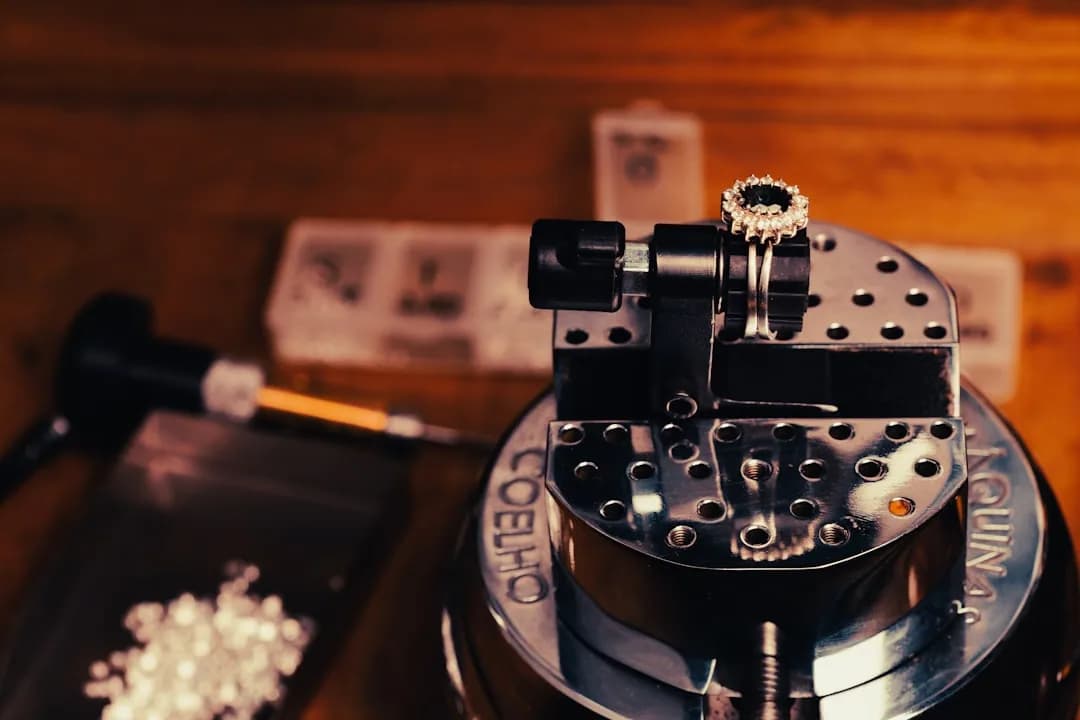
Here is the one place the answer changes. The hallmarking fee itself is a revenue cost. But the kit you buy to prepare, mark or finish your pieces, such as a laser-marking machine, an engraving system, a polishing lathe or a bench setup, is capital expenditure, not a day-to-day running cost.
Capital items are not deducted as expenses. Instead you claim capital allowances. For most plant and machinery you can use the Annual Investment Allowance (AIA), which lets you deduct the full cost in the year of purchase up to £1,000,000, a limit that has applied since 1 January 2019 (gov.uk: Annual Investment Allowance). Tools, machinery and most workshop equipment qualify.
Illustrative example. Priya buys a laser engraving and marking machine for £6,000. She claims AIA, deducting the whole £6,000 from her profit in the year of purchase. As a basic-rate taxpayer saving 26% combined, that is a £1,560 reduction in her tax and NIC bill (£6,000 x 26%).
The simple rule of thumb: the act of hallmarking is a running cost, the machine that does the marking is a capital asset. Both reduce your tax, just through different routes. Getting that split right is part of what good corporation tax and tax advisory work is for if you trade through a limited company.
How does VAT interact with hallmarking and gold?
If you are VAT-registered, the VAT charged on your Assay Office fees is normally recoverable as input tax in the usual way, because the fees relate to your taxable business. That is separate from whether the fee is deductible for income or corporation tax, which it is.
Gold is where jewellers get caught out, so it is worth being precise.
Investment gold is VAT-exempt. Under VAT Notice 701/21, investment gold means gold of a purity not less than 995 thousandths in bar or wafer form of a weight accepted by the bullion markets, or qualifying gold coins minted after 1800 with a purity of at least 900 thousandths. Supplies of investment gold are exempt from VAT, although certain suppliers can opt to tax. Most ordinary jewellery is not investment gold, so it is standard-rated at 20%.
The Special Accounting Scheme (reverse charge) for gold. To stop missing-trader fraud, supplies of non-investment gold (and opted-to-tax investment gold) between VAT-registered businesses use a reverse charge. The buyer accounts for the output tax rather than the seller, and the seller's invoice must state that the VAT is payable by the buyer. This catches business-to-business gold dealing, not a retail sale to a consumer.
The VAT margin scheme for second-hand pieces. If you buy second-hand jewellery from someone who could not charge you VAT, you can use the margin scheme to pay VAT only on your profit margin rather than the full selling price. There is a catch: the scheme cannot be used for investment gold, precious metals, precious stones or new jewellery. The global accounting scheme is a simpler variant for high-volume, low-value second-hand stock. You cannot use either scheme if VAT was shown separately on your purchase invoice.
Whichever scheme applies, your hallmarking fees stay deductible for income or corporation tax. The VAT scheme only changes how you account for VAT on the goods, not whether the Assay Office charge reduces your taxable profit.
For a fuller picture of the tax reliefs, VAT quirks and record-keeping that apply to your trade, see our dedicated page for accountants for jewellers.
Frequently asked questions
Are hallmarking fees an allowable expense for a sole trader?
Yes. Assay Office hallmarking fees are a revenue cost incurred wholly and exclusively for your trade, so a sole trader deducts them in full when calculating taxable profit, under section 34 ITTOIA 2005.
Can a limited company claim hallmarking fees against corporation tax?
Yes. A company deducts hallmarking fees as an allowable expense under section 54 CTA 2009, on the same wholly and exclusively basis as a sole trader. They reduce the profit your corporation tax is charged on.
Is the Assay Office fee a capital cost or a revenue cost?
It is a revenue cost. You pay it repeatedly to make stock saleable, so it is deducted as an expense in the period. By contrast, machines that do the marking are capital and qualify for capital allowances such as the AIA instead.
Can I reclaim the VAT on my hallmarking fees?
If you are VAT-registered and the fees relate to your taxable business, the VAT on Assay Office charges is recoverable as input tax under the normal rules. This is separate from, and additional to, deducting the fee for income or corporation tax.
Do jewellers have to register for money laundering supervision?
You must register with HMRC as a high value dealer if you accept or make cash payments of 10,000 euros or more for goods. The registration and annual fees are then deductible revenue expenses for your business.
Are hallmarking fees deductible if I sell second-hand jewellery under the margin scheme?
Yes. The margin scheme only changes how you account for VAT on the goods. Your hallmarking fees remain an allowable deduction against income or corporation tax regardless of the VAT scheme you use.
Book a free Tax Health Check →
Talk to an accountant who knows the jewellery trade
Hallmarking, gold VAT, capital allowances and money laundering rules all collide in one small workshop, and getting the split right is where the savings sit. If you would like that handled properly, book a free call with a Zmartly accountant and we will make sure every allowable cost is claimed and every figure on your return stands up.