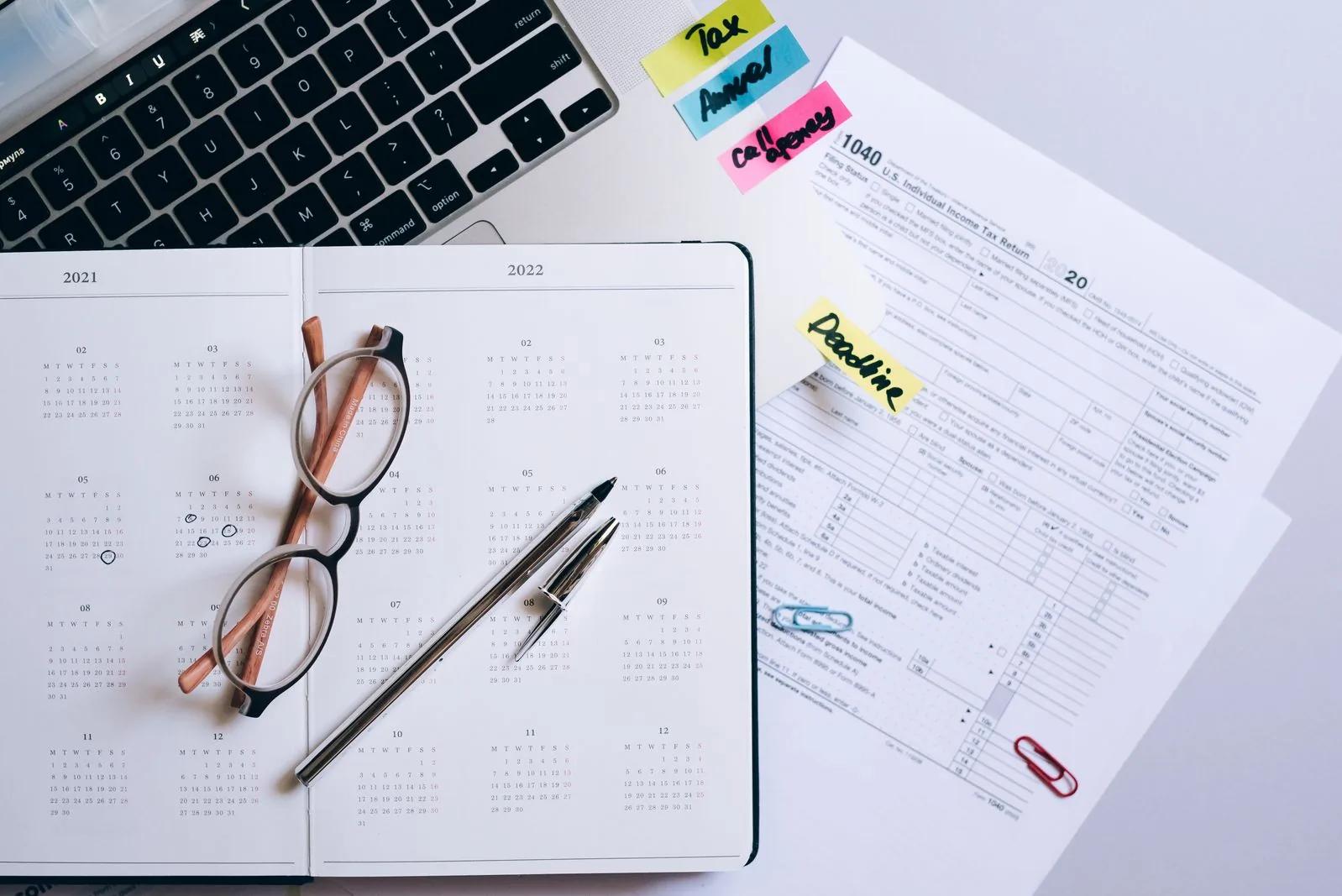
The UK tax year starts on 6 April and ends on 5 April: 2026/27 runs from 6 April 2026 to 5 April 2027, and 2027/28 runs from 6 April 2027 to 5 April 2028. For a sole trader selling on Etsy, those dates define the personal tax year, while filing the return and paying the balance usually happen after that year has ended.
The tax year ends before the filing deadline
5 April closes the tax year. It doesn't mean your Self Assessment return is due that day. Self Assessment is the system HM Revenue and Customs (HMRC) uses to collect tax that hasn't already been dealt with through wages or pensions.
For a seller, the useful distinction is between earning the profit, reporting it and paying the tax. A busy Christmas can belong to one tax year, while the deadline to report it falls in the next. Keep the tax year on your records and calendar entries so you don't attach a January deadline to the wrong sales period.
The Self Assessment guidance sets out the annual cycle. You can send a return after the relevant year ends. Filing early tells you what you owe and gives you time to arrange payment; it doesn't require you to wait until the filing deadline.
UK tax year dates for 2026/27 and 2027/28

The slash in 2026/27 means the year spans parts of two calendar years. It includes April to December 2026 and January to early April 2027. A calendar-year sales report ending in December won't, by itself, cover that whole tax year.
| Event | 2026/27 tax year | 2027/28 tax year |
|---|---|---|
| Tax year starts | 6 April 2026 | 6 April 2027 |
| Tax year ends | 5 April 2027 | 5 April 2028 |
| Tell HMRC if you need to register | 5 October 2027 | 5 October 2028 |
| Usual paper return deadline | 31 October 2027 | 31 October 2028 |
| Usual online return and balancing payment deadline | 31 January 2028 | 31 January 2029 |
The table applies the annual Self Assessment timetable to each tax year. It shows the ordinary deadlines for an individual, not a special deadline in an HMRC notice. For the preceding 2025/26 year, the usual online filing and payment deadline is 31 January 2027. That January date doesn't close the 2026/27 tax year, which is still running.
Registration comes before your first filing deadline
If you're starting a shop as a sole trader, check whether you need to send a return. For 2026/27, HMRC says sole traders with trading income above £1,000 before expenses must send one. That test concerns sales income before deductions, not the amount left after paying for stock, postage and marketplace fees.
Someone who needs to file for the first time must normally tell HMRC by 5 October following the end of the relevant tax year. Use the Self Assessment registration service to check the right route. If you registered before but stopped filing, you may need to reactivate your account rather than start again.
Registering, filing and paying are separate jobs. Completing the registration step doesn't report your sales or settle the bill. Our Self Assessment deadline guide explains the filing timetable, including the different paper and online dates.
January and July can cover different tax years
The usual balancing payment date is 31 January after the tax year ends. A balancing payment settles what remains due for that completed year. Payments on account are advance instalments towards the next bill, usually due on 31 January and 31 July.
That is why a seller's first January bill can include both the completed year's balance and an advance instalment. Look at the tax year beside each charge in your account. Adding them together without checking the labels can make it look as though HMRC has charged twice for the same profit.
Payments on account aren't required if the previous year's tax was less than £1,000, or more than 80 per cent of that year's tax was paid outside Self Assessment. Where they apply, each instalment is generally half the previous year's relevant tax bill. Check the scope in HMRC's payments on account guidance before treating your whole account balance as the calculation base.
Allow time for the payment method you choose. The Self Assessment payment guide explains clearing times and weekend arrangements. If you can't pay in full, contact HMRC about a payment plan and keep the filing deadline in view.
Illustration: an Etsy seller's first tax year
This illustration uses invented round amounts to explain the calendar, not a real client's results or a tax estimate. Suppose an Etsy sole trader makes their first sale in July 2026. By 5 April 2027, the shop has £20,000 of sales and £8,000 of allowable business expenses, leaving £12,000 of profit in this simplified illustration.
The calculation is £20,000 minus £8,000 equals £12,000. It doesn't establish the seller's tax bill: other income, allowances and the treatment of individual costs still matter. The sales exceed the registration test even though expenses reduce the profit.
- From the first sale, the seller keeps sales records, expense evidence and marketplace statements.
- On 5 April 2027, the 2026/27 tax year ends. The seller checks the records for the relevant trading period.
- By 5 October 2027, the seller tells HMRC that they need to complete their first return.
- By 31 January 2028, the seller submits the online return and pays any balancing amount due for 2026/27.
That final payment date settles the balance for 2026/27. If payments on account apply, an advance payment for 2027/28 also falls due in January, followed by the second in July. Keep the tax reserve separate from the money earmarked for the shop's next stock order.
Quarterly updates have their own dates
Sellers using Making Tax Digital (MTD) for Income Tax send summaries of their business income and expenses through compatible software. These updates cover the tax year so far. They aren't separate tax returns, and sending one doesn't replace the year-end return.
For standard update periods in 2026/27, the timetable is below. The later updates include earlier months, so the third update doesn't report only the Christmas quarter. Check the cumulative totals against your records before sending them.
| Standard period covered | Update deadline |
|---|---|
| 6 April to 5 July 2026 | 7 August 2026 |
| 6 April to 5 October 2026 | 7 November 2026 |
| 6 April 2026 to 5 January 2027 | 7 February 2027 |
| 6 April 2026 to 5 April 2027 | 7 May 2027 |
Calendar update periods are available for accounting periods running from 1 April to 31 March. Their update deadlines are the same. Choose the appropriate setting before sending the first update, because HMRC says you can't change the update periods for the rest of that tax year once an update has been sent.
HMRC's quarterly update instructions also require an update when there has been no income or expense activity. Our Making Tax Digital for Income Tax guide explains who needs to use the system. Don't assume that every new Etsy shop starts quarterly reporting immediately.
The UK financial year is a different calendar
For Corporation Tax, the financial year begins on 1 April. Your company's accounting period can be different: a company with a December year end doesn't acquire an April year end simply because Corporation Tax uses financial years.
HMRC's Corporation Tax guidance explains how rates relate to accounting periods. If different rates apply across an accounting period, the calculation divides that period by the days each rate applies. For an owner who also files a personal return, the company and personal timetables need separate calendar entries.
Check your company's actual accounting dates before planning its return or payment. Our guide to limited company deadlines covers the company timetable. Don't use a personal January filing reminder as a substitute for those dates.
Keep VAT periods beside the personal tax calendar
A seller registered for value added tax (VAT) should check the return periods assigned to their business. Don't assume a VAT period ends on 5 April because the personal tax year does. Label each calendar entry with the tax, period covered and action required: prepare records, file or pay.
Before a busy sales period, review the deadlines that follow it. Pull together marketplace statements and expense records while the transactions are still easy to explain. A calendar is more useful when it tells you which records to prepare, rather than merely announcing that a deadline is close.
Frequently asked questions
When does the UK tax year start and end?
The UK tax year starts on 6 April and ends on 5 April the following year. For example, 2026/27 starts on 6 April 2026 and ends on 5 April 2027. The deadline for submitting an online Self Assessment return comes after the year ends, rather than on its final day.
What are the UK tax year dates for 2027/28?
The 2027/28 UK tax year runs from 6 April 2027 to 5 April 2028. Under the ordinary annual timetable, the online Self Assessment return and balancing payment are due on 31 January 2029. Keep that filing date separate from any payments on account or quarterly update deadlines.
Is the UK financial year the same as the tax year?
The Corporation Tax financial year starts on 1 April, while the personal tax year starts on 6 April. A company's own accounting period can differ from both. If you run a limited company and also complete a personal return, keep separate records of the periods and deadlines for each.
Does the tax year end on 31 January?
No, the personal tax year ends on 5 April. 31 January is normally the online Self Assessment filing and balancing payment deadline for the tax year that ended the previous April. A first payment on account towards the next bill may also be due on that January date.
Do Making Tax Digital updates replace my annual return?
No, Making Tax Digital for Income Tax quarterly updates are summaries of business income and expenses, not tax returns. You still need to complete the year-end return through compatible software. The updates cover the tax year so far, and the standard and calendar update options share the same deadlines.
Can I file my return before January?
Yes, you can submit your Self Assessment return after the relevant tax year has ended without waiting until January. Filing earlier helps you establish the bill and plan payment. Check whether you need to register or reactivate an account first, and keep evidence for the figures you report.