Most Shopify sellers think VAT registration is simple. You watch your sales, you hit £90,000 over a rolling 12 months, you register. Done.
That rule is real, but it has a trap built into it. The trap is not about how much you sell. It's about where your stock physically sits at the moment a customer hits "buy".
If you're based outside the UK and you hold stock in a UK warehouse, the £90,000 threshold doesn't apply to you at all. You can be liable to register from your very first sale, even if that sale is £12. This catches a lot of sellers who move stock into a UK fulfilment centre to get faster delivery, then assume they're still under the threshold.
This guide explains exactly when a Shopify seller has to register for VAT, why stock location is the deciding factor, and how to tell which set of rules applies to you. Every figure here is dated to the 2025/26 tax year and linked to the relevant HMRC guidance.
When does a Shopify seller have to register for VAT?
If your business is established in the UK, you must register for VAT once your total taxable turnover goes over the registration threshold of £90,000 in any rolling 12-month period, or if you expect to go over it in the next 30 days alone. That's the headline rule, and for a UK-based Shopify seller it's usually the one that matters.
There are two separate tests, and either one can trigger registration.
- The historic test. Add up your taxable turnover for the last 12 months at the end of every month. If it goes over £90,000, you must register within 30 days, and your registration takes effect from the first day of the second month after you went over.
- The future test. If at any point you realistically expect your taxable turnover to exceed £90,000 in the next 30 days on its own, you must register, with effect from the date you formed that expectation.
The current registration threshold is £90,000 and the deregistration threshold is £88,000, both in force since 1 April 2024 (gov.uk: register for VAT). The standard VAT rate is 20% (gov.uk: VAT rates).
But there's a catch that the threshold rule hides. The £90,000 figure is only available to businesses that are established in the UK. If you're not, the rules are very different, and that's where stock location comes in.
What is the stock-location trap?

Here's the answer in two sentences. If you're a seller who is not established in the UK and you hold stock in the UK at the point of sale, you have no registration threshold and you must register for VAT and account for it on those sales straight away. The £90,000 threshold simply isn't available to you.
HMRC's guidance on goods sold directly to UK customers is blunt about it. An overseas seller who owns goods of any value that are located in the UK at the point of sale must register and account for VAT on any sales made directly to UK consumers. "Any value" means exactly that, from £1 upwards.
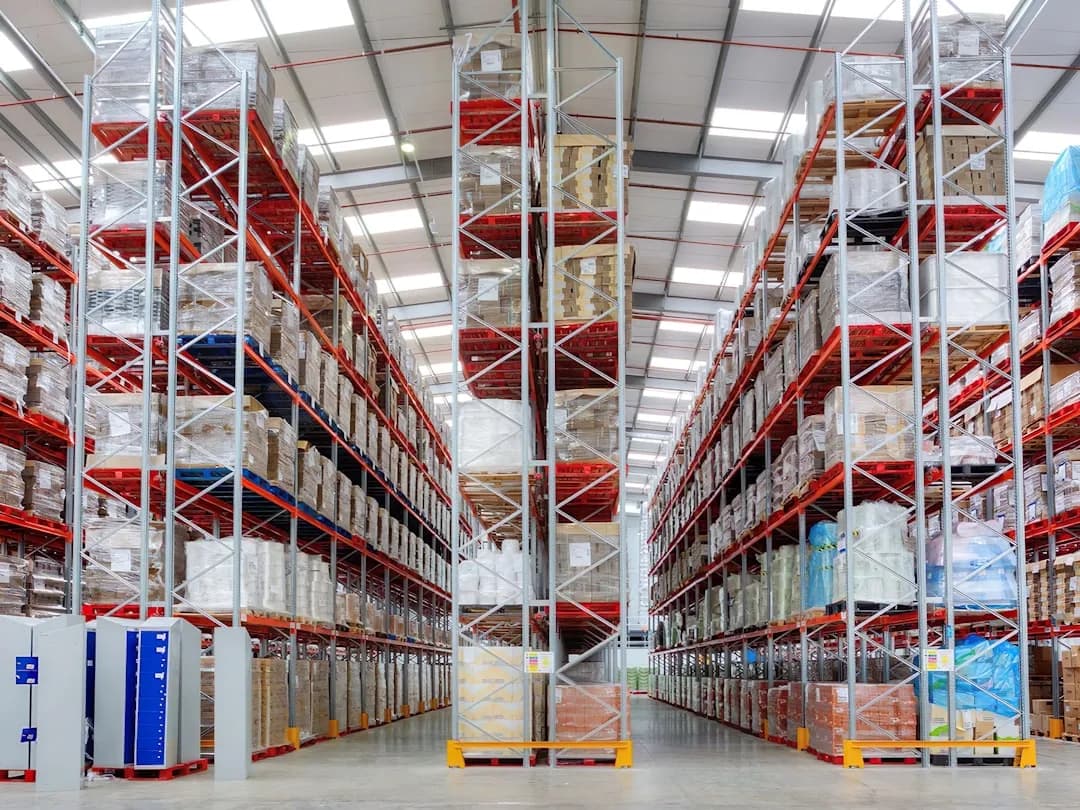
This is the part that surprises people. Sellers often move stock into a UK third-party logistics (3PL) or fulfilment warehouse purely for speed and shipping cost. Faster delivery, happier customers. But the moment that stock is sitting on UK soil when an order is placed, and you're an overseas business, you've stepped outside the threshold world entirely.
The trap has three ingredients, and you need all three for it to bite:
- Your business is not established in the UK.
- You hold or own stock that is physically located in the UK.
- That stock is in the UK at the point of sale (not just passing through, but available to fulfil orders from here).
Get all three, and registration is mandatory from your first qualifying sale. No grace period for hitting £90,000, because there is no threshold to hit.
Are you "established" in the UK or not?
This is the single most important question, because it decides which rulebook you're in. A business that is not established in the UK is what HMRC calls a non-established taxable person, or NETP.
Per VAT Notice 700/1, you have a UK establishment if either of these is true:
- the place where essential management decisions are made and your central administration is carried out is in the UK, or
- your business has a permanent physical presence with the human and technical resources to make or receive taxable supplies in the UK.
Read that second point carefully. A pure storage warehouse, on its own, is generally not enough to make you "established" in the UK. Renting space in a 3PL where staff you don't control simply pick and pack your parcels does not usually give you the human and technical resources to make supplies. So you can have stock physically here and still be an NETP. That combination, NETP plus UK stock, is precisely the trap.
If you genuinely run your business from the UK, with people and premises making the sales happen here, you're established and the £90,000 threshold is back in play. If you run it from overseas and merely warehouse goods here, you're an NETP with no threshold.
Because the line can be fine, this is worth getting a second opinion on before you assume which side you're on. Our team works with Shopify sellers on exactly this question.
What if my stock is outside the UK at the point of sale?
Different rules, and they hinge on the value of each consignment.
Since 1 January 2021, for goods that are outside the UK at the point of sale and sent to a UK consumer, the point at which VAT is collected moved from the border to the point of sale for consignments not exceeding £135 in value (gov.uk: VAT and overseas goods sold directly to customers in the UK). If you sell such goods directly through your own Shopify store, you must register for UK VAT and charge and account for VAT at the point of sale, unless you only sell to UK VAT-registered businesses.
For consignments over £135, normal import VAT and customs rules apply at the border instead, rather than supply VAT at the point of sale.
A few details that trip people up:
- The £135 figure is the consignment's "intrinsic value": the price the goods are sold for, excluding transport and insurance costs (unless they're bundled into the price) and excluding other taxes and charges. It's measured per consignment, not per item.
- If your UK customer is a VAT-registered business and gives you their VAT number, you don't charge the VAT. They account for it themselves under the reverse charge, and you add a note such as "reverse charge: customer to account for VAT to HMRC".
So even with no UK stock at all, an overseas Shopify seller posting low-value parcels into the UK can still be required to register. The stock-location trap is the harshest version of the rule, but it isn't the only route to a registration obligation.
How is Shopify different from Amazon or eBay here?
This is where Shopify sellers get caught out, because advice written for marketplace sellers doesn't transfer.
When goods are sold through an online marketplace such as Amazon or eBay, and the seller is an overseas business, the marketplace is deemed to be the supplier and is liable to account for the VAT. That covers low-value imported consignments and goods already located in the UK at the point of sale. The platform collects and pays the VAT for you on those B2C sales.
Shopify is not an online marketplace in this sense. It's your own shop. There's no deemed supplier stepping in to handle the VAT. So for direct sales through your Shopify store, the existing rules remain unchanged: you, the seller, remain liable to register and account for VAT.
In plain terms: the thing that protects a lot of Amazon FBA sellers from a registration headache does not protect you on Shopify. If you sell on both, the same stock can be treated very differently depending on the channel the order came through.
| Scenario (overseas seller, B2C) | Who accounts for the VAT? | Threshold available? |
|---|---|---|
| Stock in UK, sold via your own Shopify store | You. You must register and account | No |
| Stock in UK, sold via Amazon or eBay | The marketplace (deemed supplier) | Not relevant to you |
| Stock outside UK, consignment £135 or less, sold via Shopify | You. VAT at point of sale, you must register | No |
| Stock outside UK, consignment over £135, sold via Shopify | Import VAT/customs at the border | N/A |
Illustrative example: the same seller, two warehouses
Illustrative example. Lena runs a homeware brand from Germany and sells to UK customers through her own Shopify store. Her business is managed entirely from Germany, so she's a non-established taxable person for UK VAT. Her UK sales run at about £4,000 a month, well under £90,000 a year.
Setup A: stock stays in Germany. Each order is a single item, sold for £40, posted to the UK. Each consignment is under £135 and the goods are outside the UK at the point of sale. Lena must register for UK VAT and charge VAT at the point of sale on these B2C orders. On a £40 sale (treated as VAT-inclusive at the standard rate of 20%), the VAT element is £40 divided by 6, which is £6.67, leaving £33.33 net. She reports that output VAT on her UK VAT return.
Setup B: she moves stock to a UK fulfilment warehouse. To speed up delivery, Lena ships a pallet to a UK 3PL. Nothing else about her business changes. Her turnover is still around £48,000 a year, still nowhere near £90,000. But now her stock is in the UK at the point of sale, and she's still an NETP. She must register and account for UK VAT on those sales regardless of turnover. The £90,000 threshold never enters the picture.
The lesson: the warehouse move that looked like a pure logistics decision changed her VAT position. Same products, same prices, same customers, same modest turnover. The only thing that moved was the stock, and that was enough.
A quick decision walkthrough
Work through these in order. Stop at the first "yes" that gives you an answer.
- Is your business established in the UK? If yes, the £90,000 rolling threshold applies. Register when you cross it (or expect to in the next 30 days). Skip the rest.
- You're an NETP. Do you hold stock in the UK at the point of sale? If yes, you must register and account for VAT now, from your first sale. No threshold.
- No UK stock, but you post consignments of £135 or less to UK consumers directly via Shopify? If yes, you must register and charge VAT at the point of sale on those orders.
- No UK stock, and your consignments are over £135? Normal import VAT and customs apply at the border; the buyer or importer deals with import VAT, and you may not need a UK VAT registration for those specific sales.
If you answered "yes" at step 2 or 3, the safe assumption is that you should already be registered. HMRC can register you retrospectively and assess the VAT you should have charged, so a late discovery here is expensive.
Once you're registered, all VAT-registered businesses must keep digital records and file through compatible software under Making Tax Digital for VAT. If you'd rather hand the returns and the digital record-keeping to someone else, our self-assessment and tax services team handles VAT alongside the rest of your filing.
Frequently asked questions
Does the £90,000 VAT threshold apply to my Shopify store?
Only if your business is established in the UK. If you're a non-established taxable person and you hold stock in the UK at the point of sale, the £90,000 threshold does not apply and you must register for VAT from your first sale.
I'm an overseas seller with stock in a UK warehouse. When do I register?
Straight away. An overseas seller who owns goods located in the UK at the point of sale must register and account for UK VAT on direct sales of any value, with no turnover threshold.
Does moving stock to a UK 3PL really change my VAT position?
Yes, if you're not established in the UK. The physical location of your stock at the point of sale is what matters. Moving stock into a UK fulfilment centre can trigger a mandatory registration even if your turnover hasn't changed.
Is Shopify treated like Amazon or eBay for VAT?
No. Amazon and eBay are online marketplaces that are deemed the supplier and account for the VAT on many overseas-seller sales. Shopify is your own shop, so you remain responsible for registering and accounting for the VAT yourself.
What about low-value parcels I send from overseas?
For consignments of £135 or less that are outside the UK at the point of sale and sold directly to UK consumers, you must register for UK VAT and charge VAT at the point of sale. Consignments over £135 follow normal import VAT and customs rules at the border.
How do I charge VAT to a UK business customer?
If your UK customer is VAT-registered and gives you their VAT number, and the goods are in Great Britain, you don't charge the VAT. They account for it under the reverse charge, and you note "reverse charge: customer to account for VAT to HMRC" on the invoice.
Key takeaways
- The £90,000 registration threshold is only available to businesses established in the UK.
- If you're a non-established taxable person holding stock in the UK at the point of sale, you have no threshold and must register from your first sale.
- Stock location at the moment of sale, not turnover, is the deciding factor.
- Shopify is not a marketplace, so no platform accounts for the VAT on your behalf. You do.
- Selling from overseas in consignments of £135 or less can also force registration, even with no UK stock.
Not sure which side of the line your Shopify business sits on? Book a free 20-minute call with a Zmartly accountant and we'll confirm your VAT position before HMRC does. Talk to us at zmartly.co.uk.