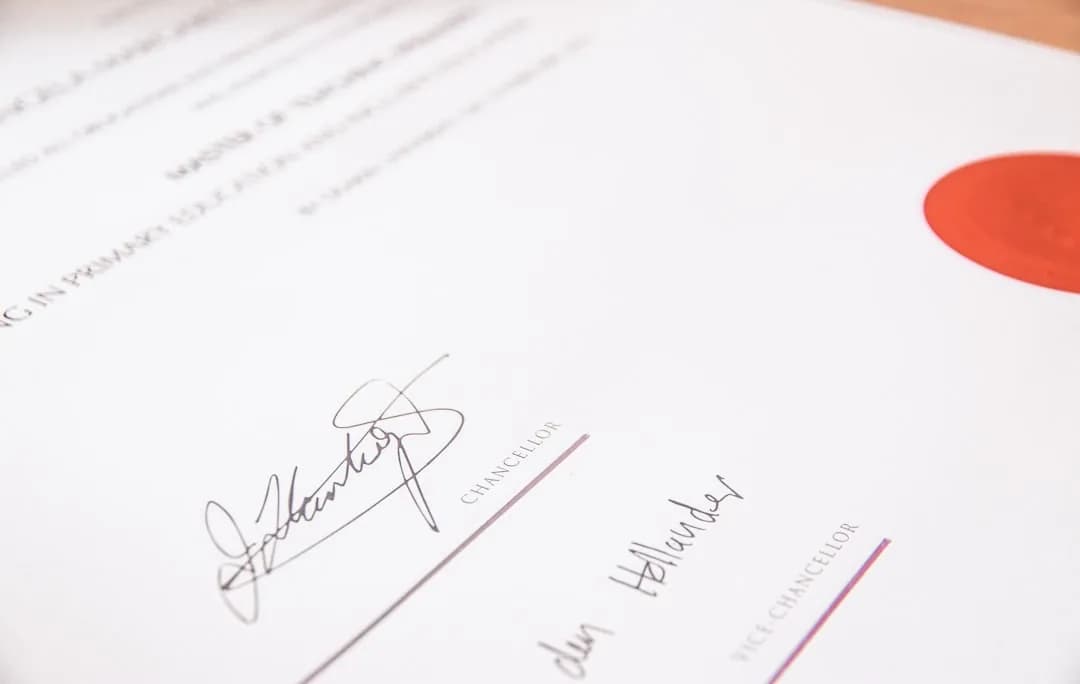
If you do NHS work as a dental performer or associate, there's one document that holds up your tax return every single year, and it never seems to land when you want it to. That document is your SD86C.
It usually appears on Compass in late July or early August, long after you'd like to have your return drafted. It carries the figure that decides how much tax relief you get on your NHS pension contributions, so guessing it is not an option.
This guide explains what the SD86C actually is, why the timing is what it is, the exact box it feeds on your tax return, and the wider pension-tax decisions it touches. It's written for NHS-contracted dental performers and associates in England and Wales.
What is an SD86C certificate for a dentist?
An SD86C is your Annual Pensionable Earnings and Contribution Statement. It confirms your net pensionable earnings and the NHS Pension Scheme contributions you actually paid for a given financial year, and your accountant uses the contribution figure to claim your pension tax relief.
The NHS Business Services Authority (NHSBSA) describes it as "a statement detailing your net pensionable earnings (NPE) across contracts you've worked on and your pension contributions for a specific financial year." It is produced once your earnings for the year have been reconciled, and you access it through Compass, the NHS dental pensions portal.
The figure that matters most for tax is your final employee contribution for the year. During the year you pay contributions on account, based on an estimate of your earnings. The SD86C replaces that estimate with the real, reconciled number.
Why does the SD86C arrive in July and not before?

In short, the SD86C can't be produced until your pensionable earnings for the year have been finalised, and that finalisation, the Annual Reconciliation Report, doesn't close until 30 June.
Here's the sequence. Each financial year runs to 31 March. After it ends, NHSBSA opens the Annual Reconciliation Report (ARR), which the NHSBSA describes as the process where providers and performers "check and confirm their net pensionable earnings (NPE) or net pensionable earnings equivalent (NPEE)" for the year.
The ARR runs from April and you can "update your NPE or NPEE figures as many times as needed before 23:59pm on 30 June". Confirming the figure is a contractual obligation under the NHS Pension Scheme regulations, so it isn't optional.
Only once the ARR has completed and the July contribution schedules have run can the statement be produced. As NHSBSA puts it, SD86C statements are "produced each year after the completion of an Annual Reconciliation Report (ARR)", and your SD86C "will be available on Compass from early August". In practice many performers see theirs land towards the end of July.
That's the whole reason it can't come earlier. The certificate reflects reconciled earnings, and reconciliation has a hard cut-off of 30 June. Miss your part of the ARR and your statement, and your tax relief, can slip even later.
What does your accountant do with the SD86C?
Your accountant takes the employee contribution figure from the SD86C and claims it as a deduction against your self-employed NHS income on your Self Assessment return, so you get income tax relief on what you paid into the scheme.
For a self-employed practitioner, HMRC's Business Income Manual is explicit at BIM54020: "Where a practitioner is self-employed, they are responsible for making both the 'employee contribution' and the 'employer's contribution'; for tax purposes, both elements are relievable as member contributions." In plain terms, the contributions you pay into the NHS scheme reduce your taxable profit.
The reason your accountant insists on the SD86C rather than your in-year deductions is accuracy. The contributions taken during the year are based on an estimate of your earnings. The SD86C shows the final, reconciled employee contribution after the ARR, which is the figure HMRC expects to see relieved.
On the return itself, the contributions are entered in the self-employment pages as a deduction from your NHS practice profit. Using the estimated in-year figure instead of the reconciled SD86C figure is one of the most common ways NHS dental returns end up wrong, in either direction.
This is core self-assessment work for a dental accountant, and it's exactly the kind of detail we handle for dentists every July.
Where do you find your SD86C on Compass?
You log in to Compass, the NHS dental services portal, and view the statement there. NHSBSA confirms you can view SD86Cs "from the 2012/13 financial year" onward through Compass, so historical years are available too if you need to revisit a prior return.
A few practical points worth knowing:
- The statement sits in your Compass account, not your practice's general NHS contract paperwork, so make sure you have your own login.
- If your earnings are amended after the ARR closes, NHSBSA says "a new SD86C will be produced after the next schedule cut-off date". Always work from the latest version.
- Limited company route is different. If you provide your services through a limited company, you are excluded from the NHS Pension Scheme for that work, so there is no pensionable NHS income or SD86C contribution to relieve in the company.
Illustrative example: in-year estimate versus the SD86C figure
Illustrative example. Priya is a self-employed NHS dental associate. Throughout the 2024/25 year, her contributions on account were calculated on an estimate of her net pensionable earnings carried over from the prior year. When the ARR closes and her SD86C is published, her reconciled net pensionable earnings turn out higher than the estimate, so her final employee contribution for 2024/25 is a little above what was taken in year.
Suppose the SD86C shows a final employee contribution of £6,400 for 2024/25, while the in-year deductions her bookkeeping had captured came to £6,050.
If her return were filed using the £6,050 in-year figure, she'd under-claim relief by £350 of contributions. As a higher-rate taxpayer, that £350 of missed deduction is worth £140 of income tax (£350 at 40%, the higher rate for 2024/25 per gov.uk). Using the reconciled SD86C figure of £6,400 instead captures that relief correctly.
The lesson isn't the direction of the difference, it's that the SD86C, not the estimate, is the figure to file on. Sometimes the reconciled number is lower and filing on the estimate would over-claim, which is the riskier mistake.
What is the dental pensions calendar through the year?
This table maps the key NHS dental pension and tax dates so you can see where the SD86C sits. Self Assessment dates are the standard statutory deadlines.
| When | What happens | Why it matters |
|---|---|---|
| 31 March | NHS financial year ends | Sets the year your SD86C will cover |
| April to 30 June | Annual Reconciliation Report (ARR) open on Compass | You confirm net pensionable earnings by 23:59 on 30 June |
| Late July to early August | SD86C published on Compass | Gives the final employee contribution to relieve |
| 31 July | Second Self Assessment payment on account due | Standard SA deadline, see gov.uk |
| 31 July | Scheme Pays election deadline (year following the SA deadline) | Last date to elect for an annual allowance charge |
| 31 October | Paper Self Assessment filing deadline | Standard SA deadline |
| 31 January | Online filing and balancing payment deadline | The reconciled SD86C figure must already be in the return |
The ARR window (April to 30 June) and the SD86C publication (late July onward) are confirmed by NHSBSA. The Self Assessment dates are the statutory deadlines published on gov.uk.
How does the SD86C connect to the annual allowance and Scheme Pays?
Your contributions and pension growth feed your annual allowance position, and if you face an annual allowance charge you may be able to ask the NHS scheme to pay it through a Scheme Pays election, which has a 31 July deadline.
The annual allowance is the limit on tax-relieved pension growth in a year. NHS pension growth for a year, alongside your contributions, determines whether you've exceeded it. NHSBSA issues a pension savings statement where growth is high enough, and that sits alongside your SD86C in the same pension-tax picture your accountant reviews.
If you do have an annual allowance charge, the NHS Pension Scheme offers a Scheme Pays facility, where the scheme settles some or all of the charge in exchange for a reduction to your benefits. The standard election deadline is 31 July in the year following the Self Assessment deadline for the tax year the charge arose. For example, a charge for the 2023/24 tax year, with a 31 January 2025 SA deadline, has a Scheme Pays election deadline of 31 July 2026.
One important caution NHSBSA flags on voluntary Scheme Pays: even where the scheme pays the charge, you remain responsible for it and any interest if HMRC receives payment after the 31 January tax deadline. The annual allowance rules are intricate and the figures shift with policy, so this is genuinely a "get advice" area rather than a DIY one.
Does the McCloud remedy change any of this?
For most current years, no, but it can affect earlier years' annual allowance figures. The McCloud remedy rolled affected service from 1 April 2015 to 31 March 2022 back into the 1995/2008 scheme, and HMRC has a digital service to put right any resulting annual allowance charges.
Here's the background. The 2015 scheme was found to have created age discrimination, so from 1 October 2023 affected members' service for 1 April 2015 to 31 March 2022 is treated as though it had stayed in the legacy 1995/2008 scheme. NHSBSA recalculates the annual allowance inputs for each of those years as if the member had always been in the legacy scheme.
Where that changes your annual allowance position, NHSBSA issues a Remediable Pension Savings Statement covering the affected years. HMRC then provides a digital service through which the corrected information for the tax years from 1 April 2015 to 31 March 2022 can be submitted, which may produce a refund or, for some, a further charge.
This is separate from your routine SD86C and current-year return, but if you receive a Remediable Pension Savings Statement it's worth flagging to your accountant, because it can change tax across several historic years.
A quick note on your wider self-employed status
The SD86C only exists because you have self-employed NHS income. It's worth remembering that the long-standing concession that automatically treated dental associates as self-employed was withdrawn with effect from 6 April 2023. HMRC's guidance at ESM4030 now states the guidance "has been withdrawn with effect from 6 April 2023" and directs you to the ordinary employment status rules and HMRC's Check Employment Status for Tax tool.
In practice, most genuine associate arrangements remain self-employed, but status now rests on the facts of your agreement rather than an automatic concession. If your working arrangement has changed, it's worth reviewing.
Want help getting your SD86C onto your return correctly?
Every July we line up SD86C statements against in-year contributions for our dental clients so their relief is claimed on the right figure, first time. If you'd like that handled, talk to a Zmartly accountant about our self-assessment service for dentists, and we'll take it from there.
Frequently asked questions
What is an SD86C certificate?
It's your NHS Annual Pensionable Earnings and Contribution Statement. It confirms your net pensionable earnings and the actual NHS Pension Scheme contributions you paid for a financial year, and it's published on Compass after the Annual Reconciliation Report completes.
Why does my SD86C arrive in July?
Because it can only be produced after your earnings are reconciled. The Annual Reconciliation Report stays open until 23:59 on 30 June, and once it completes the statement is published on Compass from late July into early August.
Where can I find my SD86C?
Log in to Compass, the NHS dental services portal. NHSBSA makes statements from the 2012/13 financial year onward available there, so you can view both the current year and earlier years.
Why does my accountant need the SD86C rather than my in-year figures?
The contributions taken during the year are based on an estimate. The SD86C shows the final, reconciled employee contribution after the ARR, which is the figure HMRC expects to see relieved. Filing on the estimate can under-claim or over-claim relief.
Is NHS superannuation tax-deductible for a self-employed dentist?
Yes. HMRC's BIM54020 confirms that where a practitioner is self-employed, both the employee and employer elements are relievable as member contributions, so they reduce your taxable profit on your Self Assessment return.
What is the Scheme Pays deadline for an annual allowance charge?
The standard election deadline is 31 July in the year following the Self Assessment deadline for the tax year in which the charge arose. With voluntary Scheme Pays you still remain responsible for the charge and any interest if HMRC is paid after 31 January.