If you run or work in a mixed practice, your income arrives from two very different worlds. One stream is NHS UDA money flowing through your contract and Compass. The other is private fees, plans and cosmetic work billed directly to patients.
For tax, those two streams do not behave the same way. NHS income carries pension and superannuation consequences that private income does not. VAT treats some private work differently from health treatment. And the way you split shared costs between the two affects your taxable profit.
This guide explains how to apportion NHS and private income and expenses correctly for 2025/26, where the common mistakes hide, and how the rules around superannuation, VAT and pensions connect. It is written for principals, associates and practice owners who want the split done right rather than roughly.
We will keep it practical, with a worked example and a clear deadline picture. Where a figure matters, we cite the gov.uk, NHSBSA or GDC page it comes from.
Why does the NHS and private split matter for tax?
Because the two income streams attract different rules, a clean split protects your pension record, your VAT position and your taxable profit at the same time.
NHS dental services run through your GDS or PDS contract, are reported to the NHS Business Services Authority (NHSBSA), and most of that income is pensionable in the NHS Pension Scheme. Private income sits outside the scheme entirely.
That single difference drives almost everything else. Your superannuation deduction only makes sense against your NHS pensionable earnings. Your VAT exposure usually comes from the private side, not the NHS side. And if you ever incorporate, the NHS income behaves differently again, because the scheme does not recognise income earned through a limited company (more on that below).
So the split is not just bookkeeping tidiness. Get it wrong and you can over or under claim relief, misstate pensionable pay, or miss a VAT registration trigger.
How do you apportion income between NHS and private work?
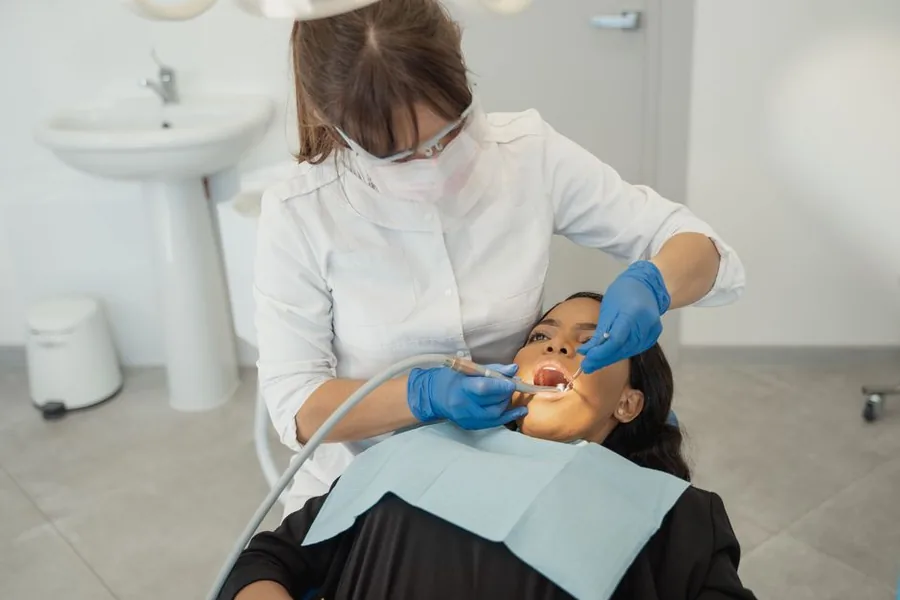
Start from the principle that income follows its true source. NHS contract income, UDA payments and any NHS patient charges collected on the NHS Business Services Authority's behalf are NHS income. Fees for private treatment, plan income, whitening, veneers and other privately funded work are private income.
In a well-run practice this is rarely a guessing game, because the practice management software already tags each course of treatment as NHS or private. The job at year end is to reconcile those reports to the bank and to your NHS schedules.
Three checks matter most:
- Reconcile NHS income to your monthly NHS contract statements and to the pensionable earnings figures that flow through Compass and the Annual Reconciliation Report.
- Strip out patient charges that you collect for the NHS but do not keep, so they are not double counted as your own income.
- Allocate plan administrator payouts and finance receipts to the private column, net of any administrator fees, which are a private cost.
If you are an associate rather than a principal, your income split usually mirrors the percentages set out in your associate agreement, with the practice paying you a share of NHS and private receipts. Keep those statements: they are your audit trail for both the income split and your self assessment return.
How do you apportion expenses between NHS and private?
Book a free Tax Health Check →
Expenses fall into three buckets: clearly NHS, clearly private, and shared.
Direct NHS costs (for example, laboratory work on an NHS course of treatment) sit against NHS income. Direct private costs (lab fees on a private crown, a private plan administrator's charge, materials only used for cosmetic work) sit against private income.
The shared bucket is where judgement comes in. Rent, rates, reception staff, the nurse's time, sterilisation, utilities, software, insurance and most premises costs serve both streams. You need a reasonable and consistent basis to split them.
Common apportionment bases include:
- Revenue split. Allocate shared costs in the ratio of NHS to private turnover. Simple, defensible, and the most widely used.
- Chair time or sessions. If private work uses disproportionate surgery time, split by sessions or hours instead.
- Headcount or floor area. Useful for premises costs where one area is dedicated to private work.
HMRC does not prescribe a single method. What matters is that the basis is reasonable, applied consistently year to year, and documented. If you switch basis, note why. For the underlying rule that an expense must be incurred wholly and exclusively for the purposes of the trade to be deductible, the relief sits in ordinary trading-profit principles, and your shared-cost apportionment simply identifies the business proportion.
This is exactly the kind of working that should be visible in your year-end statutory accounts, so a reviewer can see how the split was reached.
How is NHS superannuation treated, and against which income?
NHS superannuation is an allowable deduction in working out a self-employed practitioner's taxable profit, and it relates to your NHS pensionable earnings, not your private income.
HMRC's Business Income Manual at BIM54020 confirms the position. Where a practitioner is self-employed, they are responsible for paying both the employee and the employer elements of the NHS Pension Scheme contribution, and for tax purposes both elements are relievable as member contributions. The contributions are deducted in computing the practitioner's liability, with gross remuneration credited before the deduction for superannuation.
The key point for a mixed practice is the link to NHS pensionable pay. Only NHS income is pensionable in the NHS Pension Scheme, so the superannuation contribution is calculated on your net pensionable earnings, the NHS figure that comes through Compass and is confirmed on your SD86C statement. Your private income never enters that calculation.
BIM54020 also confirms a separate, helpful point on the annual allowance. Both the employer and employee contributions you pay can be excluded when working out your threshold income for the tapered annual allowance, unless they were made under a salary sacrifice arrangement entered into on or after 9 July 2015.
One structural warning. If an associate works through a limited company, the NHS Pension Scheme does not recognise that arrangement. The NHSBSA confirms a performer who works as a limited company cannot pension their GDS or PDS income, because membership requires you to work as an individual. Incorporating the NHS side therefore severs the superannuation route, which is a major factor in any decision to incorporate.
When does VAT apply to private dental work?
Most dental treatment is VAT-exempt, but purely cosmetic private work can be standard-rated, and that is where VAT creeps into a mixed practice.
VAT Notice 701/57 sets two conditions for a health professional's services to be exempt: the service must be within the profession in which you are registered to practise, and its primary purpose must be the protection, maintenance or restoration of the person's health. A General Dental Council (GDC) registered dentist supplying dental care and treatment, including dental prostheses such as dentures, crowns, bridges and plates, meets this test.
The notice is equally clear on the other side. Where services are undertaken purely for cosmetic reasons, they are standard-rated at 20%. Cosmetic work can still be exempt where it is delivered as an element of a wider oral-health treatment programme, so the test is the primary purpose, not the label.
Items that are separable from treatment, such as toothbrushes and toothpaste held out for sale, fall outside the exemption and are standard-rated. Dental prostheses are an exception and stay exempt.
So your NHS income is exempt, the bulk of clinical private treatment is exempt, and only the purely cosmetic and retail-style supplies push you towards taxable turnover. If those taxable supplies exceed the VAT registration threshold of £90,000 on a rolling 12-month basis, registration becomes compulsory.
How does VAT partial exemption work for a mixed practice?
If you register for VAT because you make taxable cosmetic or retail supplies alongside your exempt dental treatment, you become partly exempt. That means you can only reclaim the input VAT that relates to your taxable activity.
In practice you sort input VAT into three pots:
- VAT on costs used only for taxable (cosmetic, retail) supplies, which is recoverable.
- VAT on costs used only for exempt (dental treatment) supplies, which is not recoverable.
- VAT on overheads used for both, which is recovered using a partial exemption method, normally the standard method based on the ratio of taxable to total supplies.
There is a de minimis rule. If the exempt input VAT you would otherwise lose is below the de minimis limits, you can recover all of it. Above those limits you keep only the taxable proportion.
This is the same apportionment logic you used for income and overheads, applied to VAT. The cleaner your NHS, exempt-private and taxable-private coding is in the books, the simpler the partial exemption calculation becomes. If your practice is approaching the threshold or already partly exempt, this is worth a conversation with a dental tax adviser before the next return.
Illustrative example: splitting income and costs for 2025/26
Illustrative example. Maya is a self-employed principal at a mixed practice. For 2025/26 her receipts and costs (all figures illustrative) are:
| Item | Amount |
|---|---|
| NHS contract income (pensionable) | £160,000 |
| Private treatment income | £80,000 |
| Purely cosmetic and retail income (taxable for VAT) | £20,000 |
| Total income | £260,000 |
| Direct NHS lab costs | £18,000 |
| Direct private lab costs | £12,000 |
| Shared overheads (rent, staff, utilities, software) | £90,000 |
Her NHS share of total income is £160,000 of £260,000, which is about 62%. Splitting the £90,000 of shared overheads on that revenue basis gives roughly £55,000 to NHS and £35,000 to private.
That lets Maya see the contribution of each side before tax. It does not change her overall taxable profit, which is total income of £260,000 less total allowable costs of £120,000 (£18,000 + £12,000 + £90,000), giving £140,000. The split is about understanding each stream and supporting the pension and VAT positions, not about creating two separate tax bills.
For superannuation, only the £160,000 NHS figure is pensionable, so her NHS Pension Scheme contribution is calculated on her net pensionable earnings from that NHS work, confirmed on her SD86C. That contribution is then deducted as a member contribution in computing her tax liability, per BIM54020.
For VAT, only the £20,000 of purely cosmetic and retail income is taxable. That sits below the £90,000 registration threshold, so on these figures Maya is not required to register. If her taxable supplies grew past £90,000 on a rolling 12-month basis, she would register and move into the partial exemption calculation above.
You can sense-check your own income split and the tax on your self-employed profit with our self-employed tax calculator before you finalise the year.
What deadlines and documents should you track?
A mixed practice has more moving parts than a purely private one. This calendar pulls the key dental and tax dates together for a 2025/26 year.
| Date | What it is | Source |
|---|---|---|
| End of July (following year) | NHSBSA completes the Annual Reconciliation Report; SD86C pensionable earnings statement then appears on Compass (usually early August) | NHSBSA |
| 31 July | Standard deadline for a voluntary Scheme Pays election for the relevant tax year's annual allowance charge | NHSBSA |
| 5 October | Deadline to register for Self Assessment if newly self-employed | gov.uk |
| 31 January | Online Self Assessment filing and balancing payment for the prior tax year | gov.uk |
| 31 January and 31 July | Payments on account towards the next year's tax | gov.uk |
| Annually (renewal window from autumn) | GDC Annual Retention Fee; the 2026 ARF is £698 for dentists | GDC |
Two extra items often catch mixed-practice dentists. First, if your NHS pension input is affected by the McCloud remedy, NHSBSA reissues remediable pension savings statements and HMRC operates a digital service to recalculate or compensate annual allowance charges for the relevant remedy-period years; check whether a statement applies to you. Second, Making Tax Digital for Income Tax begins on 6 April 2026 for sole traders and landlords with qualifying gross income over £50,000, then £30,000 from April 2027 and £20,000 from April 2028. Qualifying income is your gross income before expenses, so for a busy associate or principal both NHS and private turnover count towards that test.
One more status point worth flagging. The long-standing ESM4030 concession that automatically treated associate dentists as self-employed was withdrawn from 6 April 2023. Associate self-employment now rests on the ordinary employment-status tests and HMRC's Check Employment Status for Tax (CEST) tool, so the way your associate agreement and working pattern are structured matters more than ever. Our guide for dentists covers this in more detail.
Frequently asked questions
Does the NHS and private split change my total tax bill?
Not directly. Your taxable profit is total income less total allowable expenses, however you slice the streams. The split matters for getting your superannuation deduction, pensionable earnings and VAT position right, and for understanding which part of the practice is actually profitable.
Can I deduct NHS superannuation against my private income?
The superannuation contribution is calculated on your NHS pensionable earnings, because only NHS income is pensionable. The contribution is then allowable as a member contribution in computing your overall tax liability under BIM54020. Private income never enters the pensionable earnings figure.
Is all my private dental work subject to VAT?
No. Under VAT Notice 701/57, dental care whose primary purpose is protecting, maintaining or restoring health, supplied by a GDC-registered dentist, is exempt, including dental prostheses. Only purely cosmetic work and retail items like toothpaste are standard-rated at 20%.
When do I have to register for VAT as a dentist?
Only if your taxable (standard-rated) supplies, mainly purely cosmetic and retail sales, exceed the £90,000 VAT registration threshold on a rolling 12-month basis. Exempt dental treatment and NHS income do not count towards that threshold.
What happens to my NHS pension if I incorporate the practice?
The NHS Pension Scheme does not recognise income earned through a limited company. The NHSBSA confirms a performer working as a limited company cannot pension their GDS or PDS income, because you must work as an individual to do so. Incorporating the NHS side ends that pension route, so weigh it carefully before restructuring.
How should I split shared costs like rent and staff?
Use a reasonable, consistent basis, most commonly the ratio of NHS to private turnover, though chair time, sessions or floor area can be better where private work uses disproportionate resources. Document the basis and apply it the same way each year.
Get the split right the first time
A mixed practice rewards precise bookkeeping. Clean income coding, a defensible expense split and a tidy superannuation and VAT position save real money and stress at year end.
If you want that handled by accountants who work with mixed NHS and private practices every day, talk to Zmartly's dental team. We will reconcile your NHS and private streams, set a sensible apportionment basis, and keep your pension, VAT and Self Assessment positions aligned.