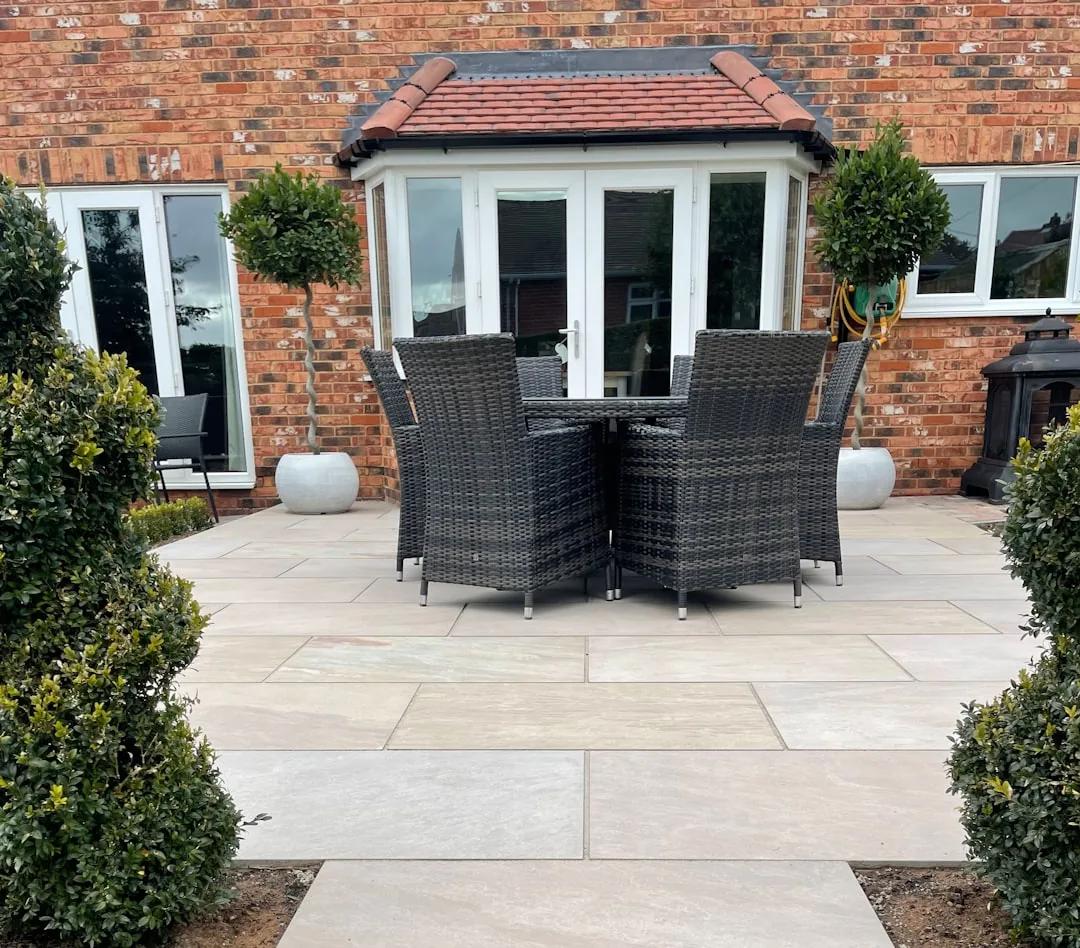
If you do landscaping work on new houses, your VAT rate is not a simple 20%. Some of what you do can be zero-rated, which means you charge VAT at 0% and your customer pays nothing on top. Get the line wrong and you either overcharge the developer or, worse, you under-declare and HMRC comes back for the difference.
The rules sit in VAT Notice 708, and they are fiddlier than most landscapers expect. The headline most people half-remember is "turf is zero-rated, plants are standard-rated". That is roughly right, but it misses the one test that actually decides most jobs: whether the work is on a landscaping scheme approved by the planning authority.
This guide explains when landscaping on a new build qualifies for zero-rating, what always stays at 20%, and how to keep the evidence HMRC will want to see. It is written for landscapers, groundworkers and garden contractors working on new residential developments.
If you want this handled properly across your jobs, that is what we do for landscaping and grounds-maintenance businesses.
Can landscaping on a new build be zero-rated?
Yes, but only in defined circumstances. Landscaping on a new build dwelling can be zero-rated where the work is supplied "in the course of construction" of the building and it counts as closely connected to that construction. In practice, soft landscaping (topsoil, seeding and turfing) within the plot usually qualifies, and the planting of shrubs, trees and flowers qualifies only where it is detailed on a landscaping scheme approved by the planning authority as a condition of planning consent. Everything else, including ornamental and leisure features, stays standard-rated at 20%.
What does zero-rating mean for a landscaper?
Zero-rated is not the same as exempt, and it is not the same as "no VAT". It is a taxable supply, just at a rate of 0%.
That distinction matters to you. Because zero-rated work is still taxable, you keep the right to reclaim the VAT on your own costs (your materials, plant hire, fuel) that relate to it. If a supply were exempt, you would lose that input VAT recovery. So zero-rating is the best of both worlds: nothing added for the customer, full recovery for you.
For your customer (usually the housebuilder or main contractor), zero-rating means they pay your labour and materials with no 20% VAT bumped on top. On a new build that is a real saving, which is exactly why developers expect you to apply the relief correctly and will query an invoice that charges 20% where 0% should apply.
The standard VAT rate is 20% and the zero rate is 0%. Both are confirmed on gov.uk's VAT rates page. The question on every new build job is simply which one applies to the work in front of you.
When is landscaping "in the course of construction"?
Zero-rating for construction services hangs on the phrase "in the course of construction" of a qualifying building, which for our purposes means a new dwelling. Your landscaping only gets near the relief if it is closely connected to that construction.
Two things drive whether it is closely connected: timing and purpose.
On timing, there has to be a close connection between when the landscaping is done and when the physical construction of the building takes place. Work carried out while the dwelling is being built, or in the natural run-up to handover, can qualify. Work done long after the house is finished and occupied generally cannot, because the construction is over.
On purpose, the work has to form part of completing the dwelling and its site, not be a separate undertaking. Laying topsoil and turf so the garden of a new house can be used is part of finishing that house. Building a tennis court or a swimming pool in the grounds is treated as a separate project, even if it happens at the same time.
This "course of construction" test, and the close-connection principle, come from VAT Notice 708 and HMRC's construction manual. It is the gateway. If a job fails it, no amount of turf makes it zero-rated.
What landscaping can be zero-rated?
Where the course-of-construction gateway is met, the following landscaping work on a new dwelling can normally be zero-rated.
| Landscaping work | VAT treatment on a new build |
|---|---|
| Application of topsoil within the plot | Zero-rated |
| Seeding with grass | Zero-rated |
| Laying turf | Zero-rated |
| Roads, footpaths, drives, parking areas, patios within the site | Zero-rated |
| Boundary walls, fences and gates forming part of the site works | Zero-rated |
| Planting of shrubs, trees and flowers | Zero-rated only if on a planning-approved landscaping scheme |
The first group, the soft landscaping of topsoil, grass seed and turf, is the reliable one. HMRC accepts this as closely connected to constructing the dwelling, because a finished house needs usable ground around it.
Hard site works such as the drive, paths, patio and boundary treatment that form part of the development's approved layout are also generally within the relief, because they let the building be used and accessed.
The planting of shrubs, trees and flowers is the exception that needs the extra test, covered below.
What landscaping is standard-rated at 20%?
Some work is standard-rated even on a brand-new house, because HMRC treats it as either a separate undertaking or as going beyond what is needed to complete the dwelling. Charge 20% on:
- Planting of shrubs, trees and flowers that is not on a planning-approved landscaping scheme.
- Replacing trees and shrubs that later die, become damaged or diseased. Replacement is never within the new-build relief.
- Outdoor leisure facilities for the dwelling, such as tennis courts and swimming pools.
- General landscaping beyond the approved scheme, for example laying out an elaborate ornamental garden as a separate project.
- Any landscaping done well after the dwelling is finished and occupied, where the close connection to construction has gone.
The pattern is consistent. The relief is for finishing the house and making its plot usable, not for ornamental, recreational or after-the-fact garden projects. When you find yourself doing a water feature, a putting green or a designer planting scheme that nobody asked the council to approve, assume 20% unless you can show otherwise.
The planning-scheme test that decides most jobs
Here is the single rule that resolves more new build landscaping queries than any other.
The planting of shrubs, trees and flowers is not normally treated as closely connected to constructing the dwelling, so it is standard-rated, except where it is detailed on a landscaping scheme that the planning authority has approved as a condition of the planning consent. Where the planting is on that approved scheme, it can be zero-rated; where it is not, it stays at 20%.
This comes from VAT Notice 708 and reflects the Rialto Homes tribunal decision, which HMRC accepts in its construction manual. The logic is that if the council made the developer landscape the plot a certain way as a planning condition, that planting is part of being allowed to build and occupy the house, so it is part of the construction.
What this means on site:
- Always ask the developer for the approved landscaping plan and the planning condition that requires it. That document is your zero-rating evidence for the planting.
- If your planting matches the approved scheme, you can zero-rate it. Keep a copy.
- If the homeowner or developer asks for extra planting on top of the approved scheme, that extra is standard-rated. You may end up with a single job that is part 0% and part 20%, and your invoice should split it.
Do not zero-rate planting just because the house is new. The new build status gets the soft landscaping (turf, seeding, topsoil) and the site works over the line. For shrubs, trees and flowers, the approved scheme is the deciding factor.
Illustrative example: a turfing and planting job on a new estate
Illustrative example. Imagine Tom runs a VAT-registered landscaping firm and is subcontracted by a housebuilder to finish the gardens on a small new development. For one plot, the job is:
| Work item | Charge (labour + materials) | VAT treatment |
|---|---|---|
| Topsoil and turf to the rear garden | £1,800 | Zero-rated |
| Front-garden grass seeding | £300 | Zero-rated |
| Shrubs and hedging on the approved landscaping plan | £900 | Zero-rated |
| Extra ornamental planting the buyer asked for privately | £600 | Standard-rated |
| Total | £3,600 | Mixed |
The topsoil, turf and seeding are soft landscaping on a new dwelling, so they are zero-rated. The shrubs and hedging are on the planning-approved landscaping scheme, so they are zero-rated too. The extra ornamental planting the buyer requested off-plan is not on the approved scheme, so it is standard-rated.
Tom's invoice shows £3,000 of work at 0% (£1,800 + £300 + £900) and £600 at 20%, adding £120 of VAT (£600 x 20% = £120). The invoice total is £3,720.
Because all of this is taxable (the zero-rated portion included), Tom can still reclaim the input VAT on the topsoil, the turf, the plants and his other costs for the whole job. These figures are illustrative; your own split depends on the approved scheme and what you actually supply.
What records should you keep?
Zero-rating is something you have to be able to prove, not just assert. If you cannot evidence it, HMRC can treat the supply as standard-rated and assess you for the VAT you did not charge, which on a busy developer's account adds up fast.
Keep, per job:
- Confirmation that the building is a new, qualifying dwelling (the development's planning reference helps).
- The approved landscaping scheme and the planning condition, for any shrub, tree or flower planting you zero-rate.
- Dated records showing the work was done in the course of construction, not months after handover.
- Invoices that clearly split zero-rated and standard-rated lines where a single job covers both.
This is really where good landscaping bookkeeping pays for itself: a job costed and invoiced with the zero-rated and standard-rated lines split, and the approved scheme filed against it, is a job you can defend if HMRC asks. Getting the VAT liability right on construction work is one of the more error-prone areas we see, and the cost of a wrong call lands on you, not the developer. If you are unsure where a job sits, or you want a second pair of eyes on your invoicing, our VAT services for trades cover exactly this. You can also weigh up registration and cash flow with our team if your turnover is near the VAT threshold.
Want to be sure your new build invoices apply the right VAT rate? Book a free call with a Zmartly accountant and we will review how you are charging.
Frequently asked questions
Is turf zero-rated on a new build?
Yes. Laying turf, applying topsoil and seeding with grass within the plot of a new dwelling are soft landscaping works closely connected to constructing the house, so they can be zero-rated provided the work is done in the course of construction.
Are plants and shrubs zero-rated on a new build?
Only sometimes. Planting shrubs, trees and flowers is standard-rated at 20% unless it is detailed on a landscaping scheme approved by the planning authority as a condition of the planning consent. If it is on that approved scheme, it can be zero-rated.
What landscaping work stays at 20% VAT on a new build?
Standard-rated work includes planting not on an approved scheme, replacing dead or damaged trees and shrubs, outdoor leisure features such as tennis courts and swimming pools, ornamental garden projects beyond the approved scheme, and any landscaping done well after the house is finished and occupied.
Does the new build VAT relief cover patios, paths and driveways?
Generally yes. Roads, footpaths, drives, parking areas and patios within the site, along with the walls, fences and gates that form part of the approved site works, can be zero-rated because they allow the building to be used and accessed.
Can I still reclaim VAT on my costs if I zero-rate the job?
Yes. Zero-rated supplies are taxable at 0%, not exempt, so you keep the right to reclaim input VAT on the materials, plant and other costs that relate to that work. This is a key difference between zero-rated and exempt supplies.
How does mixed-rate work affect my landscaping accounting?
It means your landscaping accounting has to track VAT at the line level, not just the job level. A single new build garden can carry zero-rated soft landscaping and standard-rated ornamental planting at the same time, so your bookkeeping should record each line at its correct rate, keep the approved scheme as evidence for the zero-rated planting, and still claim the input VAT on all your costs. Get that line-by-line discipline right and your VAT returns stand up and your margins stay honest.