If you've landed here looking to claim enhanced capital allowances on energy-efficient or water-saving equipment, there's something you need to know first. The scheme no longer exists.
Enhanced capital allowances (ECAs) gave businesses 100% first-year tax relief on plant and machinery listed on the Energy Technology List or Water Technology List. That relief ended for purchases made on or after 1 April 2020 for companies, and 6 April 2020 for sole traders and partnerships.
The good news is that the reliefs that replaced it are, for most businesses, simpler and more generous. You don't need to check a special technology list, and you can often still get 100% relief in the year you buy.
This guide explains what ECAs were, why they were withdrawn, and exactly which reliefs you should be using now, including the Annual Investment Allowance, full expensing, and the new 40% first-year allowance that started on 1 January 2026.
In short: Enhanced capital allowances were withdrawn for expenditure from 1 April 2020 (companies) and 6 April 2020 (sole traders and partnerships). Most equipment now gets full relief through the Annual Investment Allowance (100% up to £1,000,000), with full expensing for companies and a new 40% first-year allowance from 1 January 2026.
What were enhanced capital allowances?
Capital allowances are how you claim tax relief on assets you buy to keep and use in your business, like machinery, equipment, tools and certain fixtures. Instead of deducting the cost as a day-to-day expense, you claim it against your profits through the capital allowances rules.
Enhanced capital allowances were a special version of that relief. They gave you a 100% first-year allowance on equipment that met set energy-saving or water-efficiency standards, so you could deduct the full cost from your taxable profits in the year you bought it.
To qualify, the specific product had to appear on one of two government registers:
- The Energy Technology List (ETL), for energy-saving plant and machinery.
- The Water Technology List (WTL), for water-efficient equipment.
There was also a first-year tax credit for loss-making companies that invested in listed technology. Both the allowance and the credit were withdrawn at the same time.
Why were enhanced capital allowances abolished?
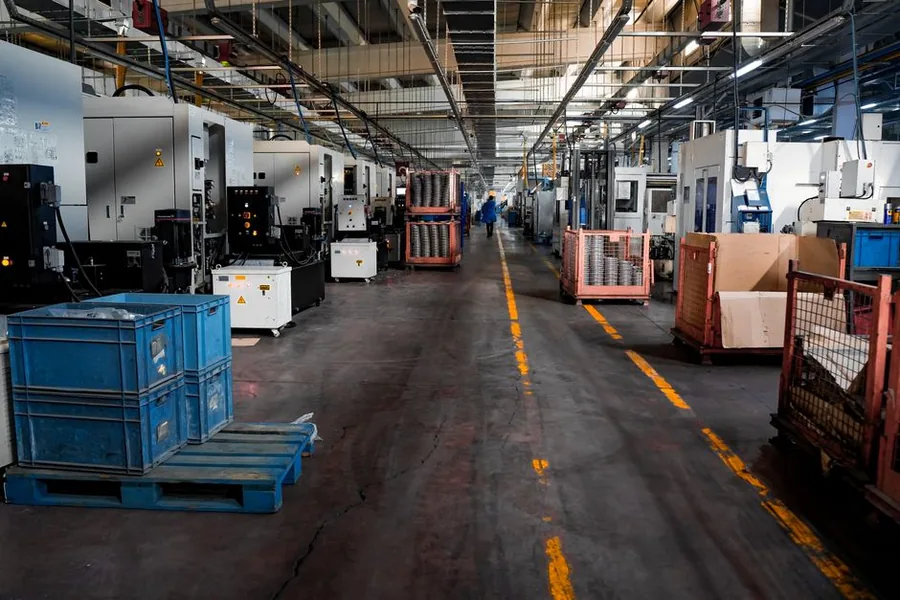
The government announced the end of the scheme at Budget 2018 and withdrew it for expenditure from 1 April 2020 (companies) and 6 April 2020 (unincorporated businesses). The official reasoning was that the relief had become complex to administer, and the money was redirected to fund the Industrial Energy Transformation Fund.
So if you see older guidance telling you to "check the Energy Technology List" or claim "ECAs" on a new boiler or LED lighting, that advice is out of date. The lists themselves have been withdrawn by gov.uk.
In practice, the mistake we see most often is a business owner reading a pre-2020 article, buying equipment expecting a special green-tech allowance, and then being surprised. The reality is usually better than they fear, because the general reliefs below typically deliver the same 100% relief without the paperwork.
What replaced enhanced capital allowances?
Most equipment that once needed an ETL listing now gets full relief through the everyday capital allowances regime. Here's how the main reliefs compare for the 2025/26 tax year.
| Relief | Rate | Who can claim | Key conditions |
|---|---|---|---|
| Annual Investment Allowance (AIA) | 100% up to £1,000,000 | All businesses | Most new and second-hand plant and machinery (not cars) |
| Full expensing | 100% main pool, 50% special rate | Companies only | New and unused plant and machinery (not cars) |
| 40% first-year allowance | 40% (from 1 January 2026) | All businesses | New main-rate plant and machinery; excludes cars and second-hand assets |
| Main-pool writing-down allowance | 18% (14% from April 2026) | All businesses | Applied to the pooled balance each year |
| Special-rate writing-down allowance | 6% | All businesses | Integral features, long-life assets, thermal insulation |
For most SMBs buying ordinary equipment, the Annual Investment Allowance does the same job ECAs used to, and more besides.
What is the Annual Investment Allowance?
The Annual Investment Allowance (AIA) gives you 100% tax relief on qualifying plant and machinery up to £1,000,000 a year, for the current period. It's available to companies, sole traders and partnerships alike.
That £1,000,000 limit has applied since 1 January 2019 and covers the vast majority of equipment purchases (see gov.uk: Annual Investment Allowance). It works on both new and second-hand assets, which is one reason it's so widely used. Cars are the main exclusion.
Illustrative example
Priya runs a small limited company and buys £20,000 of energy-efficient LED lighting in June 2025. She claims the full £20,000 under her AIA.
- Cost claimed in 2025/26: £20,000
- Corporation Tax saved at the 19% small profits rate: £20,000 x 19% = £3,800
She gets the full £3,800 saving in the year of purchase, exactly as she would have done under the old ECA scheme, but without checking any technology list.
If you want to sense-check a figure like this, our Corporation Tax services team can run the numbers for your own purchases.
What is full expensing, and who can claim it?
Full expensing is a permanent 100% first-year allowance for companies on new and unused main-rate plant and machinery, in place since 1 April 2023. There's no upper limit.
There's also a 50% first-year allowance for new special-rate assets, such as integral features (lifts, heating systems, air conditioning), long-life assets and thermal insulation. The remaining 50% of that cost goes into the special-rate pool and attracts the 6% writing-down allowance each year afterwards.
Two conditions matter most:
- It's for companies only. Sole traders and partnerships can't use full expensing, but they can use the AIA instead.
- The asset must be new and unused, not second-hand.
Because the AIA already gives companies 100% relief up to £1,000,000, full expensing mainly helps businesses spending more than that in a year on new equipment.
What is the new 40% first-year allowance from 2026?
From 1 January 2026, there's a new 40% first-year allowance for main-rate plant and machinery, announced at the Autumn Budget 2025. You claim 40% of the cost in year one, and the remaining 60% goes into the main pool for writing-down allowances in later years.
It's aimed at investment that the other reliefs don't reach, for example assets bought to lease out, and investment by unincorporated businesses beyond their AIA. According to gov.uk, it excludes cars, second-hand assets, and assets for overseas leasing.
At the same Budget, the main-pool writing-down allowance was cut from 18% to 14%, effective 1 April 2026 for Corporation Tax and 6 April 2026 for Income Tax. A hybrid rate applies to accounting periods that straddle those dates. The special-rate pool stays at 6%.
Illustrative example
A company buys £100,000 of qualifying new equipment in February 2026 and, having already used its AIA elsewhere, claims the 40% first-year allowance.
- Year 1 allowance: £100,000 x 40% = £40,000 (£40,000 x 19% = £7,600 saved at the small profits rate)
- Balance to the main pool: £60,000
- Year 2 writing-down allowance at 14%: £60,000 x 14% = £8,400 (£8,400 x 19% = £1,596 saved)
Compare that with the old position, where the same £100,000 would have gone straight to the main pool:
- Year 1 at 18%: £100,000 x 18% = £18,000 (£18,000 x 19% = £3,420 saved)
The 40% first-year allowance pulls a lot more relief forward into year one. For most SMBs, though, the AIA remains the first port of call, because it gives 100% relief on the first £1,000,000.
What other 100% first-year allowances exist?
A few targeted 100% first-year allowances sit alongside the general reliefs:
- Zero-emission cars. Fully electric cars bought new qualify for a 100% first-year allowance. (Note that cars are excluded from the AIA and the new 40% FYA, so this is the main route to full relief on a company car.) If you're weighing this up, see our guide to company car versus mileage.
- Zero-emission goods vehicles. New electric vans and lorries qualify for 100% relief.
- Electric vehicle charge points. The cost of installing charge points qualifies for 100% relief.
These reliefs have their own end dates set by gov.uk, so check the current position before you buy. Our tax advisory team can confirm what's available for a specific purchase and tax year.
What about solar panels?
Solar panels don't get a special green allowance, and they never qualified under the old ECA energy list in the way many people assume. They're treated as special-rate (integral feature) assets.
In practice that means you usually claim them one of three ways:
- Annual Investment Allowance: 100% relief immediately, if you've got AIA headroom within your £1,000,000.
- Full expensing (companies): the 50% first-year allowance for new special-rate assets, with the balance in the special-rate pool.
- Special-rate pool: 6% writing-down allowance a year, if the above aren't available.
For most businesses with AIA still available, claiming the full cost under the AIA is the simplest route to 100% relief.
How do you claim capital allowances?
You claim through your normal tax return, and the route depends on your structure.
- Limited companies: complete the capital allowances section of your Company Tax Return (CT600). Our CT600 filing guide walks through the deadlines.
- Sole traders and partnerships: include the figures on your Self Assessment return.
A few practical points keep claims clean:
- Include the purchase price plus delivery and installation in the qualifying cost.
- Keep invoices and records for at least six years in case HMRC asks.
- Claim in the period the expenditure is incurred, not when you first plan the purchase.
- Don't try to claim the AIA or first-year allowances on cars, which have their own rules.
Capital allowances reward getting the detail right, and the choice between AIA, full expensing and the 40% first-year allowance can change how much tax you save and when. If you'd like a hand, book a free 20-minute call with a Zmartly accountant and we'll work out which relief gives your business the best result.
Frequently asked questions
Do enhanced capital allowances still exist in the UK?
No. Enhanced capital allowances for energy-saving and water-efficient plant and machinery on the Energy Technology List and Water Technology List were withdrawn for expenditure from 1 April 2020 for companies and 6 April 2020 for unincorporated businesses. The technology lists have been withdrawn too. Most equipment now gets full relief through the Annual Investment Allowance or full expensing instead.
What replaced enhanced capital allowances?
The general capital allowances reliefs replaced them. The Annual Investment Allowance gives 100% relief on up to £1,000,000 of qualifying plant and machinery for the current period, available to all businesses. Companies can also use full expensing for 100% relief on new main-rate plant and machinery, and a new 40% first-year allowance applies from 1 January 2026.
What is the new 40% first-year allowance?
From 1 January 2026, a 40% first-year allowance applies to new main-rate plant and machinery. You claim 40% of the cost in year one and the remaining 60% goes into the main pool for writing-down allowances. According to gov.uk it excludes cars, second-hand assets and assets for overseas leasing. It was announced at the Autumn Budget 2025.
Is the main-pool writing-down allowance changing?
Yes. The main-pool writing-down allowance falls from 18% to 14%, effective 1 April 2026 for Corporation Tax and 6 April 2026 for Income Tax. A hybrid rate applies to accounting periods that straddle the change. The special-rate pool stays at 6%.
Do solar panels get a special capital allowance?
No. Solar panels are treated as special-rate assets. Most businesses claim them through the Annual Investment Allowance for 100% immediate relief if they have allowance available, or otherwise through full expensing (companies) or the 6% special-rate pool.
Can sole traders claim full expensing?
No. Full expensing is for companies only. Sole traders and partnerships should use the Annual Investment Allowance, which gives the same 100% relief on most plant and machinery up to £1,000,000, and they can also use the new 40% first-year allowance from 1 January 2026 where it applies.