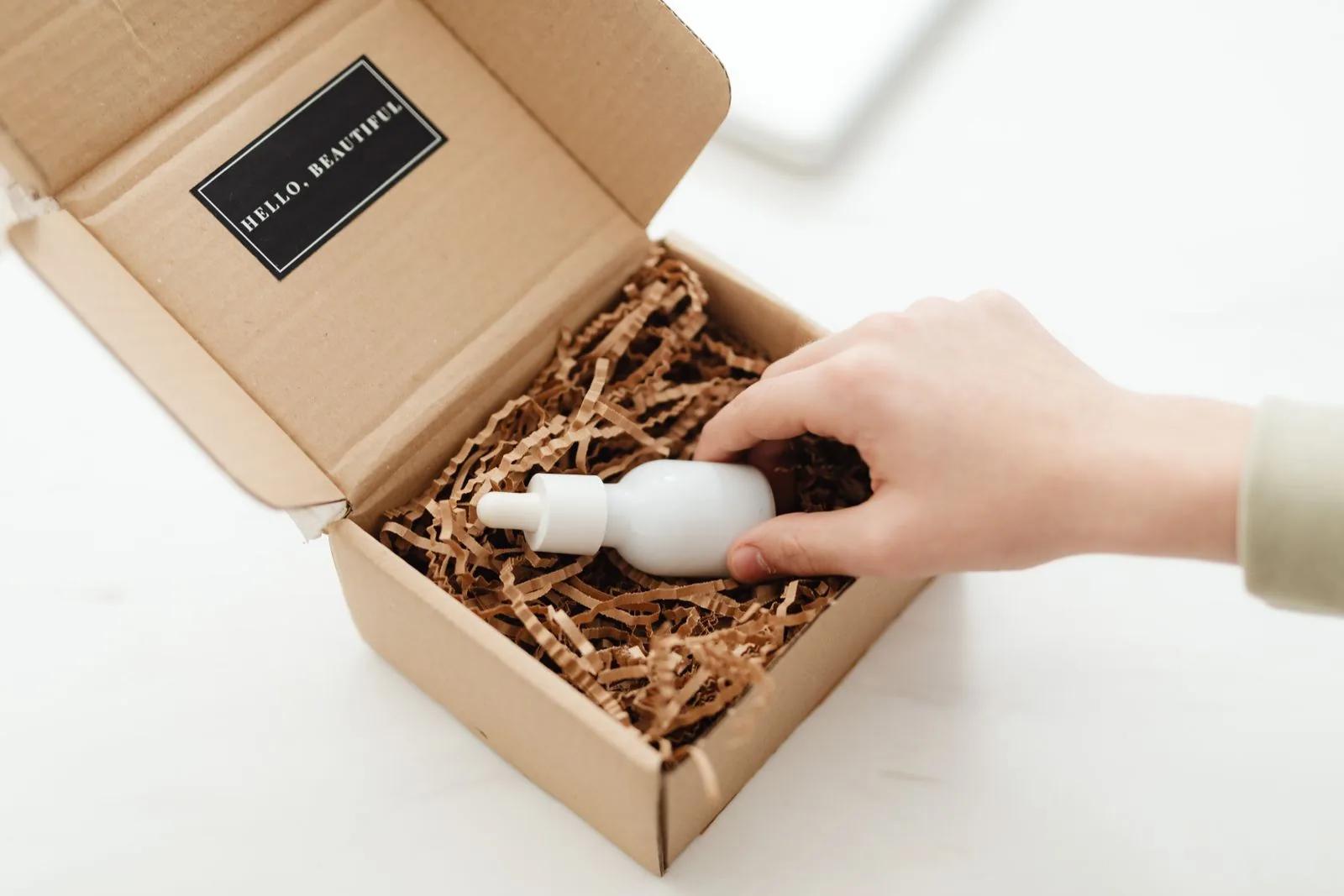
That box of free skincare a brand sent you can be taxable income. It feels like a present, but if you posted about it, HMRC may see something very different: payment for a service, just paid in product instead of cash.
This guide is for TikTok Shop sellers and creators who get sent gifted products, PR packages and samples. We'll explain exactly when a gift counts as taxable income, when it genuinely doesn't, how VAT fits in, and the records you need so you're never caught out.
It's written for the UK (England, Wales and Northern Ireland; Scotland sets its own income tax rates). Figures are for the 2025/26 tax year unless we say otherwise.
Do TikTok creators pay tax on PR gifts and gifted products?
Yes, often. If a brand sends you a product and there's an expectation that you'll promote it, HMRC generally treats that product as payment for your services, so its value is taxable trading income, even though no cash changed hands. A genuine no-strings gift with no promotional expectation, or an item you can't sell or transfer, usually isn't taxable.
So the question isn't really "is it a gift?" It's "was anything expected in return?"
When is a gifted product taxable income?
The starting point in tax law is that your trading income has to be in the form of "money or money's worth" to be taxed. HMRC's Business Income Manual makes this clear: if something you receive can't be turned into money, there may be nothing to include in your profits.
That gives you two practical tests for any gifted item.
Test one: was it given in return for promotion? If a brand sends you a product expecting content, a post, a mention or a review, that's not really a gift. You're providing an advertising service and being paid in product. The value of that product is taxable trading income.
Test two: can it be converted into money? A physical product you could keep, use or sell has a money's worth. A truly non-transferable benefit, something you can't sell on or pass to anyone else, may have nothing to include in your profits. HMRC's own example is a non-transferable reward like a holiday given to a loyal customer.
In practice, most PR products fail to escape tax. They are physical, they have a resale value, and they come with at least an implied expectation of coverage. The mistake we see most often is creators assuming "free" means "tax-free". It doesn't. It's also worth understanding the difference between a free product and a sample for tax purposes, as the two are treated differently.
A narrow set of items can fall outside trading income: a genuinely unsolicited package with no promotional strings attached, or a benefit you can't convert to cash. But repeated gifts, gifts from brands you have no prior relationship with, and anything sent on the understanding you'll make content all point firmly towards taxable income.
How does HMRC decide if you are trading?
HMRC uses a long-standing set of tests called the "badges of trade", set out in its Business Income Manual. No single badge decides it; HMRC looks at the overall picture. For a TikTok creator, the most relevant badges are:
- Profit-seeking motive. Are you doing this to make money or build a paid following?
- Frequency of transactions. Repeated, systematic dealings with brands look like a trade. A one-off freebie is weaker evidence.
- The nature of the arrangement. Is content expected in return? An implied "post about this" turns a gift into consideration.
- How the activity is carried out. A media kit, rate card, brand contracts or a TikTok Shop storefront all look businesslike.
If your activity adds up to a trade, then gifted products received because of that trade are part of your trading income. If you're a hobbyist who occasionally receives an unsolicited item and never monetises anything, you may not be trading at all. Most active TikTok creators and sellers are trading. For the wider picture on how earnings from brand deals and content are taxed, see our guide to how influencer income is taxed in the UK.
For a fuller picture of how this works for your situation, see our guidance for TikTok creators.
What about the £1,000 trading allowance?
The trading allowance lets you earn up to £1,000 of gross trading income in a tax year without paying income tax on it, and without needing to register for Self Assessment, for 2025/26 (gov.uk: tax-free allowances on property and trading income).
Two important points for creators:
It counts gross income, including money's worth. Your £1,000 isn't just cash. The taxable value of gifted products you received for promotion counts towards it too. A creator who took no cash but received £1,500 of taxable PR products has gross trading income of £1,500, over the limit.
You can't claim the allowance and expenses. If your gross trading income is more than £1,000, you can either deduct the £1,000 allowance (partial relief) or deduct your actual business expenses, whichever is better, but not both.
If your gross trading income for the year is £1,000 or less, full relief applies: no tax and no need to tell HMRC, though you should still keep records. Go over £1,000 and you must register for Self Assessment by 5 October after the end of that tax year.
Illustrative example: valuing a year of PR gifts
Illustrative example. Maya is a TikTok beauty creator (a generic example, not a real client). During 2025/26 she receives:
| Item received | Basis | Taxable value |
|---|---|---|
| Skincare set sent for a paid review | Promotion expected | £120 |
| Three brand PR boxes, posts expected | Promotion expected | £540 |
| Unsolicited candle, no contact, never posted | No strings, kept personally | £0 |
| Cash brand fees | Cash income | £900 |
| Gross trading income | £1,560 |
The candle was unsolicited with no expectation attached, so on the facts Maya treats it as outside her trading income. Everything tied to promotion counts at its value, alongside her cash fees.
Her gross trading income is £1,560, which is over the £1,000 trading allowance, so she must register for Self Assessment and report it.
Now she chooses her deduction. Say her real allowable expenses (props, a ring light, software, postage) come to £700.
- Option A, trading allowance: £1,560 less £1,000 = £560 taxable profit.
- Option B, actual expenses: £1,560 less £700 = £860 taxable profit.
Option A gives the lower profit, so Maya claims the £1,000 allowance instead of her expenses. If her profit falls within her unused personal allowance (£12,570 for 2025/26), there may be no income tax to pay, but she still has to report it, and Class 4 National Insurance can apply once profits pass the £12,570 Lower Profits Limit for 2025/26.
The catch every creator should plan for: HMRC doesn't accept tax paid in candles. You can owe tax on product value while having no cash from that product to pay the bill. Set aside cash to cover the tax on your gifted income.
Does VAT apply to gifted products?
VAT is a separate question from income tax, and it cuts both ways. If you also earn from TikTok LIVE, the VAT treatment of TikTok LIVE gifts, coins and diamonds works differently again.
As a creator receiving gifts. You only have to think about charging VAT once your taxable turnover passes the VAT registration threshold of £90,000 (the figure since 1 April 2024) (gov.uk: register for VAT). That turnover includes the value of promotional services you provide, including those paid in product. Most smaller creators are well below it, but high-earning creators can be caught, especially once gifted "payments in kind" are added to cash fees.
HMRC's view on the brand side. HMRC increasingly treats products sent to influencers not as simple gifts but as a barter: the brand supplies goods and gets advertising in return. For VAT valuation, non-monetary consideration is valued by the subjective value the parties placed on it, and ordinary business gifts only escape output VAT where the total value to one person stays under £50 in a 12-month period. This mostly affects the brand's VAT position, not yours, but it's why brands increasingly issue contracts and ask for invoices.
If you're approaching the £90,000 threshold, get advice early. Our self-assessment services team can review whether your gifted income tips you into VAT territory.
Will TikTok report my income to HMRC?
Yes, potentially. Under the UK's reporting rules for digital platforms, which started on 1 January 2024, platforms such as TikTok Shop collect seller details and report income to HMRC each year (gov.uk: reporting rules for digital platforms). Information collected during a calendar year is reported by 31 January the following year.
A platform won't report you if you sell fewer than 30 goods and earn under the equivalent of around 2,000 euros in the year, but above that your data goes to HMRC.
Two things to be clear about:
- Being reported does not automatically mean you owe tax. HMRC's guidance says so directly. Tax depends on whether you're trading.
- It does mean HMRC can cross-check what you declare against what the platform reports. Under-declaring is far riskier than it used to be.
Note that platform reports usually capture your TikTok Shop sales and payouts. They don't necessarily capture gifted products from third-party brands, but those are still taxable if received for promotion. The duty to declare them sits with you.
What records should you keep?
Good records turn a stressful HMRC question into a five-minute answer. For every gifted item, keep:
- What you received and from whom, with the date.
- The retail value at the time you received it (a screenshot of the product page is ideal).
- Whether anything was expected in return, such as emails, DMs, briefs or contracts agreeing a post.
- Whether you kept, used, sold or returned it.
If a package arrived genuinely unsolicited with no strings, save the evidence that shows that, because that's what supports leaving it out. Brand briefs, rate cards and contracts are exactly what HMRC's badges of trade look at, so keep them tidy.
If you'd rather not wrestle with valuations and Self Assessment alone, Zmartly's self-assessment service handles the lot for creators, from valuing gifted income to filing your return.
Decision steps: is this gift taxable?
Run each item through these steps:
- Was anything expected in return (a post, mention, review, tag)? If yes, it's almost certainly taxable trading income at its retail value. If genuinely no strings, go to step 2.
- Can you sell or transfer it for money? If yes, it likely has money's worth and may still be taxable as part of a trade. If it's truly non-transferable, there may be nothing to include.
- Add the taxable value to your gross trading income for the year (alongside cash fees and TikTok Shop sales).
- Is your total gross trading income over £1,000? If no, full trading allowance covers it: no tax, no return, but keep records. If yes, register for Self Assessment and report it.
- Choose the better deduction: the £1,000 trading allowance or your actual expenses, not both.
- Approaching £90,000 turnover? Check whether you need to register for VAT.
Frequently asked questions
Do I pay tax on PR gifts if I never asked for them?
Only if they form part of a trade. A genuinely unsolicited item with no expectation of promotion, that you simply keep, can fall outside your trading income. But if you post about it, or it's one of many such items in a clear pattern of brand dealings, HMRC is likely to treat it as taxable. Keep evidence that it was unsolicited and string-free if you intend to leave it out.
How do I value a gifted product for tax?
Use the normal retail price of the item at the time you received it, what a customer would have paid for it. A dated screenshot of the product listing is good evidence. This is the value that goes into your gross trading income.
Is there a tax-free limit for gifts to creators?
There's no special "gift allowance" for creators. The relevant relief is the £1,000 trading allowance for 2025/26, which covers your total gross trading income, cash and the value of taxable gifts combined. Go over £1,000 and you must register for Self Assessment and report the lot.
Do I have to pay tax even though I only got products, not money?
Yes, if the products were received for promotion. HMRC taxes income in "money's worth", not just cash. The practical danger is cash flow: HMRC won't take payment in product, so set money aside to cover the tax on gifted income.
Will I owe VAT on the free products I receive?
Receiving gifts doesn't make you charge VAT. You'd only register for VAT once your taxable turnover (including the value of promotional services paid in product) passes £90,000, the threshold since 1 April 2024. The £50 business-gift and barter VAT rules mainly affect the brand sending the items, not you.
Does TikTok tell HMRC how much I earn?
TikTok Shop, like other digital platforms, reports seller income to HMRC under rules that began on 1 January 2024, with data reported by 31 January the following year. Very small sellers (fewer than 30 sales and under roughly 2,000 euros a year) aren't reported. Being reported doesn't automatically mean you owe tax, but it does let HMRC cross-check your return.