When a tenant's washing machine packs in or the living-room carpet wears through, you have to replace it. The good news is that the cost is usually tax-deductible against your rental income.
That deduction is called replacement of domestic items relief. It lets landlords claim back the cost of replacing furniture, appliances, soft furnishings and kitchenware in a residential let.
This guide explains exactly what qualifies, what doesn't, how much you can claim, and how to do the sums. It sits alongside the wider list of allowable expenses landlords can claim against rental profit. It also covers the 2025 changes for former furnished holiday lets, and the difference between this relief and the old wear and tear allowance.
It's written for UK landlords letting residential property. If your let is in Scotland the same relief applies, though your Income Tax rates and bands differ.
What is the replacement of domestic items relief?
Replacement of domestic items relief is a deduction that lets landlords claim the cost of replacing household items in a residential rental property. It applies to furnished, part-furnished and unfurnished lets alike.
Here's what it means in practice. When the fridge dies or the sofa gives out, you replace it. You then deduct that cost from your taxable rental income, provided the item meets HMRC's conditions, which are set out in HMRC's Property Income Manual at PIM3210.
The relief took effect on 6 April 2016 for Income Tax (1 April 2016 for companies). It replaced the older wear and tear allowance, which we cover later in this guide.
One point matters above all others. The relief only covers replacements, not the first time you buy something. If you furnish a property from scratch, those initial costs don't qualify. It's the later replacement of that sofa or bed, when the original wears out, that you can claim.
So it's a relief built around the ongoing cost of keeping a let in good order, recognising that household items wear out and need swapping over time.
Which household items can landlords claim for?
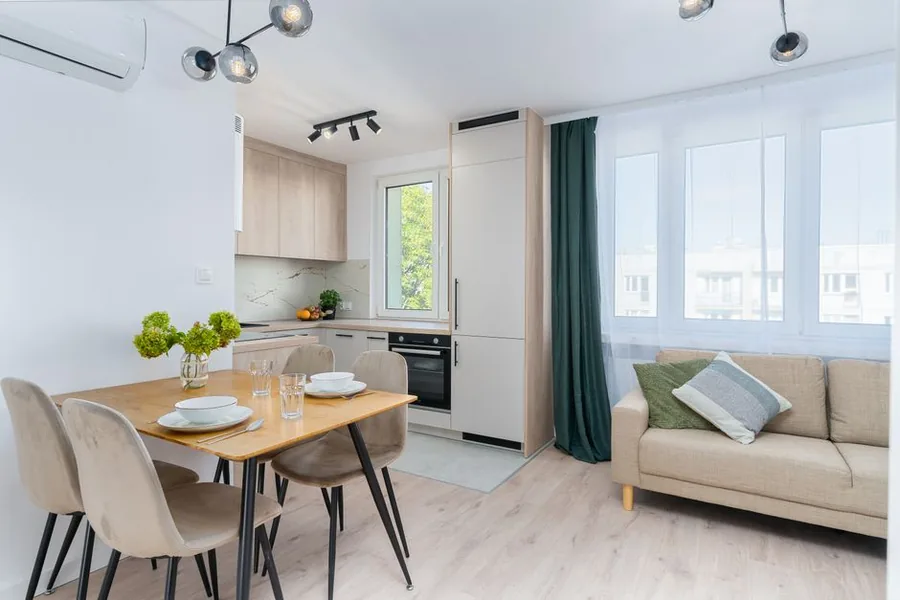
The relief covers moveable domestic items provided for your tenant's use. HMRC groups them into four broad categories.
Moveable furniture such as sofas, armchairs, dining tables and chairs, beds and bed frames, wardrobes, chests of drawers and bookcases. As a rule of thumb, if you can move it without dismantling work or damaging the building, it's likely to qualify.
Soft furnishings such as carpets, rugs, curtains, blinds, cushions, bedding and lampshades. These wear quickly in a let, so it helps that they're covered.
Household appliances, including the big-ticket items: washing machines, tumble dryers, dishwashers, fridges, freezers, fridge-freezers, cookers, hobs and microwaves. White goods are expensive, so this is where the relief really earns its keep.
Kitchenware, including crockery, cutlery, pots, pans and glasses. Individually small, but they add up.
The core test is that the item must be for the tenant's use, and once you've replaced it the old one can't stay available to them. You also need to be replacing something that genuinely existed in the property and was provided as part of the let. Keep records that show the original item was there.
Can claim vs cannot claim
| Can claim | Cannot claim |
|---|---|
| Freestanding wardrobes | Built-in / fitted wardrobes |
| Freestanding cookers | Built-in ovens (usually fixtures) |
| Carpets and rugs | Fitted kitchen units |
| Curtains and blinds | Boilers and radiators |
| Washing machines | Toilets, baths and basins |
| Sofas and armchairs | Kitchen worktops |
| Beds and mattresses | Windows and doors |
| Crockery and cutlery | The first time you buy any of these (initial cost) |
What costs are not eligible?
Book a free Tax Health Check →
Knowing what you can't claim matters just as much, because it keeps your return clean.
Fixtures are excluded
Fixtures don't count. A fixture is plant or machinery installed in the dwelling so that it becomes part of the building, such as a boiler, central heating, fitted kitchen units, a bath, basin or toilet. Replacing one of these may instead be a repair (deductible) or capital expenditure, depending on the work, so it's worth checking the treatment before you claim.
Initial purchases don't qualify
The clue is in the name: it's for replacements. If you furnish a property for the first time, none of that initial cost qualifies. When you later replace those items as they wear out, the replacement cost is eligible.
Rent a Room properties are excluded
If you let a furnished room in your own home under the Rent a Room Scheme, you can't use this relief. You rely on the Rent a Room tax-free allowance instead, which is £7,500 a year for 2026/27 (£3,750 if the income is shared). You can't claim both on the same income. For more on how that allowance interacts with a return, see our guide to the Rent a Room Scheme for 2026/27.
No double claiming
You can't claim this relief on an item for which you've already claimed capital allowances. You pick whichever route is right when you first acquire the item, not both.
If you're unsure whether a cost is a repair, an improvement, or eligible for replacement relief, it's worth a quick word with an accountant. Our tax advisory team works with landlords on exactly these calls.
How much can you claim?
How much you claim depends on whether you're replacing like for like, upgrading, or simply buying the modern equivalent of an older item.
Like-for-like replacements
For a straight like-for-like swap you claim the full cost of the new item. Replace a worn three-seater fabric sofa with a similar three-seater fabric sofa and the whole price is claimable.
Upgrades are capped
If you upgrade, you can only claim what an equivalent replacement would have cost. Swap a single wardrobe for a triple wardrobe and you claim the cost of a like-for-like single, not the dearer triple. The extra is an improvement, and it isn't claimable as relief.
Modern equivalents count as like-for-like
Here's the part landlords often miss. A modern equivalent isn't an upgrade. Manufacturing standards, energy efficiency and safety rules move on, so a new model naturally outperforms a ten-year-old one. HMRC accepts that a budget new washing machine replacing an old one is not an improvement.
So if you replace a basic washing machine with a current-day basic machine of similar capacity, you claim the full cost, even though the new one is quieter and more efficient. Those are just standard features now, not luxuries you've chosen.
Costs you can add
You can also claim the incidental costs of the replacement:
- Delivery charges
- Professional installation (for example, plumbing in a washing machine)
- Collection and disposal of the old item
Proceeds you must deduct
If you sell or part-exchange the old item, deduct what you received. You claim your net cost only.
| Scenario | Equivalent cost | New cost | Claimable | Why |
|---|---|---|---|---|
| Like-for-like sofa | £600 | £650 | £650 | Modern equivalent, similar spec |
| Single to triple wardrobe | £100 | £250 | £100 | Upgrade capped at equivalent cost |
| Modern washing machine | £200 | £420 | £420 | Modern equivalent, not an upgrade |
| Carpet plus better underlay | £300 | £450 | £300 | Better underlay is an improvement |
| Bed, old one sold for £40 | £400 | £400 | £360 | £400 less £40 proceeds |
How do you calculate the relief?
There's no official HMRC calculator, but the formula is simple.
Cost of an equivalent replacement, plus delivery, installation and disposal costs, minus any proceeds from selling or part-exchanging the old item, equals your claimable relief.
Illustrative example: dining table
Priya owns a furnished let and replaces the dining table. The old four-seater cost £400. She buys a six-seater for £600. Because more seats is an upgrade, her claim is capped at the £400 an equivalent four-seater would cost. She pays £20 delivery and sells the old table for £50.
- Equivalent replacement: £400
- Plus delivery: £20
- Less sale proceeds: £50
- Claimable: £370
That £370 comes off Priya's rental profit on her Self Assessment return, reducing her tax.
Illustrative example: white goods
Michael replaces a washing machine that he bought five years ago for £250. The new energy-efficient model is similar capacity and costs £420. He pays £60 to install it and £15 to have the old one recycled, and it has no resale value.
The new machine is a modern equivalent, so the full cost qualifies, not just the old £250.
- New machine: £420
- Plus installation: £60
- Plus disposal: £15
- Less proceeds: £0
- Claimable: £495
Illustrative example: a second-hand replacement
Jennifer replaces a worn-out sofa, which cost £800 new, with a good second-hand one for £350. Delivery is £30 and the old sofa has no value.
- Replacement: £350
- Plus delivery: £30
- Less proceeds: £0
- Claimable: £380
You can claim relief on second-hand replacements. The claim is based on what you actually spent.
What records to keep
HMRC may ask for proof, so keep:
- Receipts for the replacement items
- Records that the original items existed (an inventory or earlier receipts)
- Dated photos of the old items showing why they needed replacing
- Disposal and recycling receipts
- Records of any sale proceeds
- Delivery and installation invoices
If you replace several items in a year, work each out separately, then total them for your return. The total then feeds into your property pages when declaring rental income on Self Assessment. A simple spreadsheet with date, item, equivalent cost, extra costs, proceeds and net claim keeps it tidy and gives you an audit trail.
Are replacement white goods tax-deductible?
Yes. Replacement white goods are deductible under this relief, and they're often the most valuable claims a landlord makes.
White goods means the large kitchen and utility appliances: washing machines, tumble dryers, washer-dryers, dishwashers, fridges, freezers, fridge-freezers, cookers, ovens and hobs.
The rules are the same as for any domestic item. Replace an existing appliance that's worn out or broken, and you claim the cost of a like-for-like or modern equivalent, but not a genuine upgrade.
So if the let had a basic freestanding four-hob cooker and it dies, you claim for a similar freestanding cooker. Jump to a six-hob range with double ovens and you can only claim the cost of the basic equivalent.
Installation counts too. Plumbing in a washing machine, the electrical work to fit a cooker safely, and removal of the old appliance are all part of the claim.
Illustrative example: a landlord with three lets
David replaces white goods across three properties during 2026/27:
- Property 1: fridge-freezer, £450 including delivery
- Property 2: washing machine, £420 plus £60 installation
- Property 3: dishwasher, £480 plus £40 delivery, old one sold for £30
- Property 1: £450
- Property 2: £420 + £60 = £480
- Property 3: £480 + £40 - £30 = £490
- Total claimable: £1,420
The tax this saves depends on David's marginal rate. At the basic rate of 20% for 2026/27 it's £284; at the higher rate of 40% it's £568.
One caveat: integrated appliances built into kitchen units may be treated as fixtures rather than moveable items, so the treatment can differ. If yours are integrated, check before you claim.
Can former furnished holiday let landlords claim?
This is the big change for recent tax years. The furnished holiday lettings (FHL) tax regime was abolished from 6 April 2025 for Income Tax and Capital Gains Tax (1 April 2025 for companies).
What changed
Until then, FHLs had their own favourable treatment, including capital allowances on furniture and fittings. From 6 April 2025 a former FHL is taxed like any other residential let. Capital allowances are no longer available on new furniture and furnishings; replacement of domestic items relief applies instead.
Former FHLs now use this relief
So if you replace furniture, appliances or soft furnishings in what used to be your holiday let, you claim under the standard replacement rules in this guide, just like any other landlord.
For items replaced while the property still qualified as an FHL (before 6 April 2025), you'd have used the old capital allowances treatment. From 6 April 2025 onwards, it's replacement relief. Where a business already has a capital allowances pool, it can keep claiming writing-down allowances on that existing pool.
Illustrative example: a former holiday let
Emma's coastal cottage was an FHL and is now let on standard tenancies. In September 2025 she replaces a worn sofa (£850), two single beds (£250 each) and a washing machine (£450 including installation).
- Sofa: £850
- Two beds: £500
- Washing machine: £450
- Total claimable: £1,800
She reports it as a deduction against rental income on her Self Assessment, exactly like any residential landlord.
Abolition doesn't stop you letting short-term. You can still run a holiday let or short-stay rental. It's only the tax treatment that's changed. For more on how the new rules affect you, see our guidance for landlords and on furnished holiday let tax after abolition.
Is window replacement a repair or an improvement?
This one comes up a lot. Windows aren't moveable domestic items, so they fall outside replacement of domestic items relief. The question instead is whether the work is a repair (deductible against rental income now) or an improvement (capital).
Like-for-like is usually a repair
Replace rotten single-glazed windows with modern double-glazed ones of similar style and size, and it's generally a repair. HMRC accepts that you can't put back the exact old single glazing because building standards have moved on, so using the modern equivalent doesn't make it an improvement. The test is whether you're restoring the property or enhancing it beyond its original state.
A real upgrade is likely capital
Rip out perfectly good windows to fit premium triple glazing, or add a window where there wasn't one, and that's more likely an improvement. Capital costs aren't deductible against rental income now, but they may reduce your Capital Gains Tax when you sell by adding to your allowable costs.
Illustrative examples
- Repair: rotten single-glazed sash windows replaced with double-glazed sashes in keeping with the property, restoring function. Claimable as a repair.
- Improvement: sound single glazing swapped for premium triple glazing purely to improve efficiency. Likely capital.
- A mix: three damaged windows replaced like-for-like (repair) while a brand-new window is added elsewhere (capital). Split the costs and treat each part on its own footing.
Windows can be costly and the treatment moves real money between this year's bill and a future CGT calculation, so it's worth getting advice before you commit.
What happened to the wear and tear allowance?
If you've let property for a while you'll remember the wear and tear allowance. It was the predecessor to today's relief.
The old system
Before 6 April 2016, landlords of fully furnished lets could claim a flat 10% of net rent each year, whether or not they'd actually replaced anything. Simple and predictable, but blunt.
Why it changed
It only helped fully furnished lets, so part-furnished and unfurnished landlords got nothing even when they were spending on replacements. It also allowed claims with no real expenditure, and it didn't track what landlords actually spent.
The system now
Replacement of domestic items relief, from 6 April 2016, fixed those issues. It applies to all residential lets regardless of furnishing, it requires real expenditure, and it reflects your actual costs. Spend nothing and you claim nothing; spend £3,000 on eligible replacements and you can claim £3,000, subject to the upgrade and modern-equivalent rules.
Don't confuse it with fair wear and tear
One quick warning. The wear and tear allowance (a tax relief that no longer exists) is not the same as fair wear and tear (a tenancy concept that's alive and well). Fair wear and tear is the normal deterioration of a property during a tenancy, and it governs how much of a deposit you can keep at the end. It has nothing to do with your tax calculation.
Does Making Tax Digital change how I claim this relief?
Making Tax Digital for Income Tax (MTD for ITSA) changes how you report your rental figures, not what you are allowed to claim. Replacement of domestic items relief still works exactly as set out in this guide.
The change is phased in by income level. You must use MTD for Income Tax if your qualifying income from property and self-employment is:
- over £50,000, from 6 April 2026
- over £30,000, from 6 April 2027
- over £20,000, from 6 April 2028
Qualifying income is your gross property and self-employment income before expenses, so it is your total rent, not your profit, that counts towards the threshold.
If you are in scope, you keep digital records and send HMRC a quarterly update for your property business, then a final declaration after the tax year ends. Your replacement costs go into those records just like any other allowable expense, and the relief reduces your taxable profit in the same way. Good record keeping matters even more here, so the receipts, inventories and disposal notes covered above will keep your quarterly updates clean. If you would like help getting set up, our Self Assessment team can walk you through it.
Talk to Zmartly about your rental tax
Replacement relief is straightforward once you know the rules, but the upgrade-versus-modern-equivalent line, the repair-versus-improvement call, and the former-FHL transition all reward getting it right.
Want to make sure you're claiming every relief you're entitled to? Book a free 20-minute call with a Zmartly accountant and we'll review your rental tax position.
FAQs
Is there a separate form for replacement of domestic items relief?
No. There's no standalone form. You claim it on your Self Assessment return by including the cost as an allowable expense against your rental income, on the UK property pages (SA105) under repairs, maintenance and renewals. Keep your receipts and records in case HMRC asks.
Can I claim relief on second-hand items?
Yes. You can claim on a second-hand replacement as long as it's fit for purpose and replaces something no longer usable. The same rules apply: claim what you actually paid, plus delivery or installation, less any proceeds from the old item.
What counts as a domestic item?
Moveable household goods provided for the tenant's use: furniture, soft furnishings, appliances and kitchenware. Per HMRC's PIM3210, it excludes fixtures attached to the property such as boilers, radiators, baths, toilets and fitted units. The test is whether the item can be removed without damaging the building.
How far back can I amend a return to include a forgotten cost?
You generally have 12 months from the 31 January filing deadline to amend a Self Assessment return. For 2024/25 (deadline 31 January 2026) that's until 31 January 2027. After that you may be able to make an overpayment relief claim within four years of the end of the tax year, which is more involved.
Can I claim if the tenant damaged the item?
Yes, as long as you're genuinely replacing it. But if the tenant compensates you or their deposit covers part of the cost, deduct that from your claim. If a replacement sofa costs £500 and £200 comes from the deposit, you claim £300.
Can I claim for items in an HMO?
Yes. Landlords of houses in multiple occupation claim on the same basis as any residential landlord, whether the items are in communal areas or individual rooms, provided they meet the usual conditions.