Running an optical practice means juggling three things that most businesses never touch at once: a shelf full of high-value stock, a sale that's part goods and part exempt healthcare, and a regulator that cares who owns the company. Get any one of them wrong and the numbers stop making sense.
This guide walks through the three areas that trip up opticians most often. We'll cover how to account for frame and lens stock, how to split VAT between the spectacles you sell and the dispensing service you provide, and how the way you structure the practice affects your tax bill.
It's written for independent optometrists and dispensing opticians in England, Wales and Northern Ireland who own or are about to set up a practice. All figures are for the 2025/26 tax year unless stated.
In short: optician accounting is different because a single spectacle sale is partly standard-rated goods (frames and lenses at 20% VAT) and partly an exempt dispensing service, so the price must be apportioned and only the goods element carries VAT. Stock is valued at the lower of cost and net realisable value, and VAT registration is required once taxable turnover passes £90,000, per HMRC.
Why is optician accounting different?
Most retailers sell a product and charge VAT on the lot. Opticians don't.
When a patient walks out with new glasses, they've actually bought two different things. One is a physical product, the frames and lenses, which is standard-rated for VAT. The other is a professional service, the dispensing (measuring, fitting and advising), which is exempt from VAT when carried out by a registered optometrist or dispensing optician.
On top of that sits the sight test, which is and always has been exempt as a supply of healthcare. HMRC's internal guidance is explicit: services provided by registered opticians, including sight tests and eye examinations, are exempt from VAT because they protect and maintain health.
So a single transaction can contain an exempt healthcare service, an exempt dispensing service, and a standard-rated supply of goods. That mix is the root of nearly every accounting headache in the sector, and it's why a general-practice approach to the books rarely works for an optician.
How do you account for stock in an optical practice?
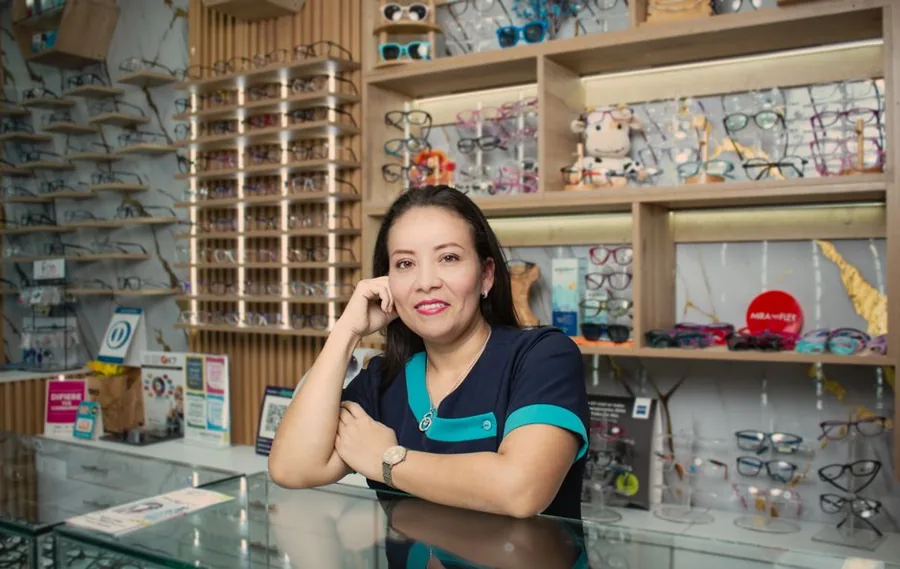
Stock is usually the biggest number on an optician's balance sheet, and it behaves oddly. Designer frames can sit unsold for a year, lens combinations are made to order, and a chunk of inventory is obsolete the moment a brand refreshes its range.
A few practical points to get right:
- Value stock at the lower of cost and net realisable value. That's the standard accounting rule, and it matters here because slow-moving or discontinued frames are often worth far less than you paid. Carrying them at full cost overstates your profit and your tax bill.
- Count it properly at the year end. A physical stocktake of frames, sunglasses, contact lens stock and consumables gives you the closing-stock figure that drives your profit. Estimates won't do.
- Track ranges, not just totals. Knowing which lines turn over and which gather dust is what lets you write down dead stock with evidence behind it, rather than guessing.
- Keep lens and lab costs separate. Bespoke lenses ordered for a specific patient are really work in progress until the job is collected. Lumping them in with shelf stock distorts both figures.
Good stock records also feed straight into the VAT calculation below, because the cost of frames and lenses is one half of the apportionment. Sloppy stock data makes accurate VAT impossible.
How does VAT work on dispensing and spectacle sales?
Here's the rule in plain terms. When you sell spectacles or contact lenses for a single price, that price covers two supplies:
- the goods (frames and lenses), which are standard-rated at 20% (VAT rates, gov.uk); and
- the dispensing service, which is exempt.
Because you've made one charge for a mix of taxable and exempt supplies, the law requires you to split, or apportion, that charge. This comes from section 19(4) of the VAT Act 1994, which demands a proper attribution of value where supplies are made for a single payment. You only pay output VAT on the taxable goods element, not on the dispensing.
This isn't optional or a clever scheme. It's the established treatment that followed the Leightons and Eye-Tech cases in the late 1990s, and HMRC's health manual confirms dispensing is a separate, exempt supply.
One practical change is worth knowing. Since HMRC's Revenue and Customs Brief 14 (2020), opticians no longer need written approval before adopting an output-tax apportionment method. You can choose a method that follows the principles in VAT Notice 700 and apply it, which brings opticians into line with other businesses. Be aware, though, that this freedom covers output tax only. If you want a special method to apportion the VAT you reclaim on costs (input tax), that still needs HMRC approval.
Because part of your income is exempt, you'll usually be partly exempt for VAT. That affects how much VAT you can reclaim on overheads, and it's an area where getting specialist VAT and tax advice early pays for itself.
You'll register for VAT once your taxable turnover (the goods element, not your exempt income) passes the £90,000 threshold (VAT registration thresholds, gov.uk). The deregistration threshold is £88,000. And every VAT-registered business must now keep digital records and file through compatible software under Making Tax Digital for VAT (Making Tax Digital for VAT, gov.uk).
How do you calculate the VAT apportionment?
HMRC publishes a suggested full-cost apportionment method. The idea is simple: work out what proportion of the cost of a dispensed pair of glasses relates to the goods rather than the service, then apply that proportion to the sale price to find the taxable part.
In outline, the method compares two costs per pair dispensed:
- A: the cost of the goods (total cost of frames and lenses, divided by the number of spectacles dispensed in the period).
- C: the cost of the dispensing service per pair (the attributable optometrist, dispensing optician and support-staff costs, divided by the number of spectacles dispensed).
The taxable proportion is then A ÷ (A + C). Apply that percentage to the sale price, and the VAT is one-sixth of the taxable part (because 20% VAT is one-sixth of a VAT-inclusive price).
Illustrative example
This is an illustrative example using made-up figures to show the mechanics. Your own costs and ratio will differ, and you should base the calculation on your actual records.
Suppose a practice works out, from its own cost records for the period, that the goods cost per pair (A) is £45 and the dispensing service cost per pair (C) is £30.
| Step | Calculation | Result |
|---|---|---|
| Goods cost per pair (A) | from cost records | £45 |
| Dispensing cost per pair (C) | from cost records | £30 |
| Taxable proportion | £45 ÷ (£45 + £30) | 60% |
| Sale price (VAT-inclusive) | single charge to patient | £200 |
| Taxable element | £200 × 60% | £120 |
| Output VAT due | £120 × 1/6 | £20 |
So on a £200 sale, only £20 of VAT reaches HMRC, because the remaining £80 of the price relates to the exempt dispensing service. The exempt element is £80, and the VAT-exclusive value of the goods is £100. Charge VAT on the whole £200 instead and you'd hand over £33.33; that's £13.33 more than you actually owe, on every single sale.
That gap is exactly why the apportionment is worth getting right and reviewing each year as your cost mix changes.
What's the best structure for an optical practice?
There are two questions tangled together here: the legal structure that suits you as a business, and the General Optical Council (GOC) rules on who can own an optical body corporate.
On the GOC side, if you trade through a company that carries out restricted functions (testing sight or fitting and supplying optical appliances), that company is a body corporate and must register with the GOC. The headline rule is that the majority of directors must be registered optometrists, registered dispensing opticians or registered bodies corporate. If there's only one director, that director must be registered. Get advice from the GOC directly on which registration category fits, as the rules turn on your specific board and revenue mix.
On the tax side, the usual choice is sole trader (or partnership) versus limited company.
- Sole trader / partnership. Simpler to run, profits taxed as income. You pay Income Tax at 20% basic rate above your £12,570 personal allowance (Income Tax rates, gov.uk), plus Class 4 National Insurance.
- Limited company. The practice pays Corporation Tax, and you draw a mix of salary and dividends. Profits up to £50,000 are taxed at the 19% small profits rate; profits over £250,000 at the 25% main rate; and profits in between are taxed at 25% with marginal relief using the 3/200 fraction (Corporation Tax rates, gov.uk). Dividends above the £500 dividend allowance are taxed at 8.75% (basic rate) or 33.75% (higher rate) for 2025/26 (Tax on dividends, gov.uk).
A company also lets you claim generous capital allowances on practice fit-out and equipment. The Annual Investment Allowance gives 100% relief on up to £1,000,000 of qualifying plant and machinery (Annual Investment Allowance, gov.uk), and companies can use full expensing for 100% relief on most new plant and machinery with no annual cap.
If you do incorporate, our guides to paying yourself dividends and corporation tax marginal relief explain how you draw profit out and how the rate works between the £50,000 and £250,000 limits.
There's no single right answer. A small single-site practice taking home modest profits may be better off as a sole trader; a growing multi-test-room practice often benefits from a company. The decision should weigh your profit level, how much you draw versus reinvest, the GOC ownership rules, and your plans to bring in or sell to other registrants. This is exactly the kind of question our accounting service for opticians is built around, and it's worth modelling before you commit.
Frequently asked questions
Do opticians charge VAT on glasses?
Partly. A pair of glasses is treated as two supplies: standard-rated goods (the frames and lenses) and an exempt dispensing service. You apportion the single price and only charge 20% VAT on the goods element, not on the dispensing or the sight test.
Is a sight test exempt from VAT?
Yes. A sight test or eye examination by a registered optician is an exempt supply of healthcare in England, Wales and Northern Ireland, so no VAT is charged on it.
Do opticians need GOC approval before changing their VAT method?
No, that's a different regulator. Since 2020 you no longer need HMRC's written approval to adopt an output-tax apportionment method, as long as it follows the principles in VAT Notice 700. A special method for reclaiming input tax does still need HMRC approval. GOC rules cover business registration and ownership, not VAT.
Should I run my optical practice as a limited company?
It depends on your profit level, how much you draw out, and the GOC ownership rules for a body corporate. A company can be more tax-efficient at higher profits and offers good capital allowances on equipment, but it adds admin. Model both before deciding.
Why is stock so important for an optician's accounts?
Stock is usually the largest asset, and frames date quickly. Valuing it at the lower of cost and net realisable value keeps your profit honest, and accurate stock cost figures feed directly into your VAT apportionment.
Book a free Tax Health Check →
Talk to an accountant who knows opticians
Stock, partial-exemption VAT and GOC-compliant structure are a lot to hold together while you're also running clinics. We can set up your apportionment method, keep your VAT and statutory accounts right, and model the structure that leaves you best off.
Want a clear plan for your practice? Book a free 20-minute call with a Zmartly accountant.