
A jewellery stocktake is harder than most retail counts, and not because gold is heavy. The real problem is ownership. A good chunk of what sits in your cabinets on stocktake night was never yours to count. Consignment pieces, memo goods out on approval, a supplier's diamond line on a sale-or-return deal, all of it lives in your shop but belongs to someone else.
Count it as your own and you overstate your stock, overstate your profit, and pay tax you do not owe. Miss the bits you do own and you understate everything and raise questions with HMRC later.
This guide walks through a jewellery shop stocktake that holds up in your accounts. You will learn how to separate owned stock from consignment and memo, how to value each one, and how the VAT margin scheme and investment gold rules change the picture. It is written for independent jewellers, family shops and small chains doing a year-end count.
What does a jewellery shop stocktake need to get right?
In short: count everything physically present, then split it into what you own and what you are merely holding. Only stock you actually own goes on your balance sheet, valued at the lower of cost and net realisable value. Consignment and memo stock stay off it, tracked separately.
That one split drives your stock figure, your gross profit, and the numbers that feed your VAT return and your tax computation. Get the split right and the rest of the count is just careful counting.
Owned stock vs consignment vs memo: what's the difference?
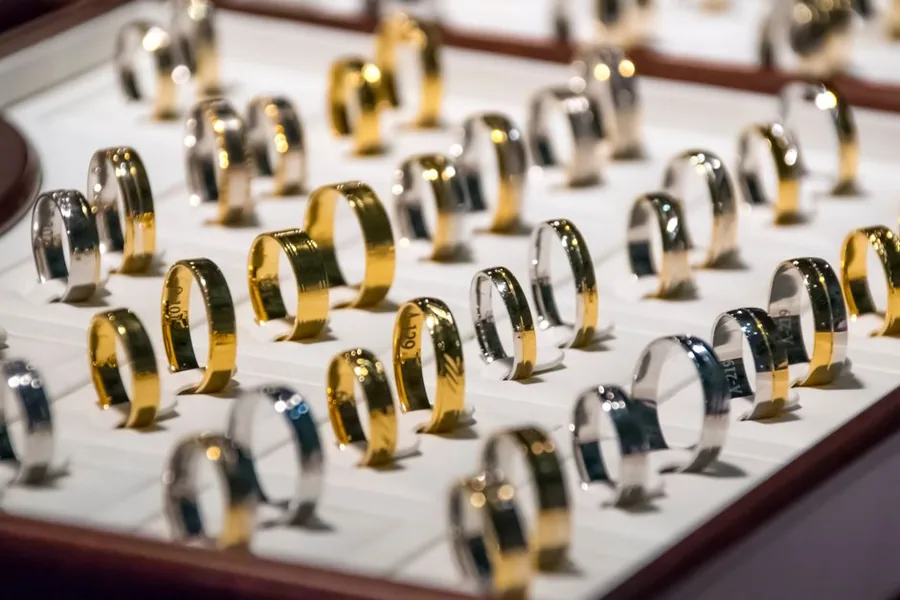
The accounting rule is about who carries the risks and rewards of ownership, not about who physically holds the item. Under UK GAAP (FRS 102), stock only goes on your balance sheet when it is, in substance, your asset.
Here is how the three categories usually fall.
| Stock type | Who owns it | On your balance sheet? | What you do at stocktake |
|---|---|---|---|
| Owned stock | You | Yes | Count and value at lower of cost and net realisable value |
| Consignment stock | The supplier, until you sell or commit | Usually no | Count separately, keep a memo record, reconcile to supplier statements |
| Memo (memorandum) stock | The supplier, sent out on approval | No | Count separately, list against the memo docket, return or buy |
The grey area is consignment. If your deal means you bear the real risks of holding the piece, for example you must pay for it after a set period whether it sells or not, or you cannot return it freely, then in substance it is your stock and it belongs on your balance sheet with a matching liability to the supplier. If the supplier keeps those risks and you can return unsold pieces at will, it stays off your books. Read the actual consignment agreement before you decide. The label on the docket does not settle it; the terms do.
How do you account for consignment stock in a jewellery shop?
Talk to a bookkeeping specialist →
Consignment stock is goods a supplier places in your shop to sell on their behalf. The classic jewellery version is a manufacturer leaving a tray of rings with you. You display and sell them, take a margin or commission, and the supplier invoices you only when a piece sells.
At stocktake, you treat genuine consignment stock like this:
- Do not include it in your stock figure if the supplier keeps the risks and rewards. It is not your asset.
- Keep a separate memo record of every consignment item: supplier, description, reference, agreed price and date received. A simple spreadsheet or a dedicated section of your stock system works.
- Reconcile your count to the supplier's statement. Any item you cannot find is either sold (so you owe for it) or lost (so you may owe for it under the agreement).
- Recognise the purchase and the sale together when a consignment piece sells. At that point it becomes a normal purchase and sale in your books.
If the agreement instead pushes the risk onto you from day one, flip the treatment: bring the stock onto your balance sheet at cost and post a creditor for the same amount. This is the same principle a car dealer applies to consignment vehicles, and it applies to jewellery in exactly the same way.
The mistake we see most often is a shop counting a supplier's consignment tray into its own closing stock because it was physically there on the night. That inflates closing stock, which inflates profit, which inflates the tax bill. Counting it separately is not optional tidiness; it is what keeps the accounts true.
What is memo stock and how do you treat it?
Memo stock, short for memorandum stock, is goods a supplier sends you on approval or sale-or-return, recorded on a memo (a docket or memo invoice) rather than a true sales invoice. It is common with loose diamonds and higher-value pieces a supplier wants to put in front of a specific customer.
The key point: a memo is not a purchase. Title has not passed to you. You are holding the goods, often for a fixed approval window, after which you either buy them or send them back.
So at stocktake, memo stock is never part of your owned stock figure. Instead you:
- List each memo item against its memo docket number and supplier.
- Confirm the goods are physically present or accounted for (sold, returned, or still on approval).
- Flag any memo that has passed its return-by date, because an overdue memo often converts to a purchase under the supplier's terms.
Treat memo and consignment stock as two separate columns in your stocktake. They behave alike for your balance sheet (off it) but the paperwork and the timing differ, and your supplier reconciliations depend on keeping them apart.
How do you value the stock you actually own?
Once you have isolated the stock you own, you value it at the lower of cost and net realisable value, the standard UK GAAP basis for inventory. Cost is what you paid, including delivery and any costs of bringing the item to its current condition and location. Net realisable value is the expected selling price less any costs still to be incurred to sell it.
For a jeweller, a few practical points matter:
- Use actual cost, not retail. A ring marked up to £1,500 in the window might have cost you £900. The £900 is what goes into stock.
- Watch slow movers and damaged pieces. A dated design you will only clear at a discount may have a net realisable value below cost. If so, value it at the lower figure. Do not carry dead stock at full cost.
- Scrap and melt have a value. Old gold held for refining is stock too, usually valued by weight at the recoverable metal value less refining costs.
- Keep cost evidence. Purchase invoices support every cost figure if HMRC ever asks.
Bullion and investment-grade gold you hold are valued on the same lower-of-cost-and-NRV basis in the accounts, but their VAT treatment is very different, which we come to below.
If you are buying display cabinets, safes, security systems or workshop tools as part of the year, those are capital items, not stock. They may qualify for the Annual Investment Allowance, which gives 100% tax relief on up to £1,000,000 of qualifying plant and machinery a year for 2025/26. Keep them out of the stock count entirely.
How does the VAT margin scheme affect your stocktake?
Many jewellers buy second-hand pieces from the public, who are not VAT-registered and so cannot give you a VAT invoice. The VAT margin scheme lets you account for VAT on your margin, the difference between what you paid and what you sold it for, rather than on the full selling price. At the 20% standard rate the VAT due is the margin multiplied by the VAT fraction of 1/6.
For your stocktake, the margin scheme changes how you record and value second-hand stock:
- You must keep a stock book with a sequential stock number, the purchase and sale dates and invoice references, a description, the purchase price, the selling price, the margin and the VAT due. This is a scheme requirement, not just good practice, and records must be kept for six years.
- Value second-hand margin-scheme stock at your actual purchase price. You cannot add repair or refurbishment costs to the purchase price for margin purposes.
- You cannot use the margin scheme on any item where you were charged VAT and could reclaim it, and you cannot use it on investment gold, other precious metals in bullion form, or loose precious stones. Those sit outside the scheme.
- The global accounting scheme is a bulk variant for high-volume, low-value items, where you account for VAT on the total margin across all eligible purchases and sales in a period rather than item by item. It is restricted to items costing under £500 each and to eligible goods, so it can suit a jeweller dealing in lots of inexpensive second-hand pieces but not your finest stock.
Keeping your margin-scheme stock book current at the year-end count saves real pain. The stocktake is the natural moment to reconcile the physical second-hand pieces to the stock book and spot anything missing or mispriced.
How is investment gold treated differently?
Investment gold is exempt from VAT, which sets it apart from almost everything else in your cabinets. HMRC defines investment gold in VAT Notice 701/21 as:
- Gold bars or wafers of a purity of not less than 995 thousandths and of a weight accepted by the bullion markets, and
- Gold coins minted after 1800, of a purity of not less than 900 thousandths, that are or have been legal tender in their country of origin, and that are normally sold at a price not more than 180% of the open market value of the gold they contain.
Because investment gold is exempt, you do not charge VAT when you sell it, and the VAT margin scheme does not apply to it. So in your stocktake, tag investment gold as a separate category from your VAT-standard jewellery and your margin-scheme second-hand stock. Mixing them up is one of the easier ways to get a VAT return wrong.
There is a further wrinkle for trade. The Special Accounting Scheme for gold, a reverse charge, can apply when you buy gold from another VAT-registered trader. Under it the seller does not charge VAT; instead you, the buyer, account for the output tax on your own VAT return. It applies to fine gold and certain gold supplies between VAT-registered businesses, including investment gold where the supplier has opted to tax. If you buy bullion or scrap gold from trade suppliers, check whether the reverse charge applies, because it changes which boxes you complete.
Ordinary new jewellery you sell to customers, gold or otherwise, is standard-rated at 20% as normal. The exemption is specific to investment gold as HMRC defines it, not to gold jewellery in general.
Worked example: a year-end count with mixed stock
Illustrative example. Meera runs an independent jewellery shop and is VAT-registered. On the night of her 31 March 2026 stocktake, her cabinets and safe hold a mix of stock. Here is how she sorts it.
| Item group | Physically present | Owned by Meera? | Treatment |
|---|---|---|---|
| New rings and chains (bought from VAT-registered wholesalers) | £42,000 at cost | Yes | Owned stock, standard-rated on sale |
| Second-hand pieces bought from the public | £8,500 at cost | Yes | Owned stock, VAT margin scheme |
| Supplier's consignment tray of new pieces | £15,000 at supplier price | No (supplier keeps the risk) | Memo record only, off balance sheet |
| Loose diamond on memo from a dealer | £6,000 on the memo docket | No (on approval) | Memo record only, off balance sheet |
| Investment gold bar (999.9 fine) held for a client | £20,000 | Yes | Owned stock, VAT-exempt on sale |
Meera's closing stock figure for her accounts is only the stock she owns:
- New stock £42,000
- Second-hand stock £8,500
- Investment gold bar £20,000
- Closing stock = £70,500
The £15,000 consignment tray and the £6,000 memo diamond stay off the balance sheet. They go in her memo records, reconciled to the supplier and dealer statements. If she had wrongly counted them into closing stock, she would have shown £91,500, overstating stock by £21,000 and inflating her profit by the same amount before any sale ever happened.
Now a single margin-scheme sale, to show the VAT. During the year Meera bought a pre-owned bracelet from a member of the public for £900 and sold it for £1,500.
- Margin = £1,500 − £900 = £600
- VAT due = £600 × 1/6 = £100
She accounts for £100 of VAT on that sale, not 1/6 of the full £1,500 (which would have been £250). The margin scheme saves £150 of VAT on this one piece, which is exactly why the second-hand stock book has to be accurate.
What records and money-laundering rules apply?
A jewellery stocktake does not sit on its own. It connects to two record regimes you have to keep straight.
VAT records. If you use the margin scheme, the stock book described above is mandatory, and all VAT records must be kept for six years. Your stocktake is the right moment to reconcile physical second-hand stock to that book.
Money-laundering supervision. If your business accepts or makes high-value cash payments of 10,000 euros or more (or the equivalent in any currency) for goods, in a single transaction or a linked series, you are a high value dealer and must register with HMRC for anti-money-laundering supervision before accepting such payments. Jewellers selling high-ticket pieces for cash are squarely in scope. Registered dealers must verify customer identity, keep the required records, and follow HMRC's anti-money-laundering rules. Your stock and cash records need to dovetail so you can evidence both.
These are not stocktake rules as such, but a clean stocktake feeds clean records, and clean records are what both VAT and AML compliance rest on.
A practical stocktake checklist for jewellers
Work through this on the night and you will have a count that stands up:
- Count everything physically present, including consignment and memo goods, so nothing is unaccounted for.
- Tag each item by ownership: owned, consignment, or memo.
- Split owned stock by VAT treatment: standard-rated, margin scheme, or investment gold (exempt).
- Value owned stock at the lower of cost and net realisable value, writing down dead or damaged pieces.
- Reconcile consignment and memo items to supplier and dealer statements.
- Update the margin-scheme stock book and reconcile it to the physical second-hand pieces.
- Keep capital items (cabinets, safes, tools) out of the count; they are fixed assets, not stock.
- Retain all supporting paperwork for six years.
Want a second pair of eyes on your year-end stock figure and VAT treatment? Our team works with independent jewellers on exactly this. Learn how Zmartly supports accountants for jewellers, or book a call to talk through your next stocktake.
FAQs
Do I include consignment stock in my jewellery shop's closing stock?
Usually no. If the supplier keeps the risks and rewards of ownership, consignment stock is not your asset, so it stays off your balance sheet and out of your closing stock figure. You track it in a separate memo record and reconcile it to the supplier's statement. Only if your agreement transfers the real risks to you from the start does it belong on your balance sheet, with a matching liability to the supplier.
What is the difference between consignment and memo stock?
Both are goods a supplier owns that physically sit in your shop, so neither goes on your balance sheet. Consignment stock is placed with you to sell on the supplier's behalf, often for an extended period. Memo stock is sent on approval or sale-or-return against a memo docket, usually for a short window, after which you either buy it or return it. The paperwork and timing differ, so list them separately.
How do I value stock for my jewellery shop accounts?
Value the stock you own at the lower of cost and net realisable value, the standard UK GAAP basis. Cost is what you paid, including delivery; net realisable value is the expected selling price less costs still needed to sell. Write down slow-moving or damaged pieces if their realisable value is below cost. Use actual cost, not your retail mark-up.
Does the VAT margin scheme apply to second-hand jewellery?
Yes, you can use the VAT margin scheme on eligible second-hand jewellery, typically pieces bought from the public who cannot give you a VAT invoice. You account for VAT on your margin at the VAT fraction of 1/6, and you must keep a stock book. The scheme cannot be used on investment gold, other bullion precious metals, loose precious stones, or items where you were charged and could reclaim VAT.
Is gold jewellery exempt from VAT?
No. Ordinary gold jewellery is standard-rated at 20% like other goods. The VAT exemption is specific to investment gold as HMRC defines it in VAT Notice 701/21: bars of at least 995 thousandths purity in market-accepted weights, and certain coins minted after 1800 of at least 900 thousandths purity. A reverse charge, the Special Accounting Scheme for gold, can also apply to gold bought from other VAT-registered traders.
When does a jeweller need to register for money-laundering supervision?
If your business accepts or makes high-value cash payments of 10,000 euros or more (or the equivalent in any currency) for goods, in one transaction or a linked series, you are a high value dealer and must register with HMRC for anti-money-laundering supervision before accepting such payments. You then have to verify customer identity and keep the required records.