
In most cases you do not charge VAT to overseas customers, but it turns on the "place of supply". As a rule, services sold to an overseas business (B2B) are supplied where the customer belongs, so you raise an invoice with no UK VAT and the customer accounts for it under the reverse charge. Goods exported outside the UK are usually zero-rated. The exceptions matter, so check them before you raise that invoice.
What "Place of Supply" Actually Means
VAT is a tax on supplies that take place in the UK. The place of supply rules decide which country a sale is treated as happening in. If the place of supply is the UK, you charge UK VAT. If it is overseas, the supply falls outside the scope of UK VAT and you charge nothing here, though the customer may have a local VAT obligation.
The rules divide into two branches: goods and services. Services then divide again depending on whether your customer is a business (B2B) or a consumer (B2C).
Selling Services to Overseas Customers

For services, the "general rule" is the usual starting point.
- B2B (business customer): the place of supply is where the customer belongs. So a UK consultancy invoicing a French company supplies that service in France. No UK VAT. The French business handles VAT through the reverse charge.
- B2C (private consumer): the place of supply is usually where the supplier belongs, so you generally charge UK VAT at 20 per cent, even though the customer is abroad. The big exception is professional services such as consultancy, legal, accountancy and advertising: sold to a private customer who belongs outside the UK, they are supplied where the customer belongs and carry no UK VAT. Bear in mind not every UK supply sits at 20 per cent; some carry a reduced rate, as our guide to VAT on electricity and gas bills at 5 per cent versus 20 per cent explains.
The Reverse Charge in Plain English
The reverse charge shifts VAT accounting from supplier to customer. When you sell qualifying B2B services abroad, you don't add VAT; your customer self-accounts for it at their local rate. On your invoice, add a note such as "Reverse charge: customer to account for VAT". HMRC's full position is set out in VAT Notice 741A.
Report the net value of these sales in Box 6 of your VAT return; there is no output VAT in Box 1.
Special Rules That Override the General Rule
The general rule has carve-outs. Most of these are supplied where the service is physically performed or located. The last two go the other way and follow the customer:
| Service type | Place of supply |
|---|---|
| Land and property (e.g. surveying a UK building) | Where the property is |
| Events, conferences, training (admission) | Where the event takes place |
| Restaurant and catering | Where physically carried out |
| Hire of transport (short term) | Where the vehicle is handed over |
| Digital services to EU consumers | Where the consumer lives (often needs VAT registration there) |
| Consultancy, legal, accountancy, advertising and similar services to a private customer outside the UK | Where the customer belongs (outside the scope of UK VAT) |
If you sell digital services (apps, e-books, streaming) to EU consumers, you may need to register for the EU's One Stop Shop. Don't assume the B2C "supplier" rule applies to digital sales.
Land and property work has its own quirks even before you cross a border. If a project involves a new dwelling, see how the zero-rating rules for landscaping on new builds work, and watch how interior designers handle disbursements and markups when they recharge supplier costs to a client. We act for interior design studios on exactly that split, including projects with overseas clients.
Selling Goods to Overseas Customers
Goods follow their own logic, based on where they physically go.
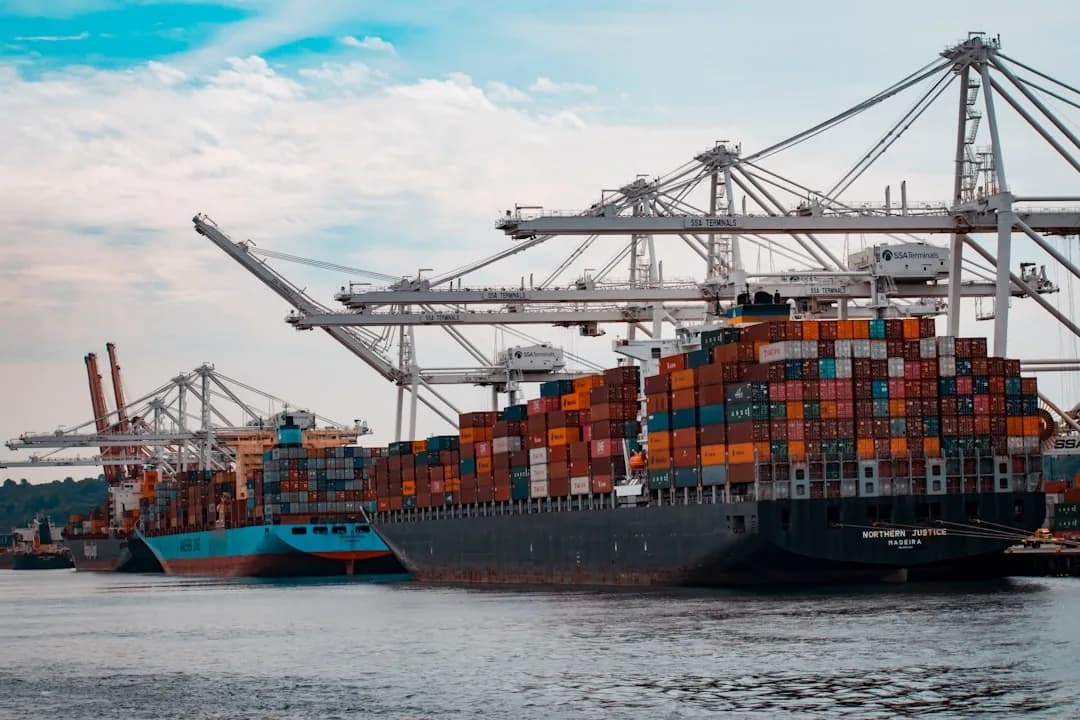
- Exports outside the UK: generally zero-rated (0 per cent VAT), provided you keep valid evidence the goods left the UK within the time limit (usually three months). Zero-rated is not the same as "no VAT", you still record the sale on your return.
- Goods sold to EU consumers: you may need to deal with EU import VAT or the Import One Stop Shop, depending on value and arrangements.
- Importing goods back into the UK: if you also import, postponed VAT accounting (PVA) lets you account for import VAT on your return instead of paying it at the border.
- Goods you never owned in the UK (e.g. drop-shipped from abroad): different rules can apply entirely.
Keep proof of export, commercial invoices, transport documents, customs paperwork. Without that evidence in time, the sale must be treated as standard-rated, and you owe the VAT out of the price you charged: one-sixth of it at the 20 per cent rate.
Do You Need to Be VAT Registered First?
These rules only bite once you're in the VAT system. You must register when your taxable turnover exceeds the £90,000 threshold (2026/27), or you can register voluntarily earlier. Exports of goods count towards that figure, because zero-rated sales are still taxable supplies. B2B services supplied to overseas businesses, where the place of supply is outside the UK, do not: they are outside the scope of UK VAT, and your taxable turnover only includes supplies you make in the UK. If you are not yet registered, check exactly when you need to register for VAT before you start invoicing overseas.
If you're below the threshold and not registered, you simply invoice without VAT, but you also can't reclaim input VAT on costs. Our VAT services team can model whether voluntary registration helps your margins.
A Worked Example: Three Overseas Sales
Numbers make the rules concrete. Take a VAT-registered UK consultancy that raises three invoices in the same quarter.
| Sale | Net value | UK VAT charged | VAT return treatment |
|---|---|---|---|
| Consultancy to a German company (B2B service) | £10,000 | £0 (reverse charge) | Net in Box 6 only; no output VAT in Box 1 |
| A training day in London sold to a private individual visiting from Australia (B2C, training performed in the UK) | £2,000 | £400 (20% UK VAT) | £400 in Box 1; net in Box 6 |
| Goods exported to a US buyer (with valid export evidence) | £5,000 | £0 (zero-rated) | Net in Box 6; evidence kept on file |
So on £17,000 of overseas sales, this business charges just £400 of UK VAT, all of it on the single B2C supply. The £10,000 B2B service and the £5,000 export carry no UK VAT, and both still appear in Box 6, but of those two, only the £5,000 export counts towards the £90,000 registration test, because the B2B service is outside the scope of UK VAT. A common mistake is the opposite error: charging 20 per cent UK VAT on the German invoice "to be safe". That adds £2,000 the customer should never have been charged, and they will want a corrected invoice. The reverse charge exists so you don't do this. If the consultancy work had gone to a private individual in Australia instead, it would also carry no UK VAT, because consultancy sold to a consumer outside the UK is supplied where the customer belongs.
Quick Decision Summary
| What you sell | To whom | UK VAT? |
|---|---|---|
| General services | Overseas business (B2B) | No, reverse charge applies |
| General services | Overseas consumer (B2C) | Usually yes, 20%, but not for consultancy, legal, accountancy or advertising |
| Digital services | EU consumer (B2C) | EU VAT via One Stop Shop |
| Goods exported outside UK | Anyone | Zero-rated (0%) with evidence |
| Land/property services | Anyone | Where the property is located |
Frequently Asked Questions
Do I charge VAT to a customer in the EU after Brexit?
For most B2B services, no, the reverse charge applies and your EU business customer accounts for VAT locally. Goods sent to the EU are normally zero-rated UK exports, but the EU buyer may face import VAT and customs duty on arrival.
What is the VAT reverse charge for overseas customers?
It's a mechanism where the customer, not the supplier, accounts for the VAT. You invoice your overseas business customer with no UK VAT and a note stating they must apply the reverse charge. The tax stays in the customer's country.
Do I still record zero-rated exports on my VAT return?
Yes. Zero-rated means the VAT rate is 0 per cent, not that the sale is ignored. Include the net value in Box 6 of your VAT return and keep export evidence in case HMRC asks.
Do I charge VAT to a consumer (B2C) overseas?
Often, but not always. Under the general rule, B2C services are supplied where you belong, so you charge UK VAT at 20 per cent. Consultancy, legal, accountancy, advertising and similar services sold to a private customer outside the UK are supplied where the customer belongs, so no UK VAT is due. Digital services to EU consumers are taxed where the consumer lives and may need One Stop Shop registration.
How long do I have to get export evidence to zero-rate goods?
Per HMRC, you normally have 3 months from the time of sale to physically export the goods and obtain valid evidence they left the UK. Miss that window and the sale must be treated as standard-rated, so you account for VAT out of the price you charged, which at 20 per cent is one-sixth of it. If the evidence turns up later, you can zero-rate the sale then.
What if I get this wrong and don't charge VAT I should have?
HMRC can assess the VAT you should have charged, plus interest and possible penalties, normally going back up to four years. Because place of supply can be genuinely fiddly, it's worth checking borderline supplies, see our FAQ or ask us before invoicing.
Cross-border VAT is one of the easiest areas to get wrong and one of the most expensive to fix later. If you're unsure whether to charge VAT on a specific overseas sale, get in touch with Zmartly and we'll confirm the correct treatment before you send the invoice.