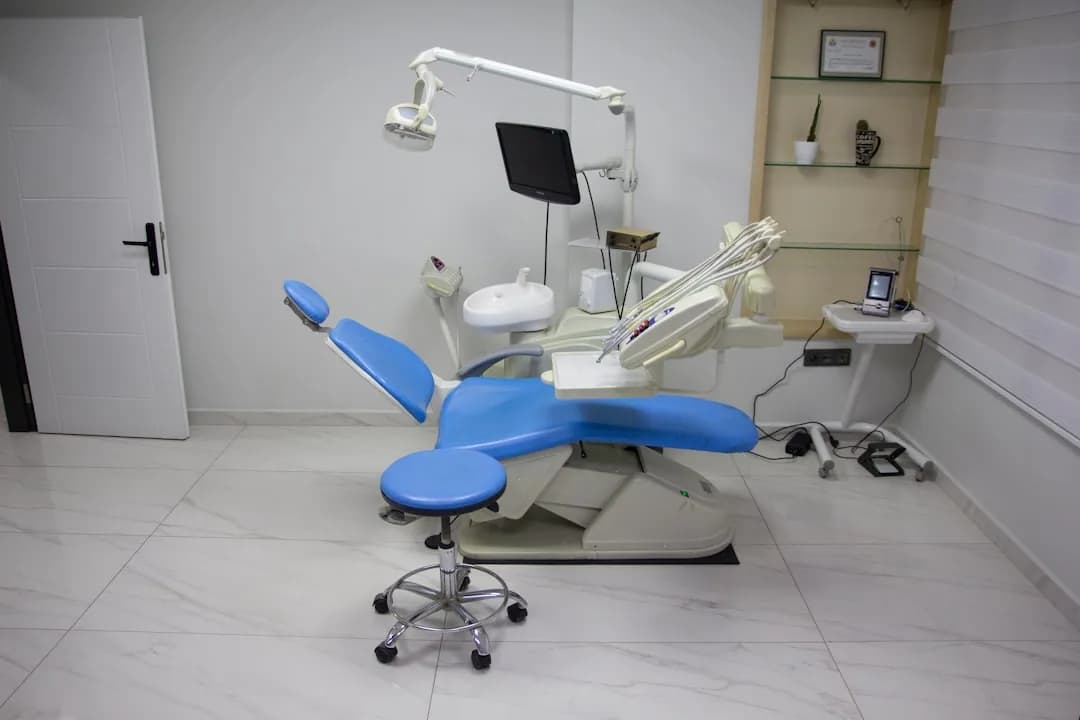
For decades, an associate dentist working under a recognised contract could treat their income as self-employed almost automatically. That shortcut is gone.
Since 6 April 2023, HMRC's old dental concession no longer applies. Your status now rests on the ordinary employment status tests, and the main tool HMRC points you to is CEST, the Check Employment Status for Tax tool.
This guide explains what changed, how the CEST tool works for a dental associate, the factors it weighs, and how to run the check so the result actually holds up. We'll also walk through an illustrative example with current 2025/26 figures.
It's written for associate dentists, locums, and the practices that engage them.
What changed for associate dentists in 2023?
The short answer: HMRC withdrew its dental-specific guidance, so associate status is now judged on the normal tests rather than assumed.
The old guidance lived in HMRC's Employment Status Manual at ESM4030. In practice it meant that an associate working under a British Dental Association or Dental Practitioners Association style agreement was generally accepted as self-employed, with earnings taxed as trading income.
ESM4030 was withdrawn with effect from 6 April 2023. The page now reads simply that the guidance has been withdrawn, and it points readers to the general status guidance at ESM0500 and to the CEST tool instead.
It's worth being clear about what this is and isn't. HMRC has framed it as a change to its guidance, not a change to the law. There's no new rule that makes associates employees. What's gone is the automatic presumption. Each engagement now has to stand on its own facts.
So if your working arrangement genuinely has the hallmarks of self-employment, your status shouldn't change. The risk is for arrangements that only ever looked self-employed because the concession smoothed it over. For the wider picture on how status is now decided, see our guide to an associate dentist's self-employed status. The same tests now apply across the practice team, including the employment status of a self-employed dental hygienist.
What is the CEST tool and what does it decide?

CEST is HMRC's free online tool that gives you a view on whether a worker is employed or self-employed for tax, and whether the off-payroll working rules (IR35) apply.
You answer a set of questions about the engagement and the tool returns one of a few outcomes. For a worker who is not using an intermediary company, the possible results are:
- Employed for tax purposes for this work
- Self-employed for tax purposes for this work
- Unable to determine
Where the worker provides services through their own company, CEST instead tells you whether the off-payroll working rules (IR35) apply, do not apply, or cannot be determined.
The tool covers the engagement in front of it, not you as a person. You can be self-employed in one role and employed in another, and a busy associate working across several practices may need to think about each one separately.
HMRC last updated the CEST tool on 30 April 2025, when it amended the tool to simplify the language. The underlying employment status principles it tests are unchanged.
One useful feature: you can save and print your answers and the result for your own records, and use the result as a valid status determination statement where the off-payroll rules are in point. Keep that printout. It's your evidence of what you told HMRC and when.
Which factors does CEST weigh for a dental associate?
Book a free Tax Health Check →
There's no single test for employment status. HMRC's own guidance at ESM0500 stresses that you weigh all the circumstances together rather than relying on one decisive factor.
The questions CEST asks map onto the factors the courts and HMRC use. The ones that matter most for a typical associate are:
- Personal service and substitution. Must you do the work yourself, or can you send a suitably qualified, GDC-registered substitute and pay them? A genuine, unfettered right to substitute points strongly towards self-employment.
- Control. Who decides what work is done, when, where and how. An associate who runs their own list, sets their own clinical approach and chooses their hours looks self-employed. Tight rotas and close supervision point the other way.
- Mutuality of obligation. Is the practice obliged to provide work and are you obliged to accept it? An ongoing duty to offer and take work leans towards employment.
- Financial risk. Do you stand to make a loss, fund your own lab bills, indemnity cover, and GDC registration, or carry the cost of failed appointments? Real financial risk points to self-employment.
- Provision of equipment. A practice usually supplies the chair and surgery, which is neutral for dentistry, but who funds materials and instruments still matters.
- Being part and parcel of the practice. The more integrated you are into the practice as an organisation, the more it looks like employment.
The detail of how you actually work matters far more than the label on your contract. A "self-employed associate agreement" that describes day-to-day reality as tightly controlled, fixed-hours, no-substitution work will not survive a CEST check or an HMRC enquiry.
How do I run the CEST check step by step?
Run it honestly, on the real working arrangement, and keep the output. Here's a practical sequence.
- Gather the facts. Pull together your associate agreement and, more importantly, a note of how the engagement works in practice: your hours, who sets your list, your substitution rights, what you fund yourself, and how you're paid.
- Decide who is checking. A practice can run CEST about an associate, or you can run it about yourself. Answer for one engagement at a time.
- Open the CEST tool on gov.uk. Work through HMRC's Check Employment Status for Tax tool, covering the sections on the contract, substitution, control over the work, financial risk and integration.
- Answer for reality, not aspiration. If you can genuinely send a substitute, say so. If you can't, don't claim you can. An inaccurate input voids HMRC's commitment to stand by the result.
- Read the result and save it. Save and print the answers and outcome. Date it and file it with your records.
- Re-run it when things change. A new contract, a change of hours, or a move to working through a company can all change the answer. Re-run CEST whenever the arrangement changes materially.
If the tool returns "unable to determine", that's a real outcome, not a glitch. HMRC's own published usage data shows a meaningful share of checks land there, so an undetermined result is a signal to take advice and look harder at the facts rather than to guess.
If you'd rather not interpret a borderline result alone, our tax advisory team reviews associate agreements against how you actually work and helps you evidence the position.
Will HMRC stand by the CEST result?
Yes, but with an important condition. HMRC says it will stand by all determinations given by the tool, as long as the information you give remains accurate and the tool is used in accordance with its guidance.
That conditional matters. The protection only holds if your answers were true and stay true. If you tell CEST you have an unfettered right of substitution but in practice the contract forbids it, HMRC is not bound by the self-employed result.
It's also worth knowing how CEST results break down in HMRC's own published data, so you can set expectations. For HMRC's published period of 25 November 2019 to 31 August 2021, the outcomes for workers not using an intermediary were 55% self-employed, 25% employed and 20% undetermined. For workers using an intermediary, 49% were outside the off-payroll rules, 30% inside and 21% undetermined.
The takeaway for associates: self-employment is far from automatic now, and a fifth of checks don't resolve cleanly. Getting the facts and the evidence right is what protects you.
Illustrative example: a self-employed associate's tax
Illustrative example. Maya is an associate dentist in England. Her engagement genuinely passes the self-employment tests, CEST returns "self-employed for tax purposes", and she has the records to back it up. For 2025/26 her net trading profit, after expenses, lab fees, indemnity and GDC costs, is £55,000.
Here's how her tax and National Insurance work out. Figures use the 2025/26 thresholds.
| Item | Calculation | Amount |
|---|---|---|
| Net trading profit | £55,000 | |
| Less personal allowance | £12,570 | |
| Taxable income | £55,000 − £12,570 | £42,430 |
| Income tax at basic rate | £37,700 × 20% | £7,540.00 |
| Income tax at higher rate | £4,730 × 40% | £1,892.00 |
| Total income tax | £9,432.00 | |
| Class 4 NIC, main rate | (£50,270 − £12,570) × 6% | £2,262.00 |
| Class 4 NIC, above upper limit | (£55,000 − £50,270) × 2% | £94.60 |
| Total Class 4 NIC | £2,356.60 | |
| Total income tax and Class 4 NIC | £11,788.60 |
For 2025/26, Class 2 NIC is no longer charged as a flat weekly amount where profits are above the small profits threshold, so there's no separate Class 2 bill for Maya, and her National Insurance record is still maintained.
This is the world a genuinely self-employed associate operates in: profit taxed through Self Assessment, NIC as a sole trader, and the costs of practising deductible against income. If a CEST check instead pointed to employment, that same income would be taxed through PAYE with employee Class 1 NIC, and most of those expenses would fall away.
You can sense-check your own numbers with our self-employed tax calculator before you talk to an accountant.
What if you trade through a limited company?
If you provide your services through your own limited company, CEST switches to the off-payroll working rules (IR35) rather than the simple employed or self-employed question.
The question then becomes whether, if you worked for the practice directly without the company, you would look like an employee. If yes, the off-payroll rules can apply and the engager or your company has to operate PAYE on the deemed payment. Our guide on using CEST for IR35 status walks through how that determination works.
One practical point specific to dentistry: associates and locums who work through a limited company are excluded from the NHS Pension Scheme, because Scheme membership rests on the individual being the contractor. That's a meaningful trade-off to weigh before incorporating, alongside the IR35 position.
Incorporation can still make sense, but it's a decision to take on the full picture, not just the headline tax rate. If you're an associate weighing it up, our page for associate dentists sets out how we help, and our tax advisory service can model the options for your situation.
Frequently asked questions
Is the CEST result legally binding on HMRC?
HMRC says it will stand by the result the tool gives, provided the information you entered was accurate, remains accurate, and the tool was used in line with HMRC's guidance. It's a commitment conditional on honest, accurate inputs, not an unconditional guarantee. Keep the saved result as evidence of what you submitted.
Does the withdrawal of ESM4030 mean associate dentists are now employees?
No. HMRC has described the 6 April 2023 withdrawal as a change to its guidance, not a change to the law. There's no new rule making associates employees. What changed is that self-employment is no longer presumed, so each engagement is judged on its actual facts using the ordinary status tests and CEST.
What if CEST says "unable to determine"?
That's a genuine outcome and a signal that the facts are finely balanced. HMRC's published usage data shows around a fifth of checks land there. Don't guess a result. Review the working arrangement in detail and take advice so the position can be evidenced properly.
Which CEST factor matters most for a dental associate?
There's no single decisive factor. HMRC's guidance at ESM0500 says you weigh everything together. In practice, a genuine right of substitution, real control over your own work, mutuality of obligation, and carrying financial risk are the factors that most often shape an associate's result.
How often should I re-run the CEST check?
Whenever the arrangement changes materially, for example a new contract, a change in hours or control, or a move to working through a limited company. A CEST result reflects the facts at the time you ran it, so a stale check offers little protection if your working pattern has moved on.
Talk to a dental accountant
Associate status is now a facts-and-evidence exercise, and a borderline CEST result is exactly where a wrong call gets expensive. Want your associate agreement and working arrangements checked against how HMRC now decides status? Book a call with a Zmartly accountant through our tax advisory service.