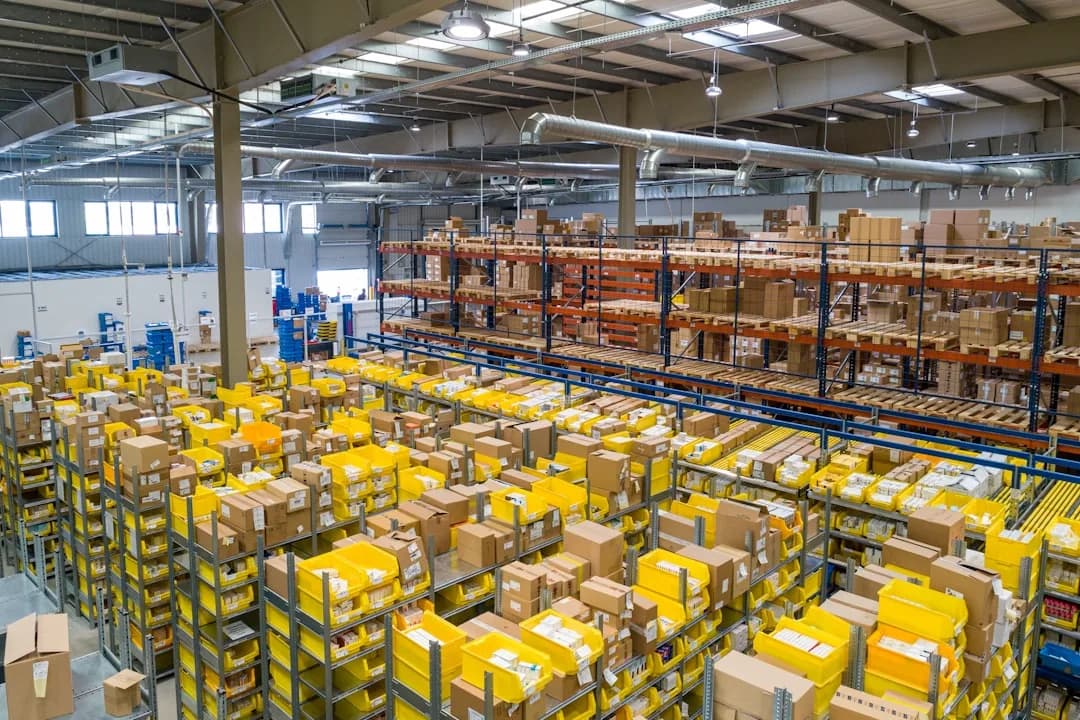
If you sell through Fulfilment by Amazon, the storage line on your fee report is rarely just one number. There is monthly storage, there is the aged-inventory surcharge that bites once stock has sat in a warehouse too long, and since 1 August 2024 there is 20% UK VAT sitting on top of nearly all of it.
Getting this right matters for two reasons. You want every fee in the right place in your books so your gross margin is honest, and you want to reclaim the VAT you are entitled to instead of leaving it on the table.
This guide walks through how to record FBA storage and aged-inventory surcharge fees in UK accounts, how the VAT works now that Amazon charges it directly, and exactly where it lands on your VAT return. It is written for UK-established sellers running a sole trade or limited company.
Are Amazon FBA storage fees a deductible business cost?
Yes. FBA monthly storage fees and the aged-inventory surcharge are ordinary trading expenses, fully deductible against your taxable profit. They are not part of the cost of your stock, so you expense them as a selling or fulfilment cost rather than capitalising them into inventory.
In practice that means storage fees hit your profit and loss account as you incur them, usually monthly. They reduce your taxable profit for the year they fall in. The reason they sit in selling costs rather than in cost of goods sold is that they relate to holding and moving stock, not to buying or making it. Your closing stock valuation should reflect what the goods cost you, not what it cost to warehouse them.
This is worth being precise about, because lumping storage into stock value overstates your inventory on the balance sheet and understates your fulfilment costs, which then hides a genuine margin problem.
What is the aged-inventory surcharge and how is it different?

The aged-inventory surcharge is an extra storage fee Amazon applies to units that have been held in its fulfilment centres beyond a set period. It is charged on top of the standard monthly storage fee, and it climbs the longer the stock sits there.
For your accounts, it is treated exactly like ordinary storage: a deductible fulfilment cost, expensed when incurred, with VAT handled the same way. But it tells you something the standard fee does not. A rising surcharge is a signal that you are holding slow-moving or dead stock, and that has knock-on effects at your year end.
Slow stock ties up cash, racks up fees, and may need writing down to its net realisable value if you cannot sell it at full price. If you are heading into a year end with ageing FBA stock, it is worth reviewing the valuation properly. We cover the mechanics of valuing FBA inventory and cost of goods sold for your UK year end in a separate guide.
The accounting tip here is to track the surcharge as its own line in your records rather than burying it inside general storage. It is one of the cleanest early-warning metrics you have for inventory health.
Why does Amazon now charge 20% VAT on FBA fees?
Since 1 August 2024, Amazon charges 20% UK VAT on selling and FBA fees, including referral fees, fulfilment fees, monthly storage and the aged-inventory surcharge, for UK-established sellers. Before that date, most UK sellers accounted for these fees under the reverse charge because the supplying Amazon entity had no UK establishment.
Here is what changed. The general place-of-supply rule for business-to-business services is that the supply happens where the customer belongs, so for a UK seller these fees have always been UK-VATable services (VAT Notice 741A). What changed is who hands the VAT to HMRC. The fees are now invoiced through an Amazon entity with a UK branch, so Amazon adds 20% UK VAT directly to your fee invoice rather than you self-accounting for it under the reverse charge.
For a VAT-registered UK seller the bottom line is usually neutral on cost, because the VAT Amazon charges is reclaimable input tax. But the mechanics on your VAT return are different, and if you are not registered for VAT, this is now a real 20% cost you cannot recover.
Can I reclaim the VAT on Amazon storage and surcharge fees?
If you are VAT-registered and use standard VAT accounting, yes. The 20% VAT Amazon charges on storage, the aged-inventory surcharge and other seller fees is input tax that you reclaim on your VAT return, provided the fees relate to your taxable business activity.
You need a valid VAT invoice to support the claim. Amazon makes VAT invoices available in Seller Central, and you should keep them with your records. Reclaiming VAT off the back of a fee summary alone is not enough if HMRC asks to see the evidence.
There is one common trap. If you sell a mix of standard-rated and exempt goods, or you have non-business use, you cannot always reclaim the full amount and may need to apportion. Most FBA sellers are fully taxable, so this rarely bites, but it is worth a sense-check if your product mix is unusual.
Illustrative example: the VAT round-trip on a month of FBA fees Priya runs a VAT-registered limited company selling homeware through FBA. In one month Amazon charges her, before VAT: - Monthly storage fee: £180 - Aged-inventory surcharge: £95 - FBA fulfilment and referral fees: £1,225 Total net fees: £1,500. Amazon adds 20% VAT of £300, so £1,800 leaves her account. In her books, £1,500 goes to fulfilment costs and reduces her profit. The £300 VAT is input tax she reclaims on her next VAT return. Net cost to the business: £1,500, exactly the pre-VAT figure. The VAT is a cash-flow round-trip, not a cost, as long as she reclaims it.
Where do FBA fees go on my VAT return?
Now that Amazon charges UK VAT directly, the treatment is the same as any UK supplier invoice. The VAT goes in your input tax box and the net cost goes in your purchases box. You no longer touch the output tax boxes for these fees.
The table below shows the difference between the old reverse charge treatment and the current direct-VAT treatment, using Priya's £1,500 net fees and £300 VAT from the example above.
| VAT return box | Old reverse charge (pre-Aug 2024) | Now (direct UK VAT) |
|---|---|---|
| Box 1 (VAT due on sales and other outputs) | £300 self-charged | nil for these fees |
| Box 4 (VAT reclaimed on purchases) | £300 | £300 |
| Box 6 (total value of sales, net) | unaffected | unaffected |
| Box 7 (total value of purchases, net) | £1,500 | £1,500 |
Under the old reverse charge you put the same VAT figure in Box 1 and Box 4, so it cancelled out (VAT Notice 741A). Now Amazon has charged you real UK VAT, you simply reclaim it in Box 4 and there is nothing to declare in Box 1. The net cost in Box 7 is unchanged either way.
All VAT-registered businesses must keep digital records and file through compatible software under Making Tax Digital for VAT, so your bookkeeping needs to capture these fees in a way that flows straight into your return.
How do I record FBA fees in my bookkeeping?
The cleanest approach is to split your Amazon settlement into its parts rather than booking the net payout as a single number. A settlement nets sales income against fees, refunds and adjustments, and if you only record the cash that lands, both your turnover and your costs are understated.
A practical chart-of-accounts split looks like this:
- Sales income at the gross order value, with output VAT where you charge it.
- FBA fulfilment and referral fees as a fulfilment cost, with the input VAT separated out.
- Storage fees as their own line.
- Aged-inventory surcharge as a separate line, so you can monitor slow stock.
- Refunds and reimbursements posted to the correct income or cost line.
Doing this monthly keeps your margin honest and makes the VAT reclaim straightforward. Many sellers use a bridging or integration tool to pull Amazon settlement data into their accounting software, which is fine, but the underlying split still has to be right. Good Amazon FBA accounting is really just this discipline done consistently: every settlement broken back into its parts so sales, fees and VAT all land where they should. Getting the bookkeeping for an ecommerce business onto a reliable monthly rhythm is usually the single biggest accuracy win.
If reimbursements are part of your picture, note that their tax treatment is not always obvious. We look at whether Amazon FBA reimbursements are taxable in a dedicated guide.
What if I am on the VAT Flat Rate Scheme?
Under the Flat Rate Scheme you generally cannot reclaim the VAT on your purchases, including Amazon's fees, except for certain capital assets costing over £2,000 (VAT Flat Rate Scheme guidance). Instead, you pay a fixed percentage of your VAT-inclusive turnover and keep the difference.
That changes the maths on FBA fees. The 20% VAT Amazon now charges becomes a real cost to you, because you cannot reclaim it. For a seller with heavy storage and surcharge fees, that can be a meaningful drag.
Watch the limited cost business rule. If your goods cost less than 2% of your turnover, or less than £1,000 a year, you are a limited cost business and pay a flat rate of 16.5% (VAT Flat Rate Scheme guidance). Service-led FBA models can fall into this category by accident. There is also a 1% discount in your first year as a VAT-registered business. For most FBA sellers carrying real stock and paying irrecoverable VAT on rising fees, standard VAT accounting tends to work out better, but it is worth modelling both before you decide.
What about overseas sellers and the reverse charge?
If you are established outside the UK but store goods here in Amazon's warehouses, the VAT picture is different. As an overseas seller who owns goods of any value located in the UK at the point of sale, you must register and account for UK VAT, and there is no minimum threshold (VAT and overseas goods sold to UK customers using online marketplaces).
For overseas-established sellers selling to UK consumers through Amazon, the marketplace is treated as the deemed supplier and accounts for the VAT on those sales. You make a zero-rated deemed supply of the goods to Amazon. The fee VAT and the place-of-supply position for a non-UK business differ from the straightforward UK-seller case described above, so this is an area to take advice on rather than assume.
Separately, be aware that Amazon and other platforms now report seller income data to HMRC each year under the reporting rules for digital platforms. This does not change what tax you owe, but it does mean your declared figures need to line up with what the platform reports. Tidy bookkeeping is the best protection here.
If you sell through FBA and want a second pair of eyes on your fee treatment and VAT, our team works with Amazon FBA sellers day in, day out.
Key takeaways
- FBA storage and the aged-inventory surcharge are deductible fulfilment costs, expensed when incurred, not capitalised into stock.
- Since 1 August 2024 Amazon charges 20% UK VAT on these fees for UK sellers, replacing the old reverse charge.
- VAT-registered sellers on standard accounting reclaim that VAT in Box 4 and record the net cost in Box 7. There is nothing to put in Box 1.
- On the Flat Rate Scheme you usually cannot reclaim that VAT, so it becomes a real cost. Model both schemes.
- Split your Amazon settlement into its parts so your margin and your VAT reclaim are both accurate.
Want help getting your FBA fee accounting and VAT right? Talk to a Zmartly accountant who works with Amazon sellers and we will make sure nothing is left on the table.
FAQs
Are Amazon FBA storage fees tax deductible in the UK?
Yes. Monthly storage fees and the aged-inventory surcharge are ordinary trading expenses, fully deductible against your taxable profit. Expense them as fulfilment costs when you incur them rather than adding them to the value of your stock.
Can I reclaim VAT on Amazon FBA fees?
If you are VAT-registered and use standard VAT accounting, yes. The 20% UK VAT Amazon charges on storage, the aged-inventory surcharge and other seller fees is reclaimable input tax, provided you hold a valid VAT invoice and the fees relate to your taxable business.
Why did Amazon start charging VAT on seller fees in 2024?
From 1 August 2024 these fees are invoiced through an Amazon entity with a UK branch, so Amazon adds 20% UK VAT directly. Previously most UK sellers self-accounted under the reverse charge. The fees were always UK-VATable services for a UK customer. What changed is who hands the VAT to HMRC.
Should FBA storage fees go in cost of goods sold or expenses?
They go in selling or fulfilment costs, not cost of goods sold. Storage relates to holding stock, not to buying or making it, so it should not be capitalised into your inventory valuation.
Do I still use the reverse charge for Amazon fees?
Not for fees invoiced with UK VAT from 1 August 2024. You reclaim the VAT charged in Box 4 and there is nothing to declare in Box 1. The reverse charge only applies to services from a supplier with no UK establishment who has not charged you UK VAT.
Can I reclaim Amazon fee VAT on the Flat Rate Scheme?
Generally no. Under the Flat Rate Scheme you cannot reclaim VAT on purchases, except certain capital assets over £2,000. The 20% on Amazon fees becomes a real cost, which is why many stock-carrying FBA sellers are better off on standard VAT accounting.
What does good Amazon FBA accounting actually involve?
At its core, sound Amazon FBA accounting means splitting each settlement into its parts rather than booking the net payout as one number: gross sales, fulfilment and referral fees, storage, the aged-inventory surcharge and refunds, each on its own line with VAT separated out. Done monthly, that keeps your gross margin honest and makes the VAT reclaim straightforward. Inventory valuation and the establishment and deemed-supplier questions sit on top of that foundation.