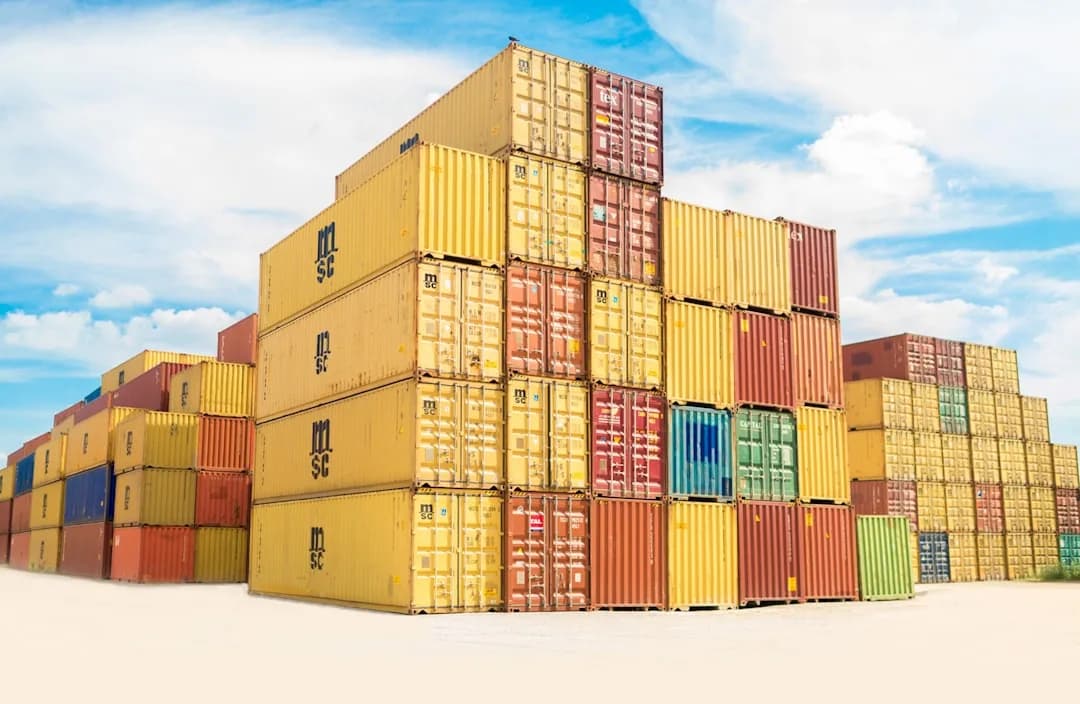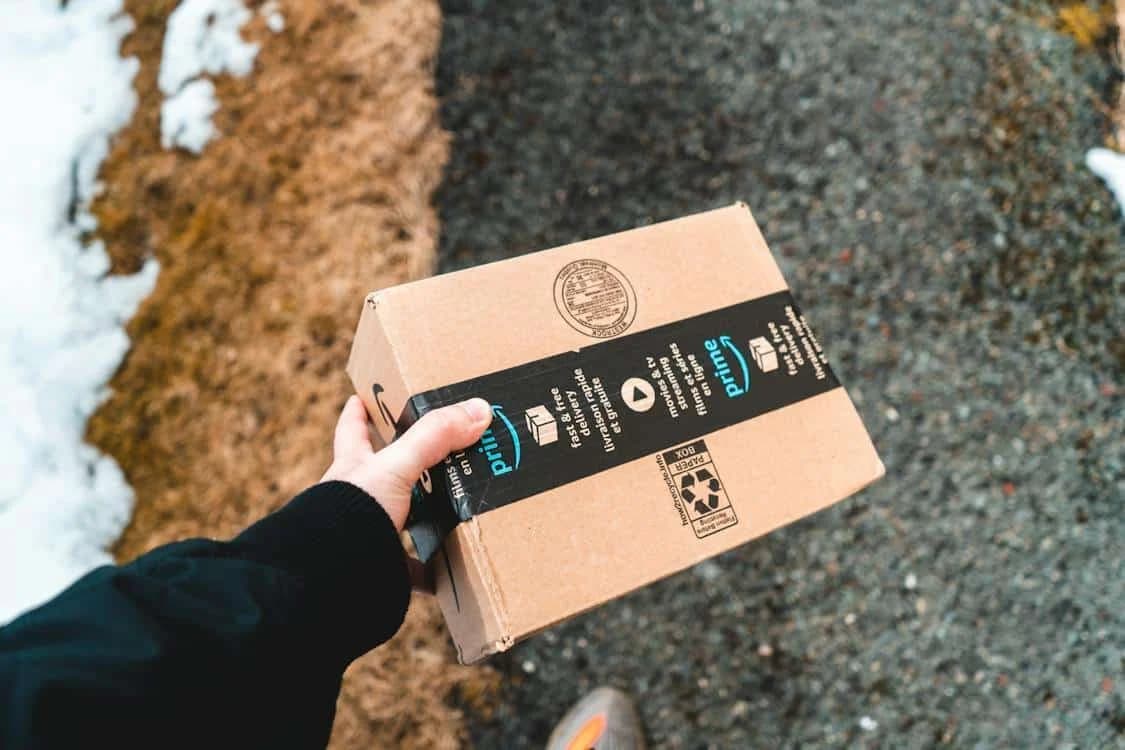
If you import stock and sell it through Amazon FBA, the price on your supplier's invoice is not what each unit actually costs you. By the time a carton clears UK customs and reaches an Amazon fulfilment centre, you have also paid freight, customs duty, customs clearance and handling. That fully loaded figure is your landed cost, and it is the number your margins should be built on.
Getting it right matters for two reasons. First, your true profit per unit is invisible until landed cost is in the picture. Second, the tax treatment splits: some of these costs sit in your cost of goods sold (COGS), while import VAT is usually reclaimable and should not inflate your unit cost at all.
This guide shows you exactly what goes into an FBA landed cost, which charges belong in COGS, how import duty and freight are treated, and why import VAT is handled separately. Every customs and VAT rule below is grounded in HMRC guidance, with sources at the end.
What is landed cost for an Amazon FBA seller?
Landed cost is the total cost of getting one unit of stock from your supplier to a saleable Amazon fulfilment centre: the goods price plus freight, customs duty, clearance and inbound shipping, spread across the units in the shipment. For a VAT-registered seller, import VAT is excluded because it is reclaimable, not a cost of the goods.
For a typical FBA import, that means:
- the price you pay your supplier for the goods
- freight to the UK (sea, air or road)
- customs duty charged on import
- customs clearance, broker and handling fees
- any inbound shipping to the Amazon fulfilment centre
Notice what is missing from that list: import VAT. For a VAT-registered seller, import VAT is reclaimable, so it is a cash-flow item, not a cost of the goods. We come back to that below, because mixing it into landed cost is one of the most common FBA bookkeeping mistakes we see.
Landed cost is not an HMRC tax term. It is a management-accounting concept. But the individual pieces inside it, especially how customs duty and import VAT are valued, are governed by specific HMRC rules, which is why this is worth doing carefully rather than by guesswork.
Which costs go into COGS and which do not?

Cost of goods sold is the direct cost of the products you have actually sold in a period. For an importer, the costs that bring stock to a saleable condition and location form part of the cost of that stock, and they hit COGS when the stock sells.
Here is the clean split for a VAT-registered FBA seller.
| Cost | In COGS? | Why |
|---|---|---|
| Goods price from supplier | Yes | The core cost of the product. |
| Freight to the UK | Yes | A cost of bringing stock to a saleable location. |
| Customs duty | Yes | A non-recoverable tax on import; it is a real cost of the goods. |
| Customs clearance, broker, handling | Yes | Direct costs of importing the stock. |
| Inbound shipping to the FBA warehouse | Yes | Gets the stock to the point of sale. |
| Import VAT | No | Reclaimable as input tax, so not a cost of the goods. |
| Amazon referral and FBA fees | No | Selling costs, expensed as overheads, not stock cost. |
The guiding principle: if a cost is non-recoverable and brings the stock to its saleable state and location, it belongs in the cost of that stock and flows into COGS as the stock sells. If a cost is recoverable (import VAT) or is a cost of selling rather than buying (Amazon fees), it does not.
This is also why landed cost and COGS are linked but not identical. Landed cost is the per-unit cost you calculate; COGS is what lands on your profit and loss account when those units actually sell. Stock you have imported but not yet sold sits on the balance sheet as inventory at its landed cost until it does. For the year-end side of that, see our guide to valuing FBA inventory and COGS for your UK year end.
How is import duty worked out, and is it in COGS?
Talk to an e-commerce accountant →
Import duty (Customs Duty) is charged on the customs value of your goods, at a rate that depends on the product's commodity code. For most imports the customs value is worked out using Method 1, the transaction value, which is based on the price paid or payable for the goods when sold for export to the UK (gov.uk: prepare to work out the customs value).
Crucially, the customs value for duty is not just the goods price. You must add the costs of transport, insurance, loading and handling connected with delivering the goods up to the UK border. Transport costs after the goods arrive in the UK can be deducted, but only if they are charged separately and can be distinguished (gov.uk: delivery costs to include in the customs value).
So duty is typically charged on goods plus freight and insurance to the UK border, not on the bare invoice value. That can surprise sellers who budgeted duty on the supplier price alone.
The duty rate itself comes from the UK Integrated Online Tariff, looked up against your product's commodity code (gov.uk: trade tariff lookup). Rates vary widely by product, so there is no single FBA duty rate to quote.
Is duty in COGS? Yes. Customs duty is not reclaimable like VAT, so it is a genuine, permanent cost of the goods. It forms part of the landed cost and flows into COGS when the stock sells.
How does freight fit into landed cost?
Freight is almost always part of landed cost, but it shows up in two different places, which is worth understanding.
First, part of your freight (the leg up to the UK border) feeds into the customs value, so you effectively pay duty on it. Second, the whole freight cost, border-side and UK-side, is a cost of bringing stock to a saleable location, so the full amount belongs in landed cost and therefore in COGS.
In practice you allocate the total freight bill for a shipment across the units in that shipment. A common, simple approach is to spread it by unit count or by volume or weight, whichever best reflects how the freight was charged. The aim is a fair per-unit freight figure that lifts each unit's landed cost.
One nuance for import VAT, covered next: freight and other incidental costs to the goods' first UK destination are also added into the value on which import VAT is charged. That does not change where freight sits in your accounts (still COGS); it just means freight is counted when HMRC values the import for VAT.
Where does import VAT go, and why is it not in COGS?
Import VAT is charged at the standard rate of 20% (gov.uk: VAT rates) on the value of the imported goods. That value is wider than the customs value for duty. To the customs value you add any Customs Duty payable on import, plus incidental expenses such as commission, packing, transport and insurance up to the goods' first destination in the UK, and onward transport to a further UK destination if it is known at the time of import (gov.uk: working out the VAT value using the customs value).
In plain terms: import VAT is charged on goods plus freight plus duty plus clearance costs, all multiplied by 20%. It is the biggest single number on many import declarations.
But for a VAT-registered seller, import VAT is not a cost. You reclaim it as input tax on your VAT return, the same way you reclaim VAT on any UK business purchase. Because it is recoverable, it must not go into your landed cost or your COGS. If it did, every unit would look 20% more expensive than it really is and your margins would read wrong.
The exception is a seller who is not VAT registered. If you cannot reclaim import VAT, it becomes a real, non-recoverable cost, and at that point it does form part of your landed cost. That single difference can swing your unit economics, which is why VAT registration is such an important decision for importing FBA sellers. We model exactly this trade-off with sellers through our Amazon FBA accounting service.
How do I reclaim import VAT (postponed VAT accounting or C79)?
There are two routes, and the one you use changes your cash flow but not your final position.
Postponed VAT accounting (PVA). PVA lets you declare and recover import VAT on the same VAT return, instead of paying it at the border and waiting to reclaim it. You account for the import VAT as output tax in Box 1 and reclaim the same amount as input tax in Box 4, so for a fully taxable business it nets to nil with no cash leaving your account at import (gov.uk: check when you can account for import VAT on your VAT Return). You elect PVA on the import declaration by entering your VAT number, and you reconcile using your monthly postponed import VAT statement from the Customs Declaration Service (gov.uk: get your postponed import VAT statement). PVA is optional, not mandatory.
Paying import VAT at the border (C79). If you do not use PVA, import VAT is paid at import, usually by your freight agent who recharges you. You then reclaim it as input tax in Box 4, supported by the monthly C79 import VAT certificate HMRC issues, not the agent's invoice (gov.uk: paying VAT on imports). The downside is the cash-flow gap: you fund the VAT at import and recover it later on your return.
Most importing FBA sellers use PVA precisely to avoid that gap. Either way, the import VAT washes through your VAT return and never touches landed cost or COGS for a registered seller. Keeping the customs paperwork, statements and certificates straight is exactly the kind of detail our bookkeeping service is built to handle for ecommerce stock.
Worked example: landing a shipment into FBA
Illustrative example. Sam imports a shipment of 1,000 phone cases to sell through Amazon FBA. Sam is VAT registered in the UK and uses postponed VAT accounting. The shipment costs:
| Cost element | Amount |
|---|---|
| Goods (1,000 units from supplier) | £6,000.00 |
| Sea freight and insurance to UK border | £900.00 |
| Customs clearance and handling | £200.00 |
| Inbound shipping to FBA warehouse | £150.00 |
Assume the product's commodity code carries a 4% duty rate. Duty is charged on the customs value, which is goods plus freight and insurance to the border: £6,000 + £900 = £6,900. Duty at 4% = £276.00.
Landed cost (the COGS figure):
| Component | Amount |
|---|---|
| Goods | £6,000.00 |
| Freight and insurance | £900.00 |
| Customs duty (4% of £6,900) | £276.00 |
| Clearance and handling | £200.00 |
| Inbound to FBA | £150.00 |
| Total landed cost | £7,526.00 |
Per unit landed cost = £7,526.00 / 1,000 = £7.526 per unit. That is the figure Sam's margins should be built on, and what each unit is carried at in inventory until it sells.
Import VAT (handled separately): import VAT is 20% on goods plus freight plus duty plus clearance to first UK destination = £6,000 + £900 + £276 + £200 = £7,376. Import VAT = £1,475.20. Under PVA, Sam puts £1,475.20 in Box 1 and £1,475.20 in Box 4. It nets to nil and stays out of landed cost entirely.
If Sam were not VAT registered, that £1,475.20 could not be reclaimed. It would be added to landed cost, pushing the shipment cost to £9,001.20 and the per-unit cost to about £9.00, roughly 20% higher. Same shipment, very different unit economics.
Frequently asked questions
Is import VAT part of cost of goods sold?
For a VAT-registered seller, no. Import VAT is reclaimable as input tax on your VAT return, so it is a cash-flow item, not a cost of the goods, and it should be kept out of landed cost and COGS. If you are not VAT registered and cannot reclaim it, import VAT becomes a real cost and does form part of your landed cost.
Is customs duty included in landed cost and COGS?
Yes. Customs Duty is not recoverable, unlike VAT, so it is a permanent cost of importing the goods. It forms part of your landed cost and flows into cost of goods sold when the stock sells. Duty is charged on the customs value, which includes freight and insurance up to the UK border, not just the supplier price.
Does freight go into COGS or into expenses?
Freight that brings your stock to a saleable location is part of the cost of that stock, so it belongs in landed cost and hits COGS when the units sell. This includes both the freight to the UK border and the inbound shipping to the Amazon fulfilment centre. You allocate the total freight across the units in the shipment to get a per-unit figure.
What is the difference between landed cost and COGS?
Landed cost is the fully loaded per-unit cost of getting stock from supplier to saleable location. COGS is the amount that hits your profit and loss account when those units actually sell. Stock you have imported but not yet sold sits on your balance sheet as inventory at its landed cost until it is sold.
Should I use postponed VAT accounting for FBA imports?
Most importing FBA sellers do, because PVA lets you declare and recover import VAT on the same VAT return rather than paying it at the border and reclaiming later, which removes the cash-flow gap. It is optional, you elect it on the import declaration with your VAT number, and you reconcile using your monthly postponed import VAT statement. The alternative is paying at import and reclaiming via the C79 certificate.
Does import VAT get charged on freight and duty too?
Yes. Import VAT is charged on a value that includes the customs value, the customs duty payable, and incidental costs such as freight, insurance, packing and clearance up to the goods' first UK destination. So import VAT is calculated on more than the bare goods price. For a registered seller this still nets out, because the whole amount is reclaimable.
Amazon deducted import duty from my seller balance. How do I recover the import VAT?
This catches a lot of sellers out. When Amazon (or its carrier) imports stock on your behalf, it can pay the customs charges and take import duty and import VAT straight out of your seller balance. The duty is a genuine, non-recoverable cost of the goods, so it stays in your landed cost and COGS. The import VAT, however, is reclaimable, but only with the right paperwork. You recover it as input tax in Box 4 of your VAT return, supported by the monthly C79 import VAT certificate or your postponed import VAT statement, never by Amazon's deduction line or the carrier's invoice. The practical catch is that the import has to be in your name and EORI for the C79 to show against your VAT number, so check that Amazon imported using your details, not its own. If the import was made under Amazon's EORI, you cannot reclaim the import VAT, which is one more reason importing FBA sellers usually arrange their own customs entry.
Get your FBA numbers right
Landed cost is where FBA profit is won or lost. Misplace import VAT, miss the duty on your freight, or forget to spread shipping across units, and your margins read wrong on every sale. If you import stock and sell through Amazon, we will set up your stock costing so landed cost is accurate, your import VAT is reclaimed correctly through PVA or the C79, and your COGS reflects reality. Book a call with a Zmartly accountant through our Amazon FBA accounting service and we will get your unit economics straight.