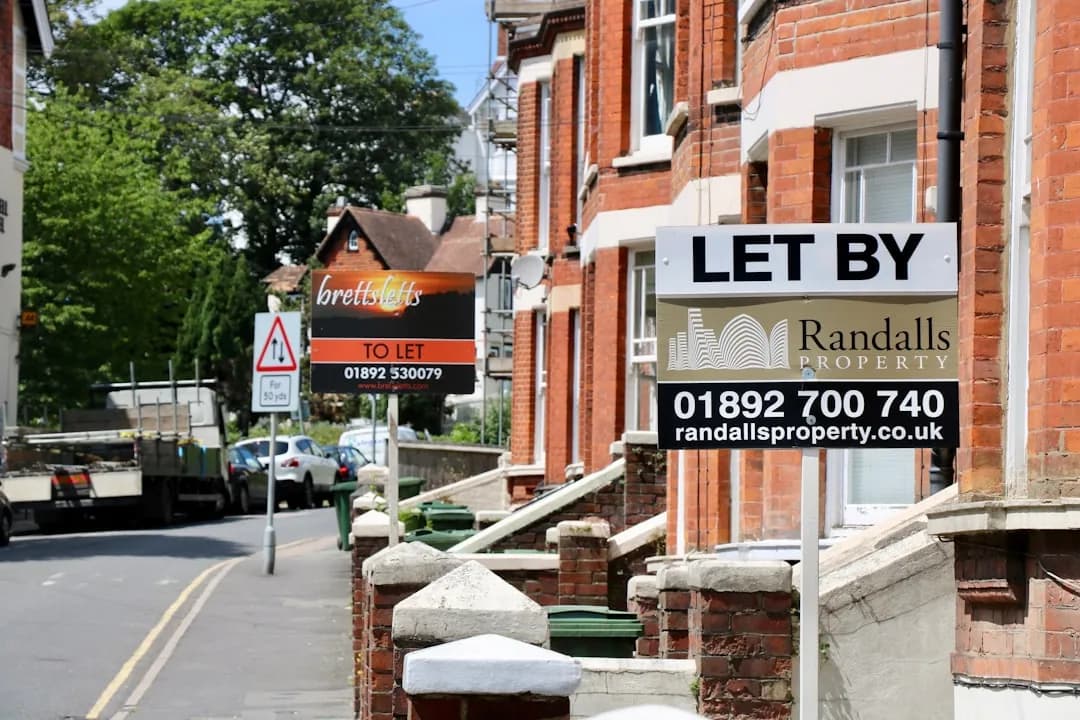
From 6 April 2027, landlords who let property in their own name and live in England or Northern Ireland pay Income Tax on rental profit at 22, 42 and 47 per cent, two points more than today's 20, 40 and 45. Landlords who live in Wales pay the same only if the Senedd sets its 2027/28 rates to match. Relief for mortgage interest rises with the basic rate, from 20 to 22 per cent. Companies are not affected. The change is already law, so the 2026/27 tax year, which ends on 5 April 2027, is the last one at the old rates unless the Budget on 28 October 2026 changes them.
What changes on 6 April 2027?
Until now, rental profit has simply been part of your income and taxed at the ordinary rates. From the 2027/28 tax year it gets rates of its own, in the same way savings and dividends already do. Each property rate is the ordinary rate plus two points.
| Band (today's thresholds, standard Personal Allowance) | Rate on rental profit in 2026/27 | Property rate from 2027/28 |
|---|---|---|
| Basic: £12,571 to £50,270 | 20% | 22% |
| Higher: £50,271 to £125,140 | 40% | 42% |
| Additional: over £125,140 | 45% | 47% |
| Mortgage interest tax reduction | 20% | 22% |
In plain terms, every £1,000 of taxable rental profit costs £20 more, whatever band it falls in. How you report and pay does not change; only the rate applied to the figures moves.
This is law, not a proposal. The rates were announced at Budget 2025 and are in the Finance Act 2026, which received Royal Assent on 18 March 2026. Section 6 creates the property basic, higher and additional rates for individuals, and section 7 sets them at 22, 42 and 47 per cent for 2027/28. Parliament sets the rates each year, so later years could differ. The 2027/28 rates are law now, although the Budget on 28 October 2026 could still change them before they start.
Who pays the new property rates?

The rates apply to individuals with property income, which the Act defines mainly as the profits of a UK or overseas property business. That covers a buy-to-let or portfolio in your own name, a share of a jointly owned let (each owner is taxed on their own share), partners in a property partnership, and furnished holiday lets, which since 6 April 2025 have been taxed as an ordinary property business.
Outside it, or only partly in it:
- Companies. A limited company pays Corporation Tax on its rental profit, at 19 per cent on profits of £50,000 or less and 25 per cent over £250,000, with marginal relief in between. The property rates do not touch it.
- Scottish taxpayers. If you are a Scottish taxpayer, Scottish rates apply to your rental profit wherever the property is. The Scottish Parliament has had the power to set separate property rates since 16 September 2026 and can use it from 2027/28. The Scottish Budget on 3 December 2026 is the first chance to do so. Mortgage interest relief for Scottish taxpayers also rises to 22 per cent, because it is given at the UK property basic rate.
- Welsh taxpayers. HMRC's policy paper says the new rates apply in Wales, but part of the rate is set by the Senedd, which since 16 September 2026 has had the power to set separate Welsh property rates from 2027/28. Welsh landlords pay the same 22, 42 and 47 per cent only if the Senedd sets its 2027/28 rates to match. It had not set them when we checked on 9 October 2026, so watch the Welsh Government's draft budget for 2027/28.
- Small amounts. The £1,000 property allowance and the £7,500 Rent a Room threshold are unchanged. If your rent sits inside either, the new rates do not reach it.
What happens to mortgage interest relief under Section 24?
Mortgage interest on a residential let held personally is not deducted from rent. Instead, HMRC gives a tax reduction worth the basic rate of the lowest of three figures: your finance costs for the year (plus any brought forward), your property profits, and your adjusted total income above the Personal Allowance. The reduction cannot create a refund, and where profits or income cap it, the unused finance costs carry forward. Our Section 24 explainer walks through that calculation in detail.
From April 2027 the reduction is worked out at the property basic rate, 22 per cent. For a basic rate landlord, rate and relief both rise by two points, so the interest is still fully relieved. For a higher rate landlord, profit is taxed at 42 per cent and interest relieved at 22, so the 20-point gap that Section 24 created stays exactly where it is. It neither widens nor closes.
How much more will a landlord pay? Two worked illustrations
Both of these are illustrations, not real clients. They use the Personal Allowance of £12,570 and basic rate band of £37,700, which are frozen by law until April 2031, and assume residential lets held personally and no other reliefs.
Illustration A, a basic rate landlord. Pension income of £24,000, rental profit of £9,000 before mortgage interest, and £3,500 of interest. All of the rental profit falls in the basic rate band.
Illustration B, a higher rate landlord. Salary of £45,000, rental profit of £20,000 before mortgage interest, and £7,500 of interest. The salary uses all but £5,270 of the basic rate band, so £5,270 of rent is taxed at the basic rate and £14,730 at the higher rate.
| Step | A: 2026/27 | A: 2027/28 | B: 2026/27 | B: 2027/28 |
|---|---|---|---|---|
| Tax on rent in the basic band | £1,800 (20%) | £1,980 (22%) | £1,054 (20%) | £1,159.40 (22%) |
| Tax on rent in the higher band | £0 | £0 | £5,892 (40%) | £6,186.60 (42%) |
| Less mortgage interest reduction | £700 | £770 | £1,500 | £1,650 |
| Tax on the rental profit | £1,100 | £1,210 | £5,446 | £5,696 |
Landlord A pays £110 a year more, which is two per cent of profit after interest. Landlord B pays £250 more: £400 extra on the rent, less £150 extra relief on the interest. In both, interest is the lowest of the three Section 24 figures, so the full amount is relieved.
The pattern holds generally: the rise is roughly two per cent of rental profit after interest, whichever band you are in. A landlord with no mortgage feels the full two points; a heavily geared one feels less.
Why does the order of your income matter from April 2027?
From 2027/28 the Act also sets the Personal Allowance and other general reliefs against employment, trading and pension income first, and only then against property, savings and dividends. Property income is treated as sitting above your salary, pension and trading income, with only savings and dividends above it.
So your salary or pension fills the Personal Allowance and the basic rate band first, and your rent sits on top. If your combined income crosses £50,270, the part taxed at 42 per cent will be rent rather than salary.
Should landlords move property into a limited company?
A company is outside the new rates and deducts mortgage interest in full, which is why the question comes up every time landlord tax rises. But profit taken out of a company is taxed again as dividends, at 10.75 per cent in the basic band and 35.75 per cent in the higher band for 2026/27. Moving property you already own into a company can also bring Capital Gains Tax and Stamp Duty Land Tax, and lenders treat company borrowing differently.
A two-point rise is rarely enough on its own to justify that. It can tip a decision that was already close. Our property incorporation calculator gives a first view, and our guide to limited company versus personal ownership sets out the trade-offs.
When will you actually pay the extra tax?
Later than you might expect, which is the trap. If you pay through Self Assessment, your payments on account for 2027/28, due on 31 January 2028 and 31 July 2028, are each half of your 2026/27 bill, worked out at the old rates. The extra tax for 2027/28 then arrives in one go with the balancing payment on 31 January 2029, alongside a first payment on account for 2028/29 that is now based on the higher figure.
For Landlord B, that is £250 of catch-up on 31 January 2029 plus a first payment on account for 2028/29 that is £125 higher, so £375 more on that day than a year earlier. If HMRC collects your rental tax through your tax code instead, the extra comes out of your pay or pension during 2027/28. Setting aside rental tax at the new rates from April 2027 avoids the surprise.
What should landlords do before April 2027?
- Work out your 2027/28 bill now. Rerun your last rental profit and interest figures at the new rates, as in the table above.
- Check Making Tax Digital. If your qualifying income from property and self-employment, before expenses, was over £30,000 in 2025/26, you must use Making Tax Digital for Income Tax from 6 April 2027. Our guide to the £30,000 threshold explains how the figure is measured.
- Know what repair timing is worth. A repair paid for after 5 April 2027 is set against profit taxed at the new rates, so each £1,000 of repairs saves £20 more in tax than it would today. That is rarely a reason to delay work a tenant or the property needs. On a large repair the Section 24 cap can change the answer, so check the figures before moving a date. Our list of landlord allowable expenses shows what counts.
- Check how jointly owned income is taxed. Each owner is taxed on their own share at their own rate. If you are married or in a civil partnership and your beneficial shares are already unequal, Form 17 lets HMRC tax you on those actual shares rather than 50:50. Our guide to Form 17 and rental income splits explains when it applies. Changing who owns what is a bigger step, with Stamp Duty Land Tax on any share of a mortgage taken over and the lender's consent to consider, so take advice first.
- Keep the records that set the bill. Mortgage interest statements, repair invoices and a separate rent account make every figure above quicker to prove.
If you are thinking of selling instead, the rate rise does not change Capital Gains Tax, and the 60-day reporting rule is covered in our buy-to-let CGT guide.
If you would like your own 2027/28 figure worked out, with the Section 24 reduction and the payment dates, see our accounting for landlords page or book a free call.
Frequently asked questions
When do the new property income tax rates start?
On 6 April 2027, the first day of the 2027/28 tax year. Rental profit for 2026/27 is still taxed at 20, 40 and 45 per cent, even if you file that return after April 2027.
Do the 22, 42 and 47 per cent rates apply to limited companies?
No. They are Income Tax rates for individuals. A company pays Corporation Tax on its rental profit, at 19 per cent on profits of £50,000 or less and 25 per cent on profits over £250,000.
Will mortgage interest relief go up to 22 per cent?
Yes. From 2027/28 the Section 24 tax reduction is given at the property basic rate of 22 per cent, up from 20. It is still worked out on the lowest of your finance costs, property profits and adjusted total income.
Do the new rates apply to landlords in Scotland and Wales?
Scottish taxpayers pay Scottish Income Tax rates on rental profit. In Wales, part of the rate is set by the Senedd, so Welsh landlords pay 22, 42 and 47 per cent only if the Senedd sets its 2027/28 rates to match. It had not set them when we checked on 9 October 2026.
Sources
- GOV.UK: Changes to tax rates for property, savings and dividend income
- GOV.UK: Income Tax, changes to tax rates for property, savings and dividend income (policy paper)
- legislation.gov.uk: Finance Act 2026, section 6
- legislation.gov.uk: Finance Act 2026, section 7
- legislation.gov.uk: Finance Act 2026, section 8, Scottish and Welsh property rates (in force 16 September 2026)
- legislation.gov.uk: Income Tax Act 2007, section 6B, Welsh rates
- GOV.UK: Tax relief for residential landlords, how it's worked out
- legislation.gov.uk: Income Tax (Trading and Other Income) Act 2005, section 274AA
- GOV.UK: Income Tax rates and Personal Allowances
- GOV.UK: Maintaining Income Tax thresholds until 5 April 2031
- GOV.UK: Chancellor's letter confirming the Budget on 28 October 2026
- Scottish Parliament: Scottish Budget 2027-28 timetable, letter of 1 September 2026
- GOV.UK: Declare beneficial interests in joint property and income (Form 17)
- GOV.UK: Corporation Tax rates and allowances
- GOV.UK: Tax on dividends
- GOV.UK: Payments on account
- GOV.UK: Find out if and when you need to use Making Tax Digital for Income Tax
- GOV.UK: Tax-free allowances on property and trading income
- GOV.UK: Furnished holiday lettings tax regime abolition
- GOV.UK: Rent a room in your home