
If you let a holiday cottage, a seaside flat or a barn conversion, the tax rules you've relied on have changed. The special tax regime for furnished holiday lettings (FHLs) was abolished from 6 April 2025 for Income Tax and Capital Gains Tax, and from 1 April 2025 for Corporation Tax.
That's a big shift. For years, a qualifying holiday let was taxed more like a trading business than a rental, which unlocked reliefs that ordinary buy-to-let landlords never had. From the 2025/26 tax year, that gap is gone.
This guide explains what an FHL was, exactly which advantages have disappeared, and what holiday-let owners should do now. It's written for landlords who want a clear, practical view rather than a list of disappointments.
In short: the furnished holiday lettings tax regime was abolished from 6 April 2025 for Income Tax and Capital Gains Tax, and from 1 April 2025 for Corporation Tax, per HMRC. From then, a holiday let is taxed like any other residential property: no capital allowances on new furnishings, no Business Asset Disposal Relief, and loan interest restricted to a basic-rate tax reduction.
What was a furnished holiday let?
An FHL wasn't simply any property you listed on a holiday platform. It was a property that met a specific HMRC definition, and only then did the favourable rules apply.
To count, the property had to be:
- Let commercially, with the genuine aim of making a profit
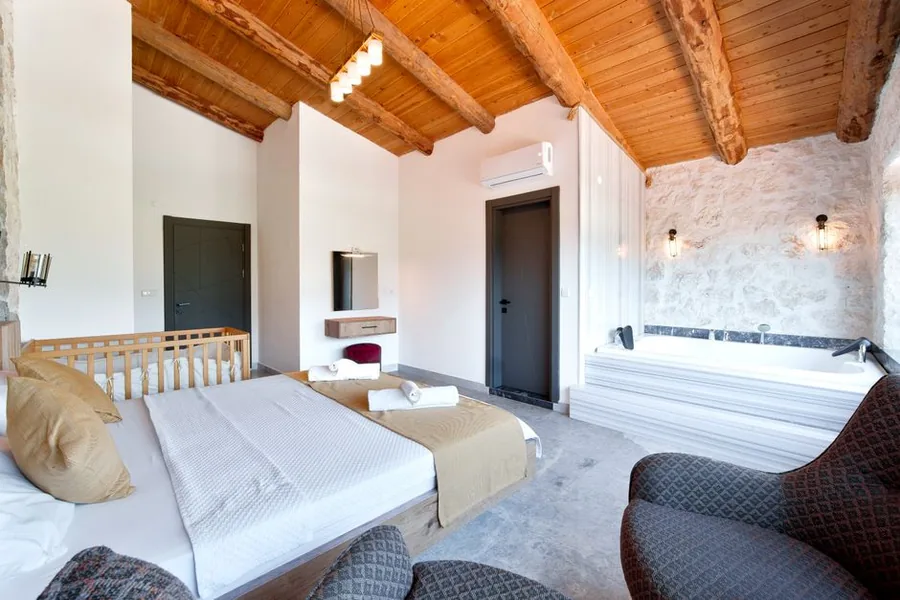
- Furnished to a standard suitable for everyday living
- Located in the UK or the European Economic Area (EEA)
- Available and actively marketed for short-term holiday lets
The idea was that you were running a self-catering business, not just collecting rent. Guests could arrive with a suitcase and find everything they needed, from beds and sofas to a working kitchen.
Although the regime has now ended, the definition still matters. It governs whether you could claim FHL reliefs on your 2024/25 return, which was the final year the rules applied.
What were the qualifying conditions for FHL status?
A property had to pass three occupancy tests in the tax year (6 April to 5 April, or from the first day of letting for a new let).
The availability test. The property had to be available for commercial holiday letting for at least 210 days. Days you stayed there yourself didn't count.
The pattern of occupation test. No single guest could stay for more than 31 continuous days, and lettings longer than 31 days couldn't add up to more than 155 days in the year.
The actual letting test. The property had to be genuinely let to paying guests for at least 105 days.
Where an owner ran more than one holiday let, averaging and period-of-grace elections could help a portfolio meet the 105-day test even if one property had a quiet year. HMRC also expected real marketing, not passive ownership: live listings, an agency, or your own advertising.
Which tax advantages did FHLs have?
Book a free Tax Health Check →
This is the heart of it. A qualifying FHL accessed reliefs that standard residential lets simply don't get.
Capital allowances on furnishings and equipment. You could claim capital allowances on items like beds, sofas, white goods and kitchen equipment, deducting the cost against your taxable profit. Ordinary buy-to-let landlords can't do this.
Profits counted as relevant earnings for pensions. FHL profits were treated as relevant UK earnings, so you could base tax-relievable pension contributions on them. Normal rental profit doesn't count.
Capital Gains Tax reliefs. On a sale or gift, an FHL could qualify for trading-asset reliefs: Business Asset Disposal Relief (BADR), roll-over relief and gift hold-over relief.
No finance cost restriction. Loan interest on an FHL was fully deductible against profit, rather than being limited to a basic-rate tax reduction as it is for residential lets.
Illustrative example: capital allowances in the final FHL year
Priya owns a cottage in Cornwall that qualified as an FHL in 2024/25. She spent £8,000 on new furniture and appliances and claimed capital allowances in full, reducing her taxable FHL profit by £8,000. As a higher-rate taxpayer (40% for 2025/26 and 2024/25), that relief was worth £3,200 to her.
This is a hypothetical to show the mechanics. The arithmetic is simply £8,000 x 40% = £3,200. From 2025/26, that kind of upfront relief on new furnishings is no longer available.
What has changed now the FHL regime is abolished?
The change was announced at the Spring Budget on 6 March 2024, confirmed at the Autumn Budget on 30 October 2024, and legislated in Finance Act 2025. It takes effect from 6 April 2025 for Income Tax and Capital Gains Tax, and from 1 April 2025 for Corporation Tax. HMRC's policy paper on abolition of the furnished holiday lettings tax regime sets out the detail.
From those dates, a holiday let is taxed in the same way as any other residential rental property. The table below sets out the practical effect.
| Tax treatment | FHL rules (to 5 April 2025) | Standard letting (from 2025/26) |
|---|---|---|
| Capital allowances on furniture | Available | Replacement of domestic items relief only |
| Pension contributions | Profits count as relevant earnings | Profits don't count |
| Business Asset Disposal Relief | Could apply on disposal | Not available |
| Roll-over and gift hold-over relief | Could apply | Not available |
| Loan interest | Fully deductible | Basic-rate tax reduction only |
| Self Assessment reporting | Separate FHL section | Standard UK property pages |
The single biggest cash-flow change for most owners is the loss of capital allowances, combined with the loan-interest restriction if the property is mortgaged.
How is holiday-let income taxed from 2025/26?
You still report your holiday-let income through Self Assessment, but it now sits in the standard UK property section of your return rather than a separate FHL box.
Profits are taxed as property income at your usual Income Tax rate. For 2025/26 that's 20% in the basic-rate band, 40% in the higher-rate band and 45% above £125,140 in England, Wales and Northern Ireland (Scotland sets its own rates). Property income isn't subject to Class 4 National Insurance.
It's worth remembering that holiday-let platforms share host earnings data with HMRC, and you'll usually receive a copy of what's been reported. Make sure those figures reconcile with your own records before you file.
What expenses can I still claim on a holiday let?
The abolition removed the special reliefs, not your ability to deduct genuine running costs. You can still claim expenses incurred wholly and exclusively for the letting business, including:
- Utilities, council tax and waste charges
- Repairs, maintenance and decorating
- Cleaning, housekeeping and gardening
- Insurance (buildings and contents)
- Letting agency fees and platform commission
- Marketing and advertising
- Accountancy and bookkeeping fees
- Safety checks (gas, electrical, fire)
The key losses are capital allowances and the full loan-interest deduction. In their place, you get replacement of domestic items relief: you can claim the like-for-like cost of replacing worn-out furniture and appliances, but not the cost of furnishing the property in the first place. Keep receipts and booking records; HMRC can ask to see them.
On VAT, the position is unchanged by the abolition. Holiday letting is a standard-rated supply, so you only register for VAT if your taxable turnover exceeds the £90,000 registration threshold on a rolling 12-month basis. Our VAT registration guidance for property businesses explains when this bites.
What happens to my old FHL losses and capital allowances?
Two practical transitions matter here.
Capital allowances pools. Where qualifying expenditure was already in a capital allowances pool by 5 April 2025, you can keep claiming writing-down allowances on that pool after April 2025 until it's used up. You just can't add new FHL-style claims for fresh purchases.
Losses. Brought-forward FHL losses aren't wasted. From 2025/26 they're carried into your ordinary UK (or overseas) property business and set against future property profits, rather than being ring-fenced to the former FHL.
If you sold or gifted the property, anti-forestalling rules apply. In broad terms, where a contract was entered into on or after 6 March 2024 but the disposal completes on or after 6 April 2025, the old CGT reliefs are only available if specific conditions are met. This is an area to take advice on rather than assume.
Should I keep letting, switch to long lets, or sell?
There's no single right answer, and it depends on your numbers, your mortgage and your plans for the property. A few principles help.
Run the real comparison. Holiday letting can still earn more gross income than an assured tenancy, even without the old reliefs. Model both scenarios on the actual property before deciding the tax change alone makes long lets better.
Mind the mortgage. The loan-interest restriction hits geared higher-rate landlords hardest. If your let is heavily mortgaged, the after-tax position may have shifted more than you expect.
Think about exit timing carefully. The favourable CGT reliefs that used to apply on an FHL sale have gone, so don't assume an old rule of thumb still holds. Take advice before exchanging.
Want clarity on where you stand? Zmartly works with holiday-let and property landlords across the UK. Book a free 20-minute call and we'll model your post-abolition tax position and the most sensible next step. See how we help landlords or talk to our tax advisory team.
FAQs about furnished holiday lettings tax
Is the furnished holiday lettings tax regime still available?
No. It was abolished from 6 April 2025 for Income Tax and Capital Gains Tax, and from 1 April 2025 for Corporation Tax. The 2024/25 tax year was the last year the FHL rules applied.
Can I still claim capital allowances on my holiday let?
Not on new purchases under the old FHL rules. You can keep claiming writing-down allowances on expenditure already in a capital allowances pool by 5 April 2025 until that pool is used up. For new items from 2025/26, only replacement of domestic items relief is available.
How is holiday-let income taxed now?
As standard UK property income, reported in the property section of your Self Assessment return and taxed at your usual Income Tax rate. There's no longer a separate FHL section, and property income isn't subject to Class 4 National Insurance.
What happens to my brought-forward FHL losses?
They're carried forward into your ordinary property business from 2025/26 and set against future property profits, rather than being limited to the former holiday-let business.
Does the platform report my earnings to HMRC?
Yes. Digital letting platforms share host income data with HMRC, and you'll usually get a copy. Include all your holiday-let income on your Self Assessment return and check it matches the platform's figures.
Can I split holiday-let profits with my spouse?
If you own the property jointly, you can generally elect to split the income to reflect your actual beneficial ownership, documented properly. Get advice first, as ownership changes can have Capital Gains Tax and Stamp Duty consequences.